
Famous Paintings of Children: 12 Iconic Portraits
Children are among the hardest things to paint well, all restless energy and unformed faces, yet artists have chased them for centuries, from stiff little royals to a windblown girl in pink.
A painted child can mean innocence, hope, status or loss, and often hides a sadder story than its sweet surface suggests. Here are twelve of the most famous paintings of children, all now in the public domain.
I have gathered the works that caught real childhood, in all its charm and fragility.
The good stuff
Three worth opening next:
The Arnolfini Portrait, detail by detail, the mirror, the dog, and the question everyone asks
Twelve famous portraits and the real people, the faces behind the paintings
The secret behind Hopper Soir Bleu, the clown picture that went wrong
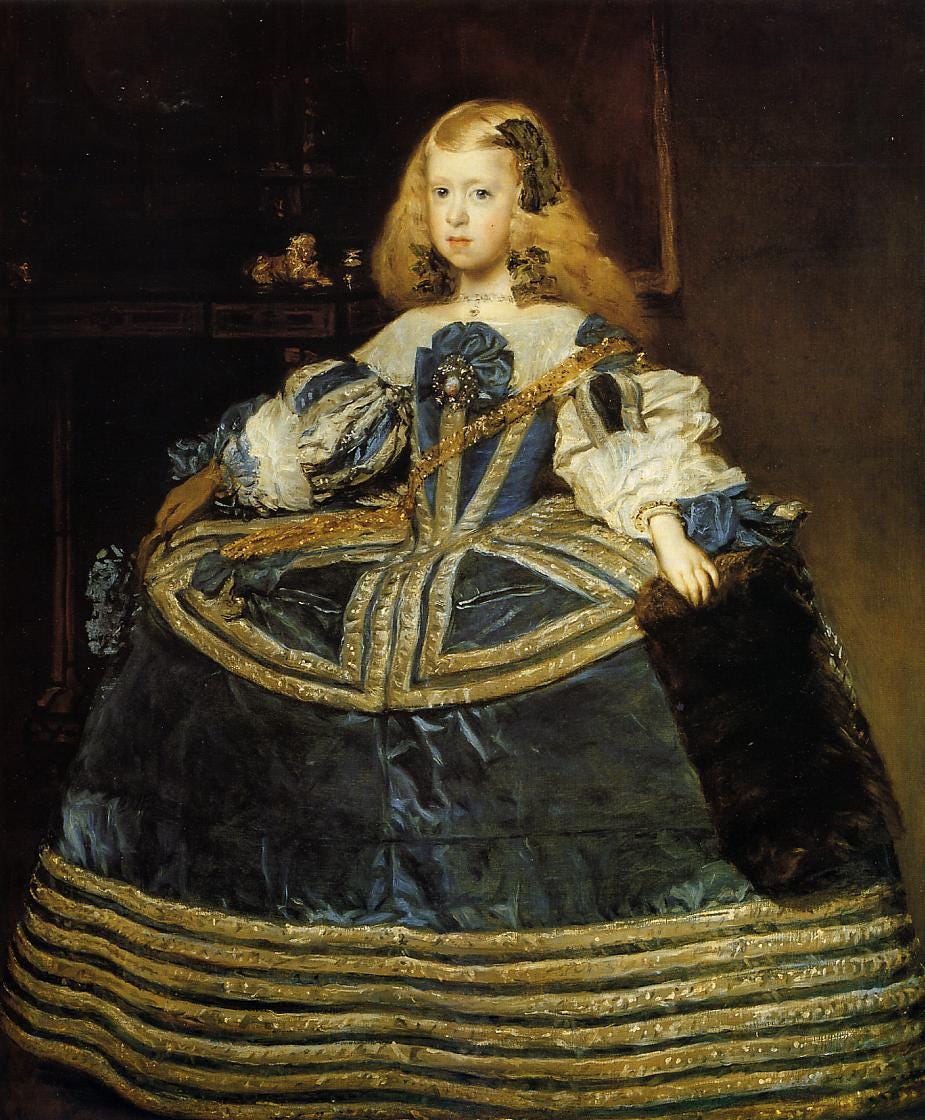
1. Diego Velazquez, Infanta Margarita in a Blue Dress (1659)
A small Spanish princess, maybe eight years old, stands stiff and solemn in an enormous silver blue gown so wide she can barely move her arms.
Velazquez painted the Infanta Margarita again and again as she grew, sending each portrait to the Austrian court of the cousin she was engaged to marry.
Under the mountain of silk and the frozen pose, he caught a real, slightly weary child. The huge dress and elaborate hair were a cage of royal duty built around a little girl.
She was married at fifteen and dead at twenty one, worn out by constant childbearing.
2. William Hogarth, The Graham Children (1742)
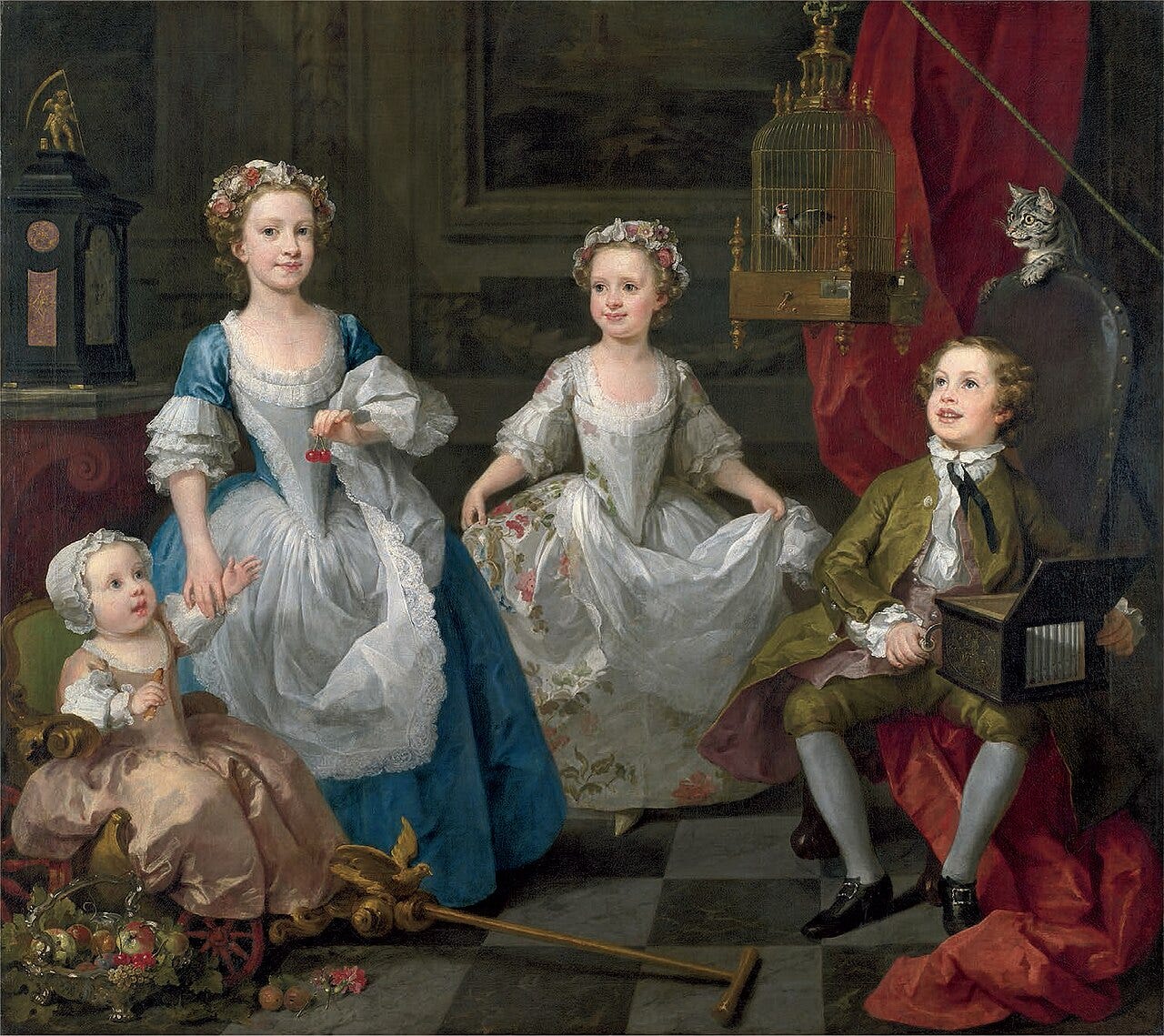
Four rosy children of a rich royal apothecary pose in their finest clothes, the baby in a little cart, a boy playing a small organ, everything bright and joyful.
On the organ sits a cat, eyeing a caged bird in a frenzy, a reminder of how easily life is snatched away. A gilded cupid on the clock holds a scythe, the sign of passing time.
The youngest child, in the cart, had in fact already died by the time Hogarth finished the picture. The picture now hangs in the National Gallery in London, its buried grief unnoticed by most who walk past.
3. Joshua Reynolds, The Age of Innocence (about 1788)
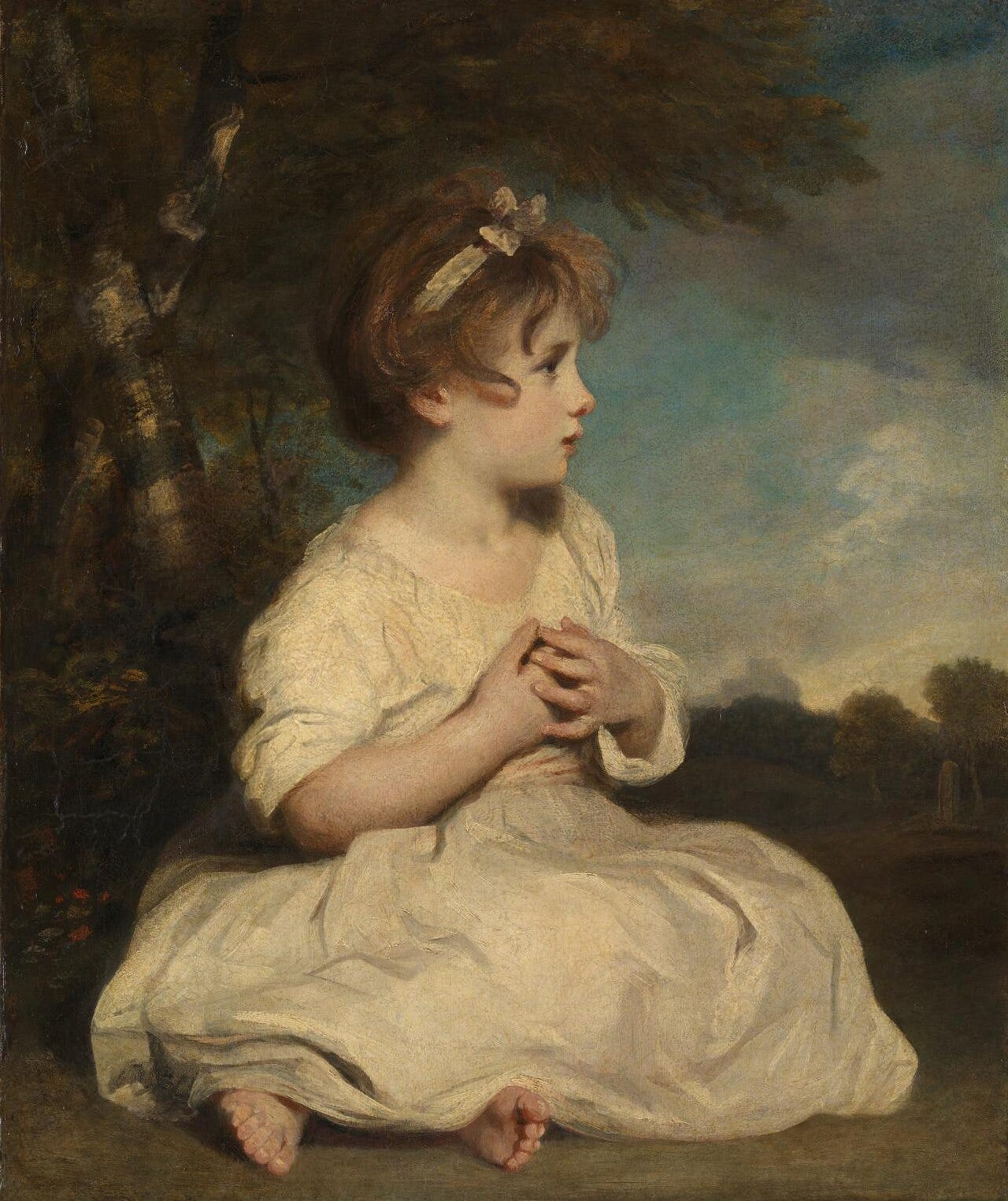
A small girl in a simple white dress sits alone in a landscape, hands folded on her chest, gazing out with wide, trusting eyes. Reynolds, the grand old man of British portraiture, gave the picture its title only later, and it came to stand for the whole idea of childhood innocence.
No one is sure who the girl was, perhaps his own great niece. For a century it was exactly how the English liked to picture a perfect, pure child.
It became one of the most reproduced images in Britain, printed on everything from schoolbooks to biscuit tins.
4. Thomas Gainsborough, The Painter's Daughters Chasing a Butterfly (about 1756)
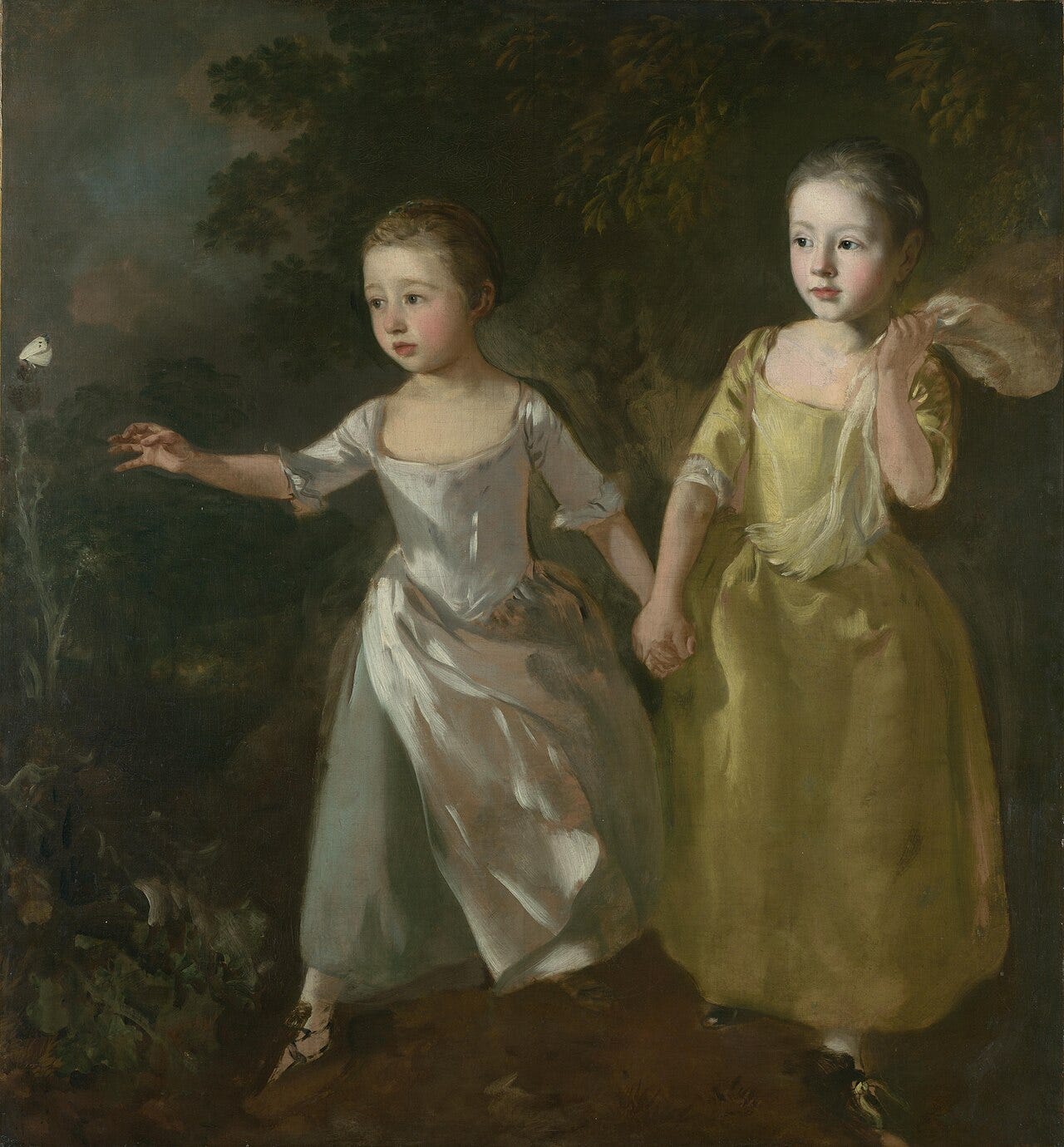
Gainsborough left this picture of his own two daughters half finished, their dresses barely more than smears of light. The girls, Mary and Margaret, run hand in hand through a dark wood, the older one reaching for a butterfly that has landed on a thistle.
The butterfly they chase is a fragile, fleeting thing, easily read as childhood itself, gone in a moment. There is real tenderness in it, a father watching his daughters play.
Both girls had troubled adult lives, which casts a shadow back over the sunlit chase.
5. Bartolome Esteban Murillo, Boys Eating Grapes and Melon (about 1650)
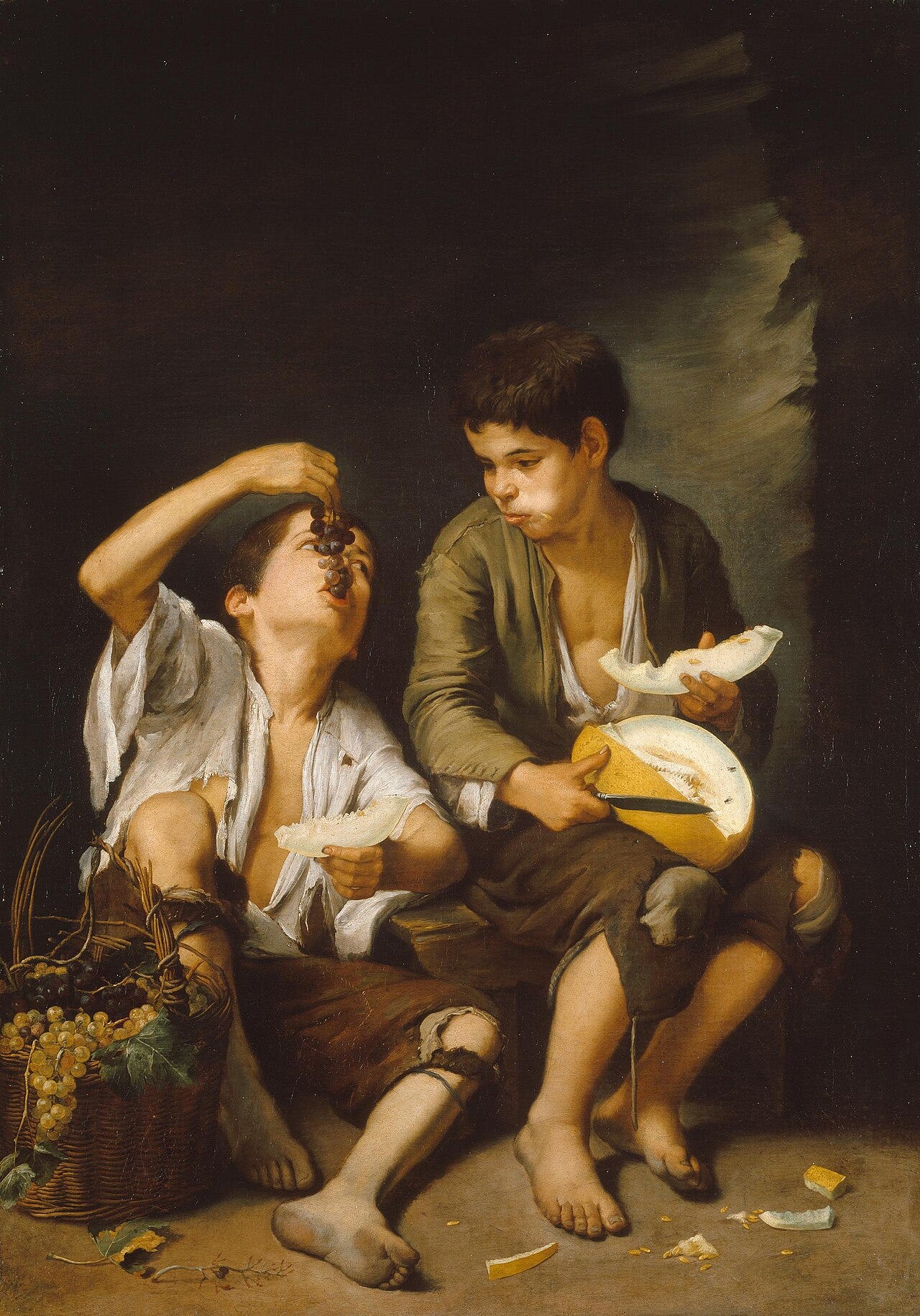
Two ragged street boys sit against a wall in the Spanish sun, grinning as they gorge on grapes and melon, dirt on their bare feet and not a care in the world.
Murillo, the great painter of holy Seville, also painted its poorest children, the beggars and urchins of the streets. He gave them warmth and charm rather than pity, making poverty look almost like a carefree adventure.
This kind of everyday genre scene of the poor was hugely popular with rich collectors. His cheerful beggar boys hang in palaces all over Europe, bought by the very people whose world they were shut out of.
6. Thomas Lawrence, Pinkie (1794)
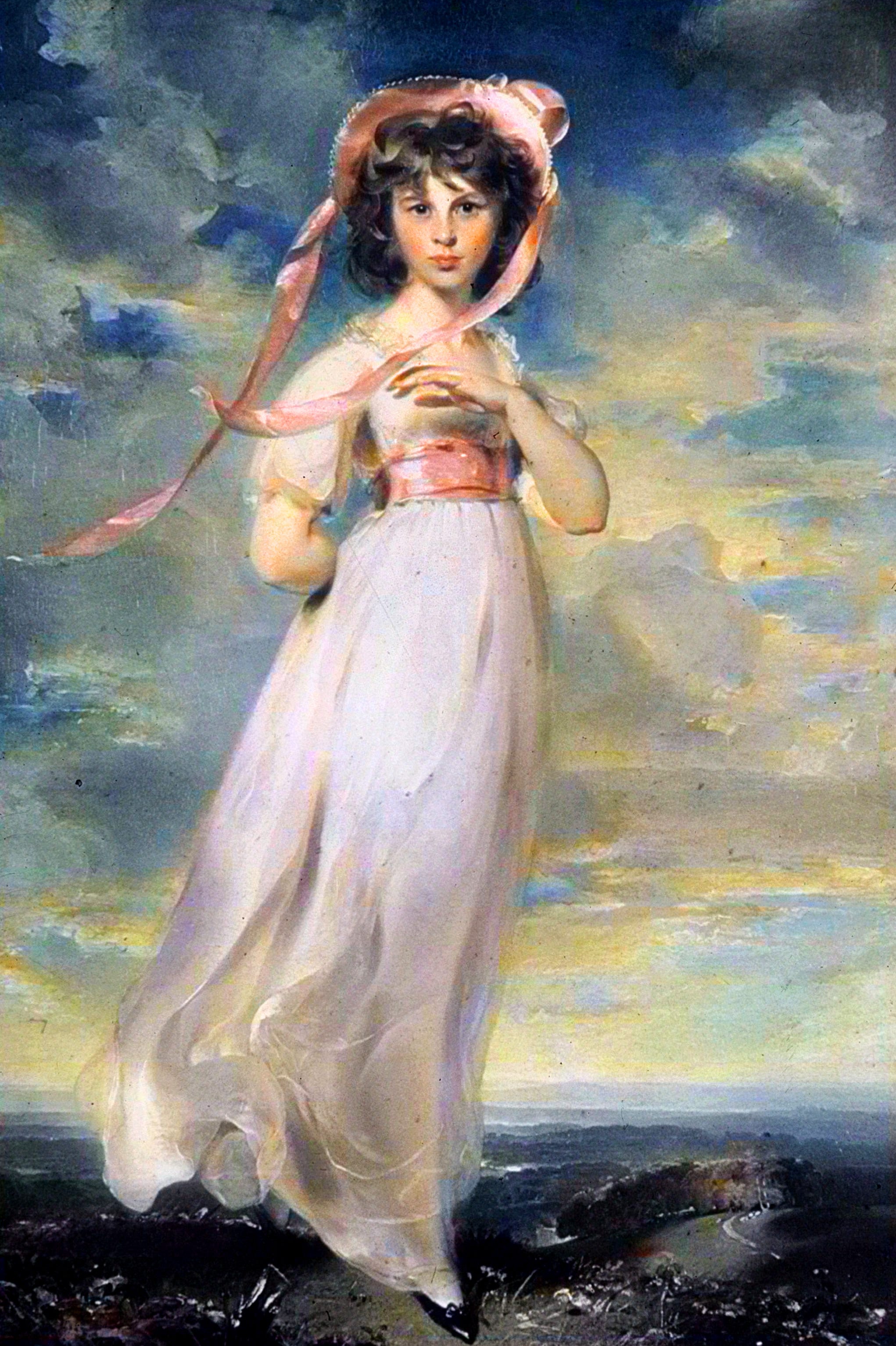
A young girl in a fluttering pink dress and bonnet stands on a windy hilltop, one hand raised, her ribbons streaming, caught as if in mid breath.
Lawrence painted eleven year old Sarah Moulton, nicknamed Pinkie, at the very start of his career, and she died of illness within a year of the sitting.
He caught a living, breathing child, alive with movement and air, where earlier portraits had frozen children like little dolls. The picture became famous as the natural companion to Gainsborough's Blue Boy.
Today the two hang side by side in the Huntington gallery in California, a boy in blue and a girl in pink, forever young.
7. Pierre Auguste Renoir, Madame Charpentier and Her Children (1878)
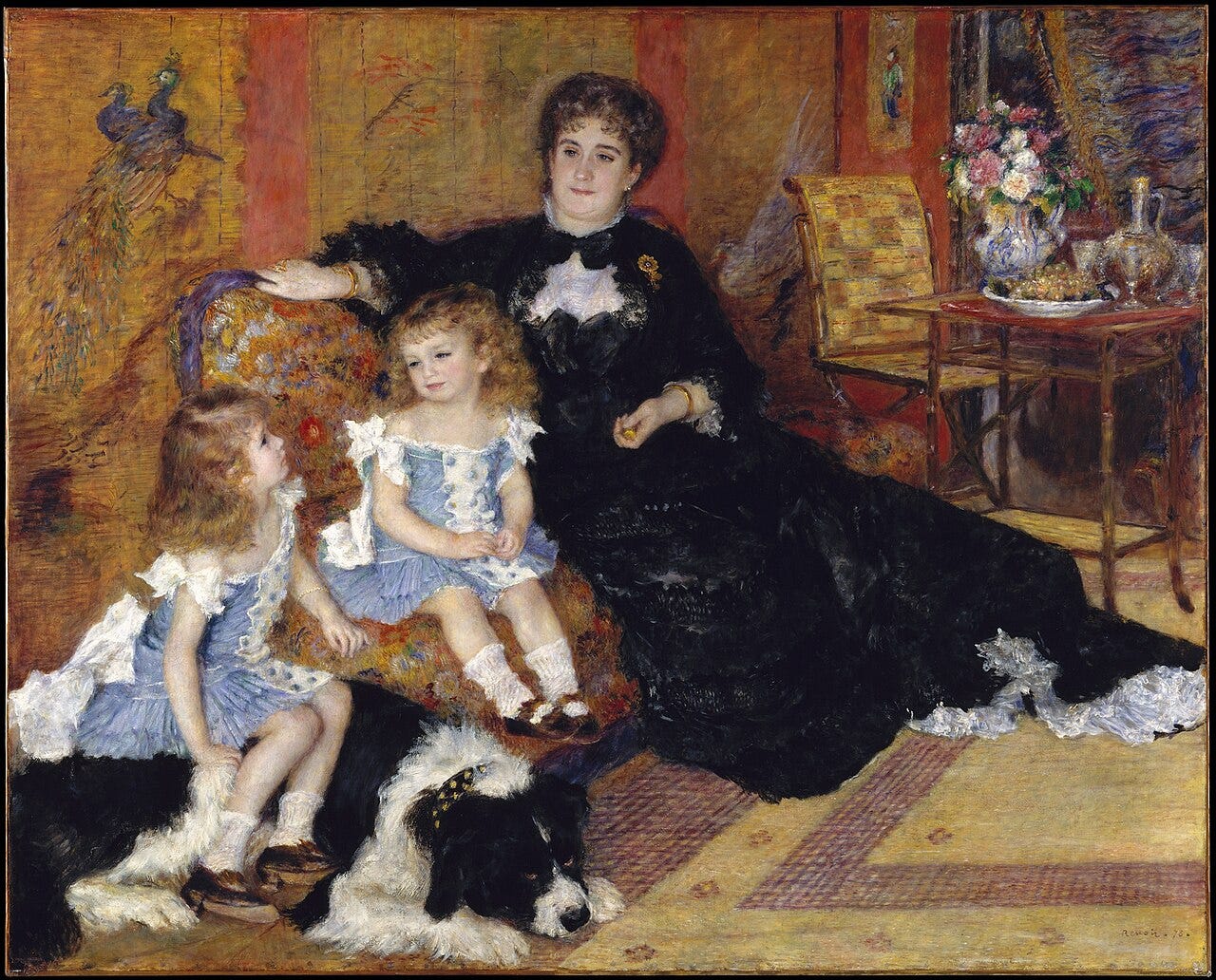
Renoir painted the wife of his most important patron in her lavish drawing room, and the picture lifted him out of poverty into fashion almost overnight.
Madame Charpentier sits among her cushions with her two small children and the family dog, everything soft and warm. Both children wear identical blue dresses, though one of them is actually her young son, kept in skirts and long hair as little boys were until they were breeched at six or seven.
It is Impressionism made comfortable and respectable, a family wrapped in light. The picture was a huge hit at the 1879 Salon that made Renoir's name for good.
8. Mary Cassatt, Little Girl in a Blue Armchair (1878)
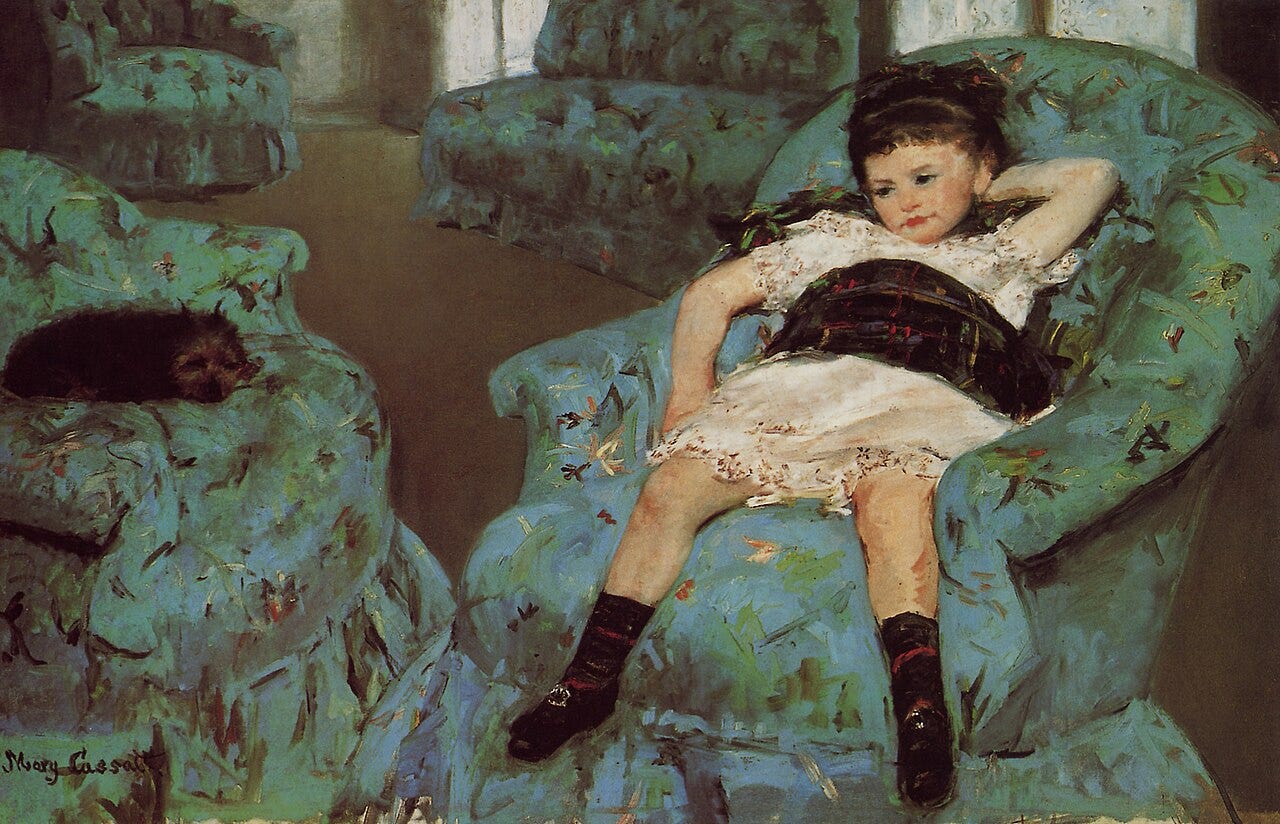
A small girl sprawls sideways across a huge blue armchair, legs flung out, utterly bored and slumped, with her little dog asleep on the chair beside her.
Cassatt, the American who painted with the Impressionists, caught childhood as it really is, restless, sulky and unposed. Her friend Edgar Degas helped paint the background, and the low viewpoint puts us right down on the floor with her.
It is now seen as one of the first honest paintings of what childhood actually feels like. A Paris jury rejected it in 1878, baffled by such an ordinary, unflattering child.
9. John Singer Sargent, The Daughters of Edward Darley Boit (1882)
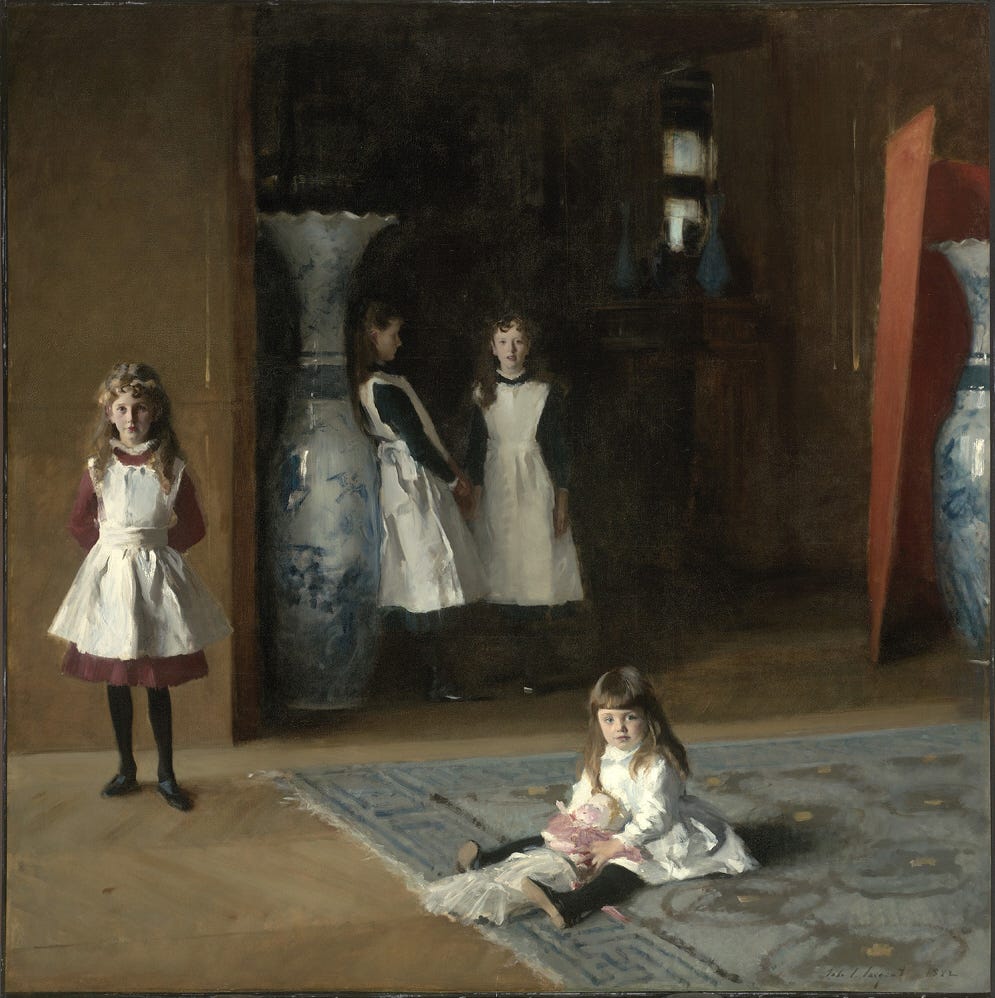
Four sisters stand in the shadowy hall of a grand Paris apartment, spread far apart, flanked by two huge blue and white vases taller than the youngest child.
Sargent scattered the girls across a dim, cavernous space, the older two half swallowed by shadow. It feels less like a family portrait than a strange, haunting stage set.
The picture quietly hints at the distance between the sisters, none of whom ever married, and two of whom later struggled with mental illness.
The two great vases were later given to the same Boston museum, and now stand beside the painting exactly where Sargent placed them.
10. Jean Baptiste Greuze, A Girl with a Dead Canary (1765)
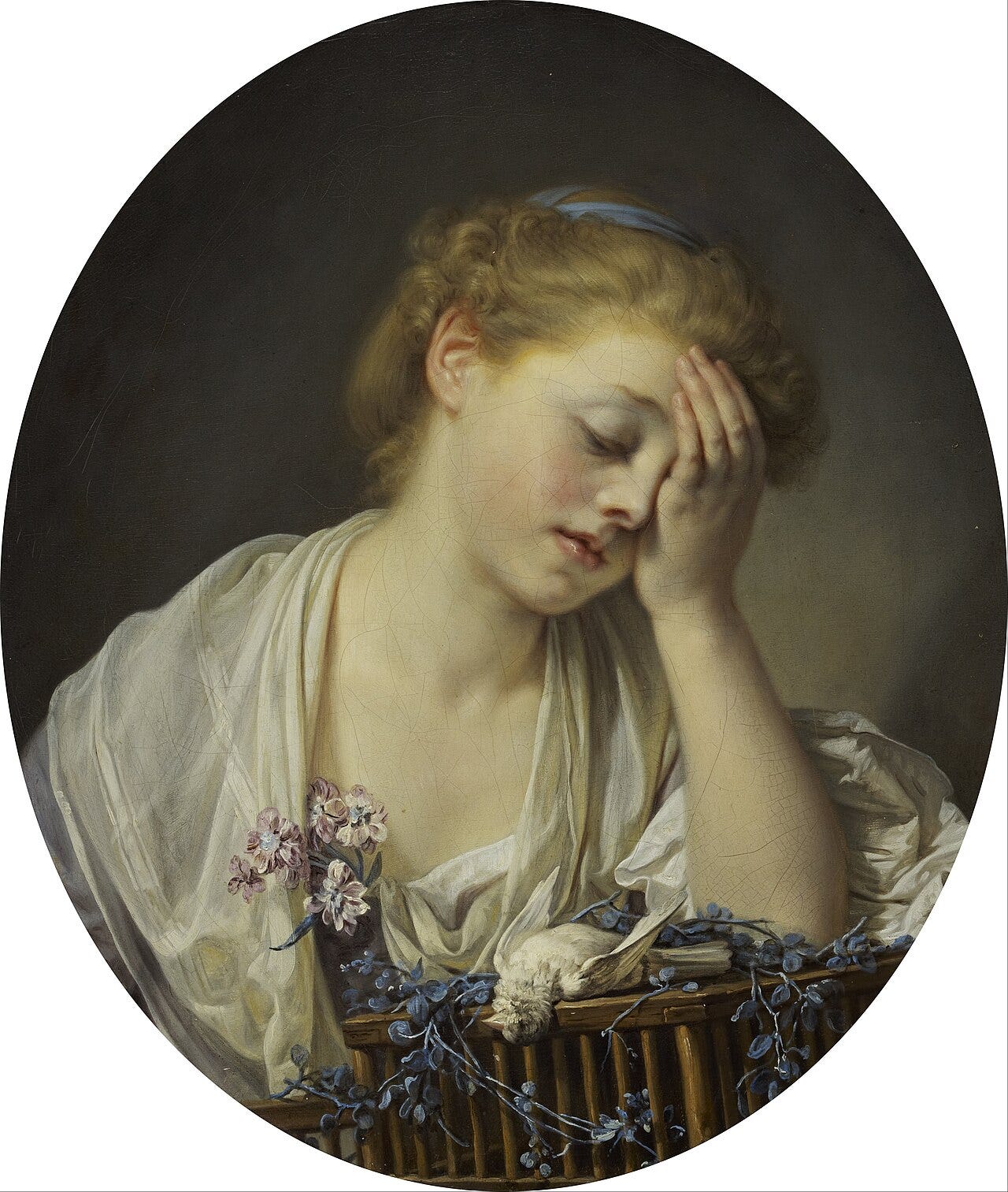
A young girl slumps over an open birdcage, her head resting on her hand, gazing down in tears at her pet canary, which lies dead on top of the cage.
Greuze made his name on these tender, tearful scenes, and eighteenth century Paris adored the sweet sadness of it.
Every soft fold of skin and cloth is painted to melt the heart. It is sentimental in a way modern taste can find almost too much, yet it captures a real childhood grief, the first death a child ever meets.
The philosopher Diderot wrote a whole essay puzzling over whether the dead bird really stood for a lost first love.
11. Vincent van Gogh, First Steps (1890)
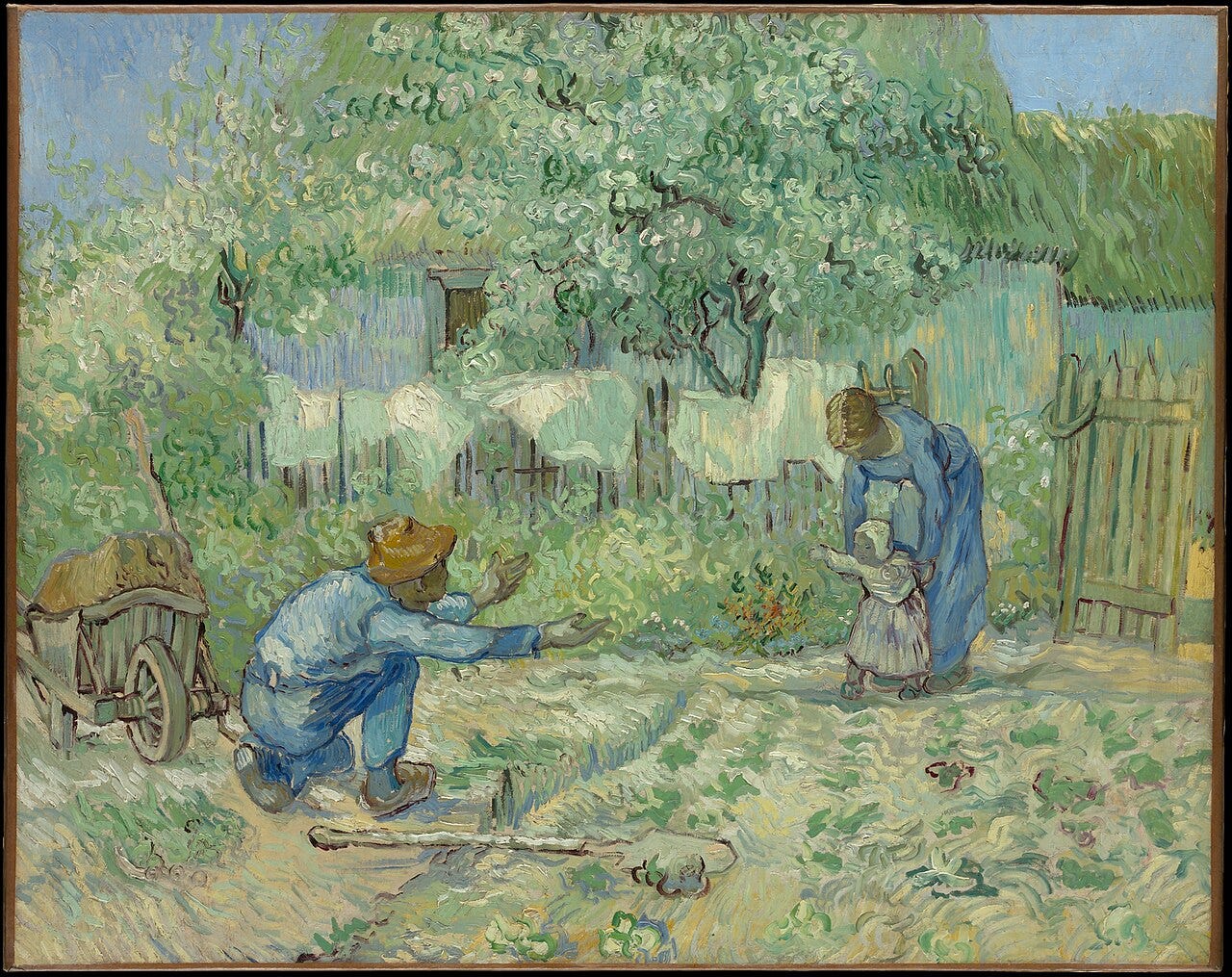
A tiny child lets go of a chair and totters toward its father, who has dropped his spade and crouched with open arms to catch the first steps.
Van Gogh copied this scene from a drawing by Millet, the peasant painter he worshipped, while shut in an asylum in the last months of his life, and I trace those final days in the full piece on his last day He turned Millet's quiet farmyard into a swirl of thick, living green and blue.
There is something aching in it, a childless, dying man painting a family's happiest ordinary moment. He finished it early in 1890, only months before he shot himself at thirty seven.
12. Philipp Otto Runge, The Hulsenbeck Children (1806)
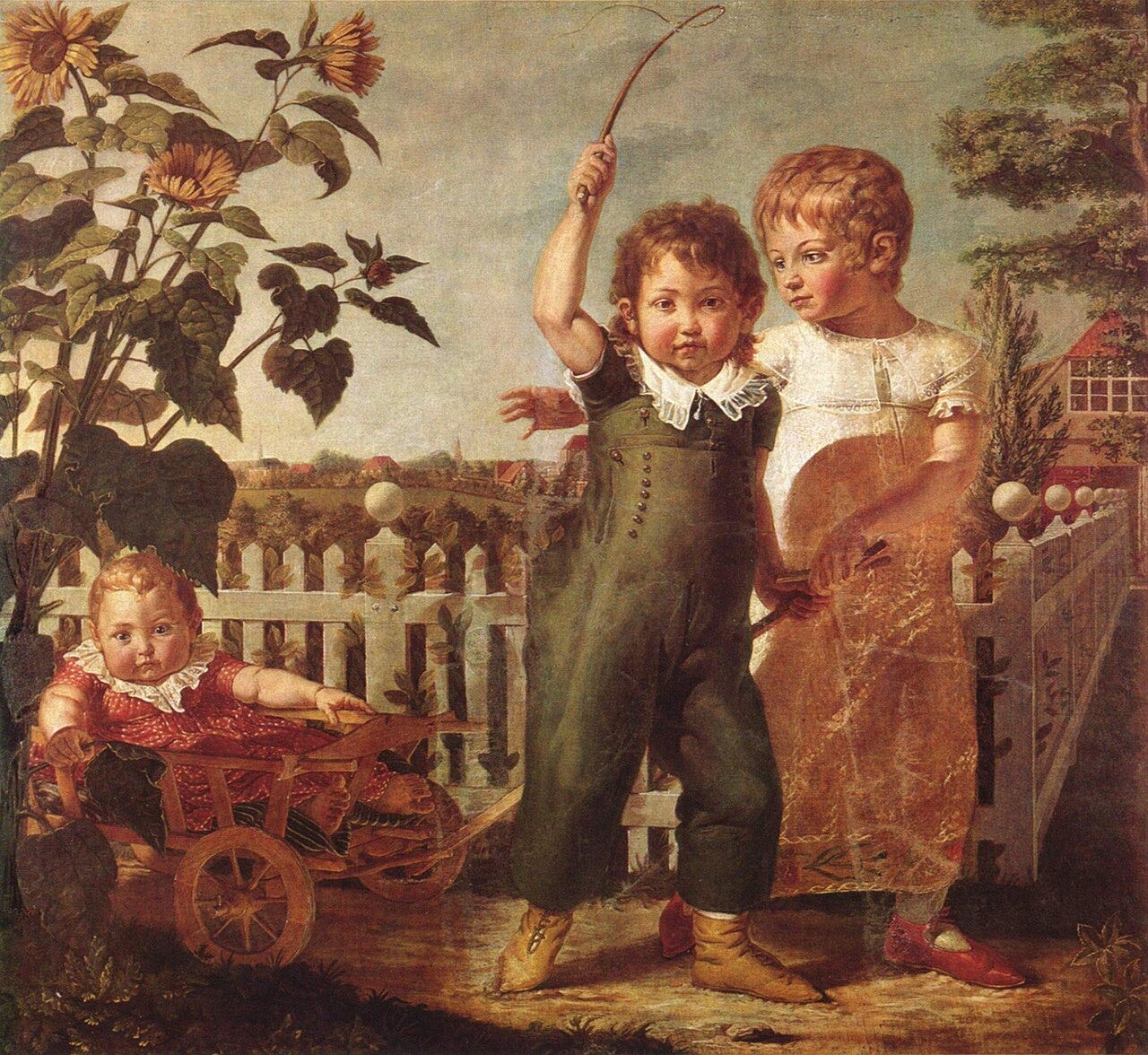
Three small German children stand in a garden at the edge of a village, one in a little cart, painted from a low angle so they loom large against a wide morning sky.
Runge believed children were closer to God and to nature than grown people, and painted them with unusual seriousness and force. The baby grips a big sunflower leaf with a startling, wild energy.
Behind them the ordinary world of fences and houses stretches away, but the children fill the foreground like young gods. Runge died of tuberculosis at thirty three, leaving only a handful of finished paintings, of which this is the greatest.
Paintings of children, common questions
Why are children in old paintings dressed like little adults? Until the eighteen hundreds children were seen as small adults, and were painted in stiff grown up clothes to show off family wealth and status.
Why do so many child portraits feel sad? Child death was common, and painters often hid symbols of mortality, a wilting flower or a caged bird, in even the happiest scenes.
Who is the most famous painter of children? Mary Cassatt and Pierre Auguste Renoir are the best known, along with the British portraitists Reynolds and Gainsborough.
Why are little boys sometimes painted in dresses? Before about age six or seven, boys wore dresses and long hair, a custom called breeching that lasted well into the nineteenth century.
What do birds and flowers mean in child paintings? A wilting flower, a caged bird or a dead pet all stood for how short and fragile a young life could be, a quiet reminder tucked into the sweetest scenes.
If these children pulled you in, you will love these too:
Titian, Sacred and Profane Love, which of the two women is which
The Last Supper, detail by detail, the detail hiding at that table
Six women, one monster, what Picasso did to the women who loved him
The child that does not last
Every painting of a child is, quietly, a painting about time. The artist freezes one impossible moment, a butterfly chased, a ribbon caught by the wind, a first wobbling step, knowing the child in front of them will change and grow and one day be gone.
That is why even the sweetest of them carries a faint ache. We do not just look at these children, we watch them never grow up, held forever at the edge of the world.