
Famous Renaissance Paintings: 12 That Changed Art
The Renaissance was the rebirth of Western art, when painters rediscovered the ancient world, cracked the code of perspective and made flat holy figures suddenly breathe.
Over about two centuries, from Florence to Venice to the north, a handful of works reset what a painting could be. Here are twelve of the most famous Renaissance paintings, all now in the public domain.
I have gathered the ones that turned painting from a craft into an art, and their makers into legends.
The follow ups
If you like knowing what is actually going on inside a picture, start with these three:
The Arnolfini Portrait, detail by detail, the mirror, the dog, and the question everyone asks
The Last Supper, detail by detail, the detail hiding at that table
The Ambassadors, detail by detail, the object at the bottom that only works from one side
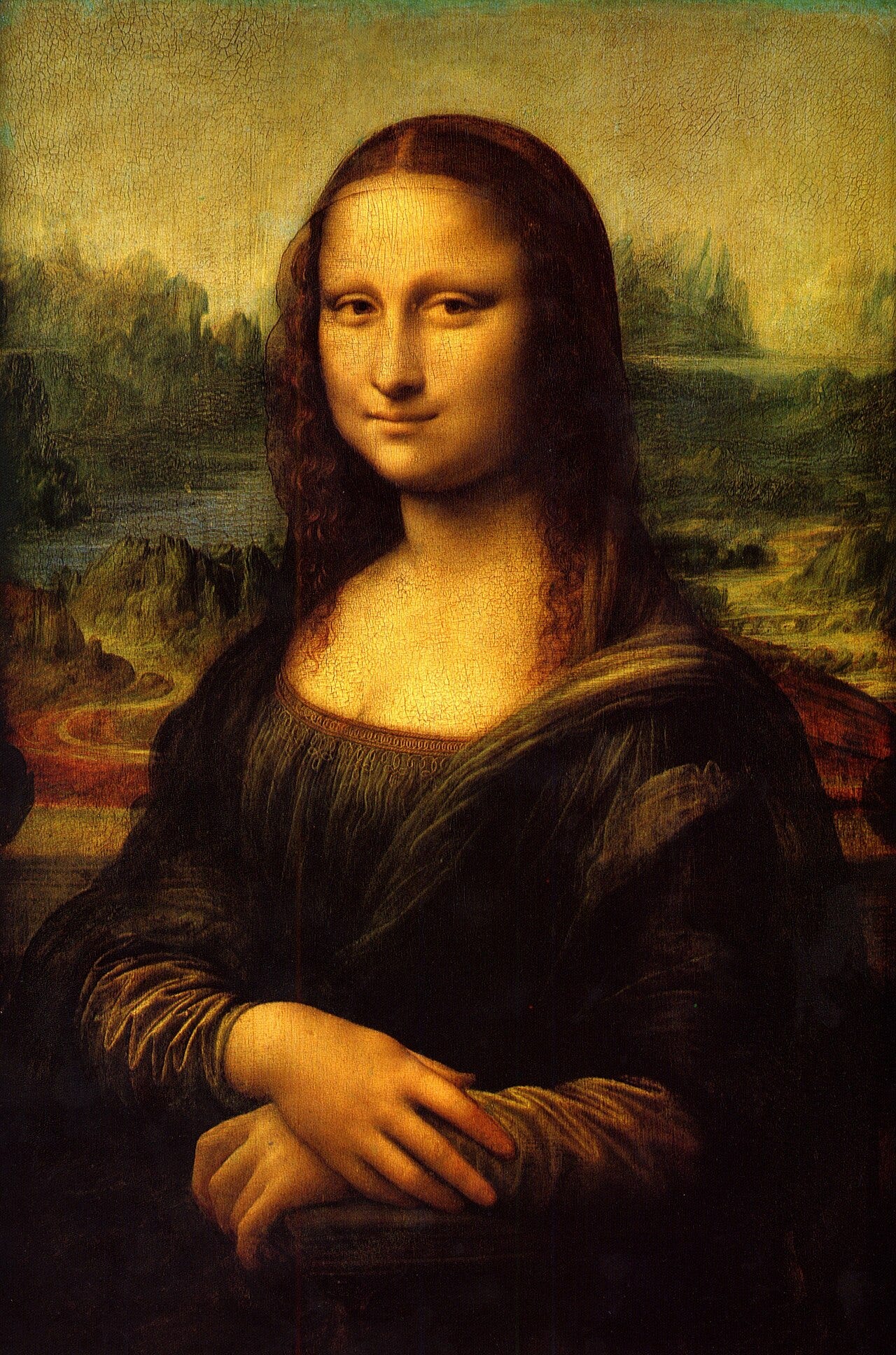
1. Leonardo da Vinci, Mona Lisa (about 1503)
The most famous painting in the world is a small portrait of a merchant's wife with the faintest, most argued over smile in art. Leonardo worked on it for years and never delivered it, carrying it with him until he died in France.
He softened every edge with a technique called sfumato, blending light into shadow like smoke, so her expression seems to shift as you look.
For centuries it was admired but not worshipped, until it was stolen from the Louvre in 1911 and the theft made it a global superstar.
Today it sits behind bulletproof glass while millions file past for a ten second glimpse.
2. Michelangelo, The Creation of Adam (1512)
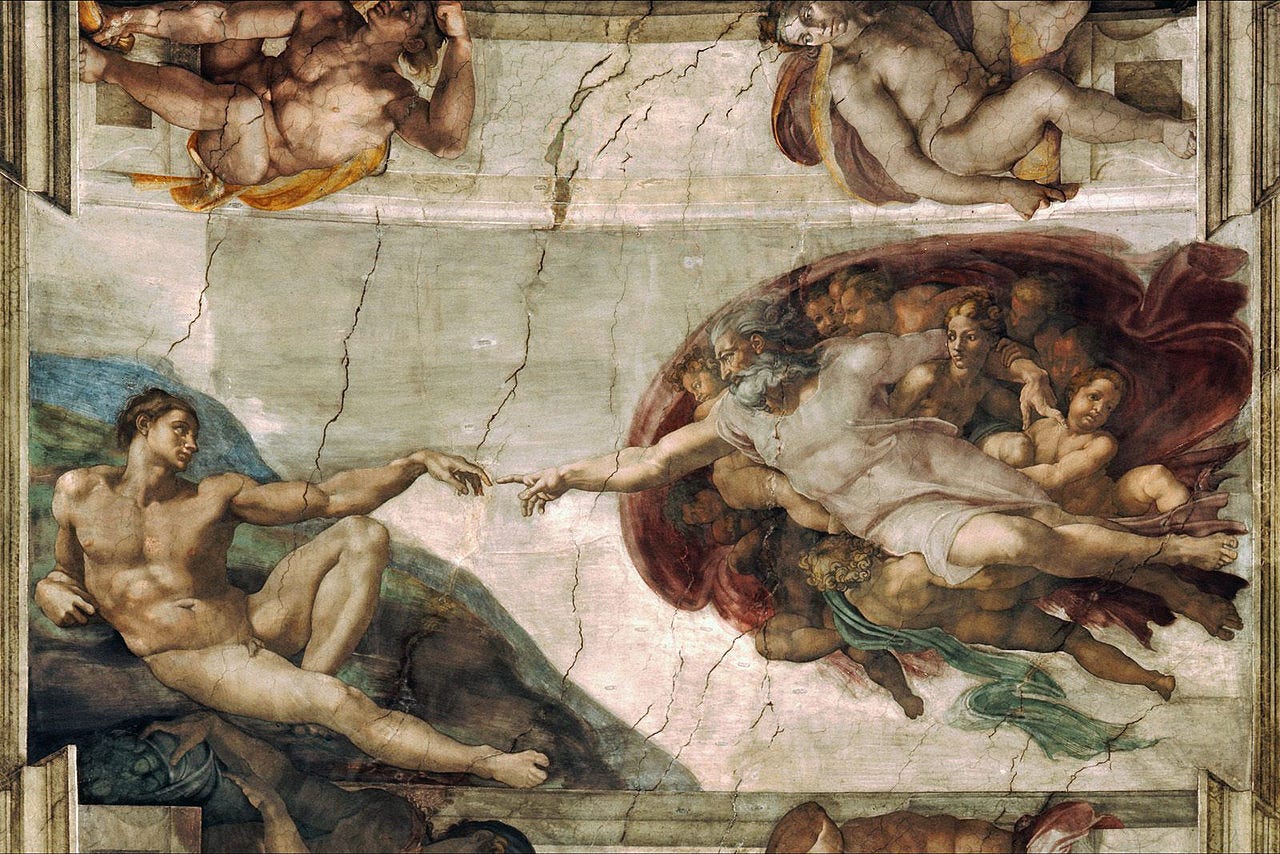
On the ceiling of the Sistine Chapel, God reaches out to a languid, naked Adam, their fingers almost touching across a small, electric gap.
Michelangelo spent four years on a scaffold painting the whole vast ceiling, and always insisted he was a sculptor and not really a painter at all.
The near touch of the two hands has become one of the most copied images on earth, endlessly parodied. Some scholars think the red cloak around God is shaped exactly like a human brain, a hidden hymn to the mind.
He unveiled the finished ceiling on the last day of October 1512, on the eve of All Saints.
3. Sandro Botticelli, The Birth of Venus (about 1485)
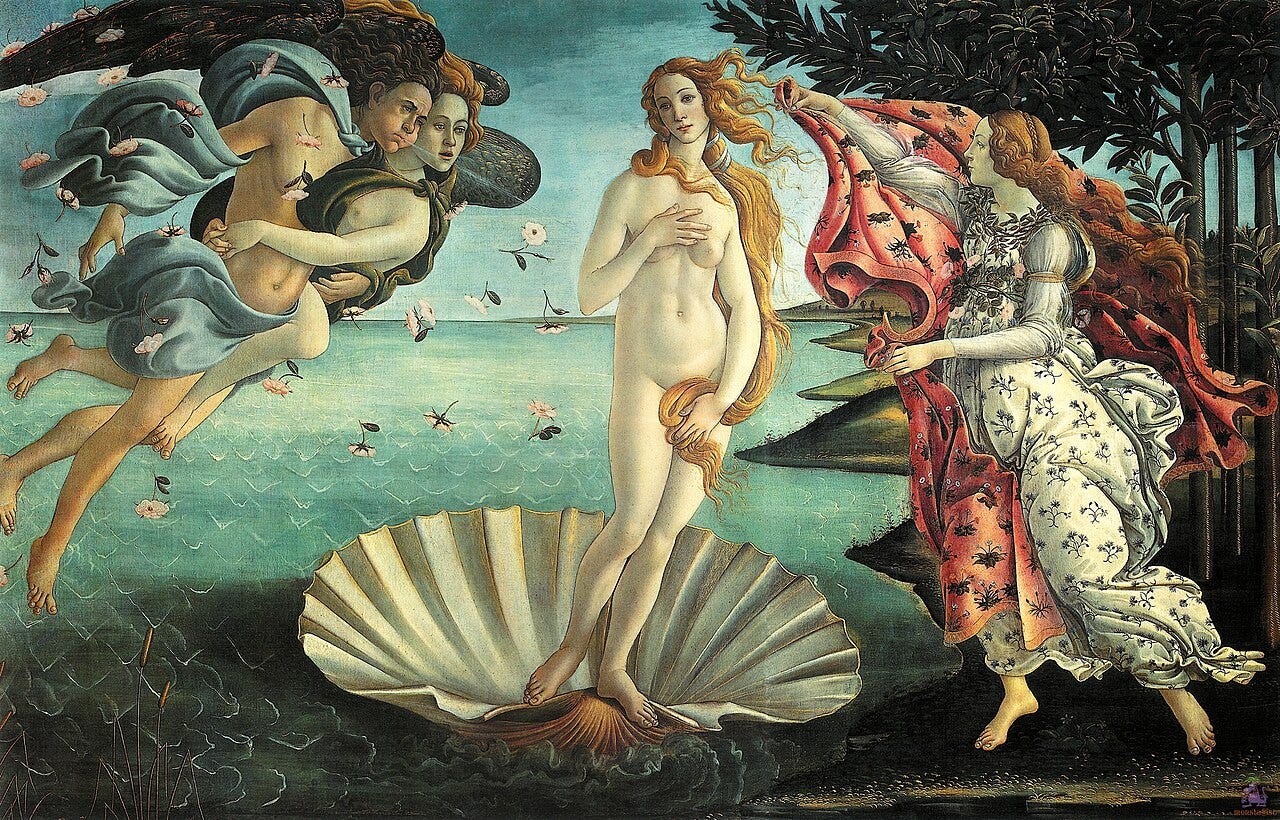
Botticelli painted the goddess of love born fully grown from the sea, blown to shore on a giant shell, in one of the first great female nudes since ancient Rome.
She stands with the weightless grace of a Greek statue, covering herself with her own long hair, all line and elegance rather than solid flesh. It was made for the Medici, the ruling family of Florence, at the height of the city's golden age.
For decades it hung ignored in a country villa before the world fell in love with it again. Today her face is one of the most reproduced in all of art.
4. Raphael, The School of Athens (about 1510)
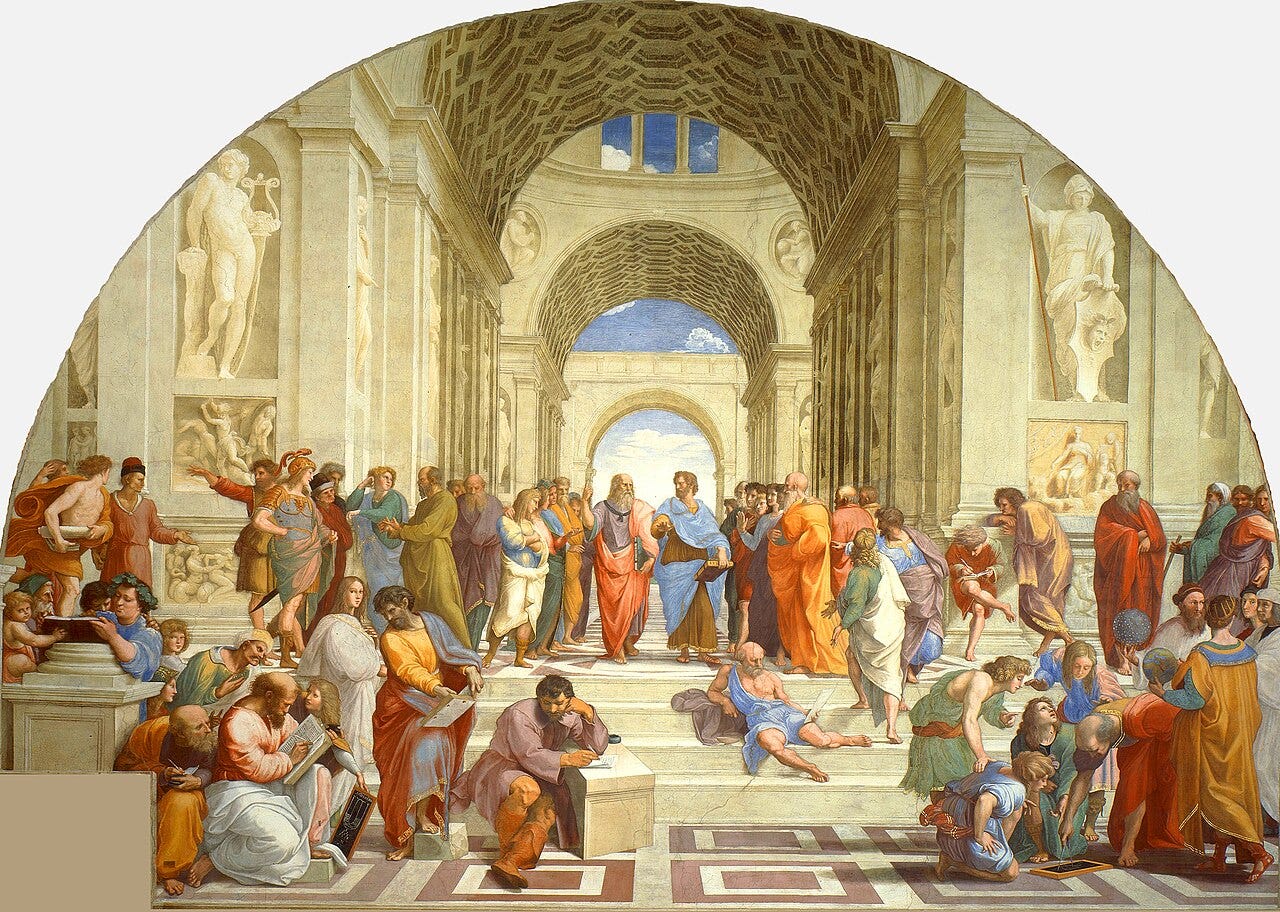
Raphael gathered the greatest thinkers of the ancient world under one grand painted arch, Plato and Aristotle at the center, arguing philosophy for all eternity.
He painted the huge fresco on a wall of the Pope's private rooms, at the same time Michelangelo was painting the Sistine ceiling a short walk away.
He gave the ancient philosophers the faces of his own heroes, painting Leonardo as Plato and sneaking in a portrait of himself at the edge of the crowd.
It is the perfect picture of the Renaissance dream, the marriage of ancient wisdom and Christian faith. Raphael was only in his mid twenties when he painted it.
5. Leonardo da Vinci, The Last Supper (about 1498)
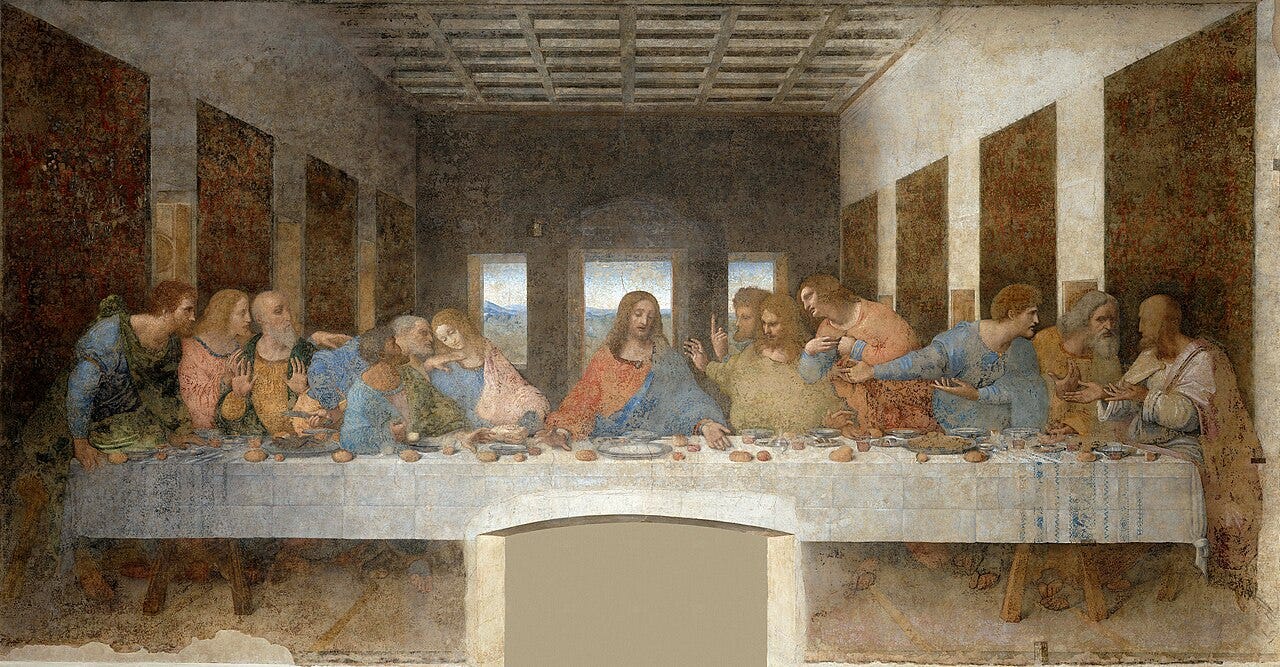
Leonardo painted the moment Jesus tells his twelve apostles that one of them will betray him, catching each man's shock, denial and dismay as the news lands.
Instead of painting properly into wet plaster, he experimented with a new method that let him work slowly, and it began flaking off the wall within his own lifetime.
What survives is a ghost of the original, restored again and again over five hundred years, and I unpack its hidden details in the full piece on the Last Supper's secret It survives on the wall of a Milan refectory that was bombed in the Second World War, shielded by sandbags while the roof came down around it.
6. Jan van Eyck, The Arnolfini Portrait (1434)
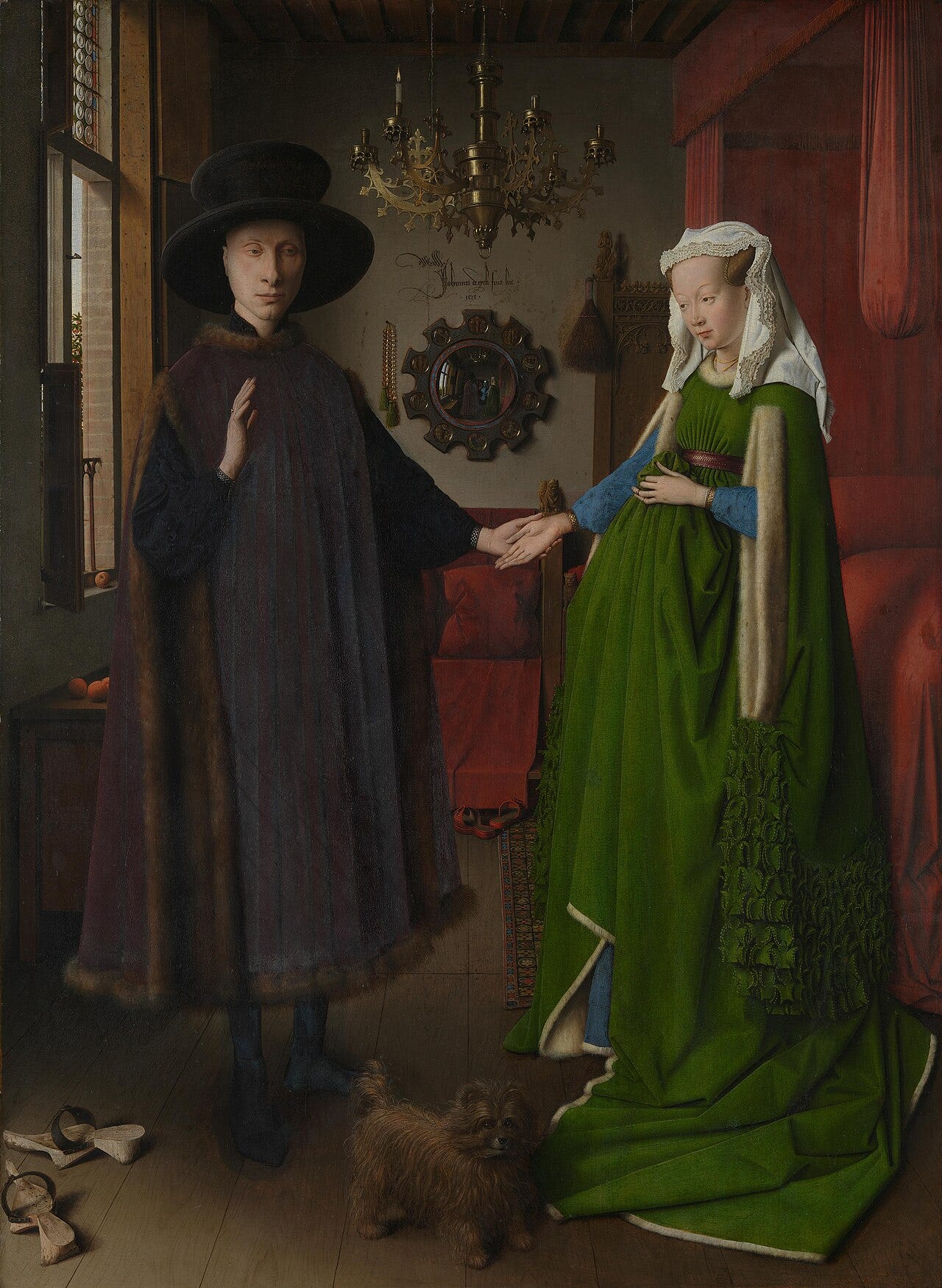
In the north, far from Italy, van Eyck was quietly performing a different miracle, painting a Flemish couple in a bedroom with a realism so sharp it still looks like a photograph.
He was one of the first to fully master oil paint, which let him build up glazes of unbelievable detail, down to the reflections in a convex mirror on the back wall.
In that tiny mirror you can see two extra people entering the room, one of them perhaps the painter himself. The whole picture is packed with hidden symbols of marriage and wealth.
On the wall he wrote, in curling Latin, van Eyck was here.
7. Titian, Bacchus and Ariadne (about 1523)
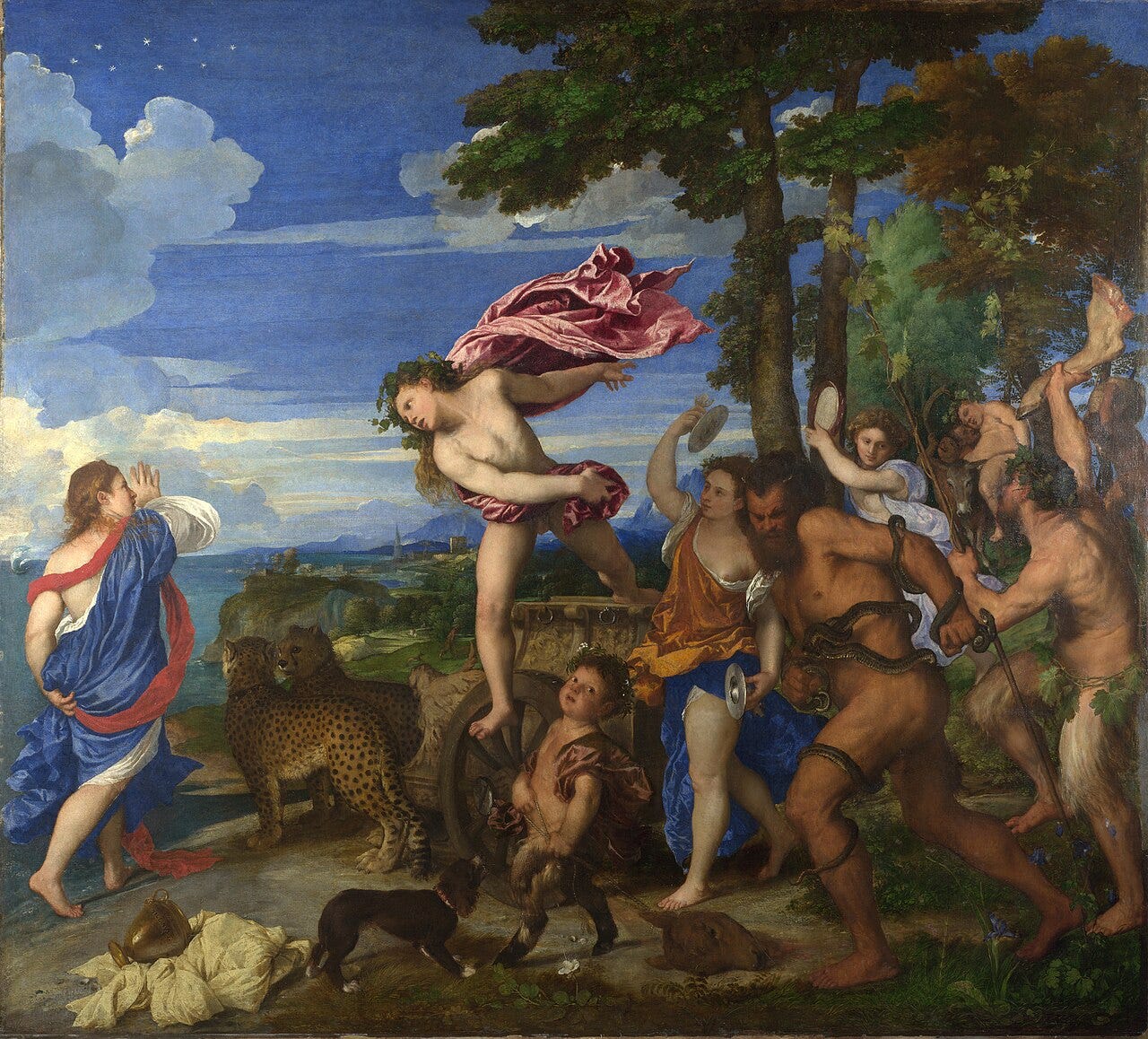
The god of wine leaps from his chariot in mid air, cloak flying, having just spotted the abandoned princess Ariadne and fallen in love with her on the spot.
Titian, the giant of Venice, filled the scene with movement and glorious color, a whole drunken procession spilling in from the right. The sky is a deep, singing blue made from lapis lazuli, then about as costly as gold.
It shows the Renaissance discovering not just holiness but pure sensual joy, myth and wine and desire. It hangs in the National Gallery in London, where its leaping god still seems frozen a fraction of a second before he lands.
8. Albrecht Durer, Self Portrait (1500)
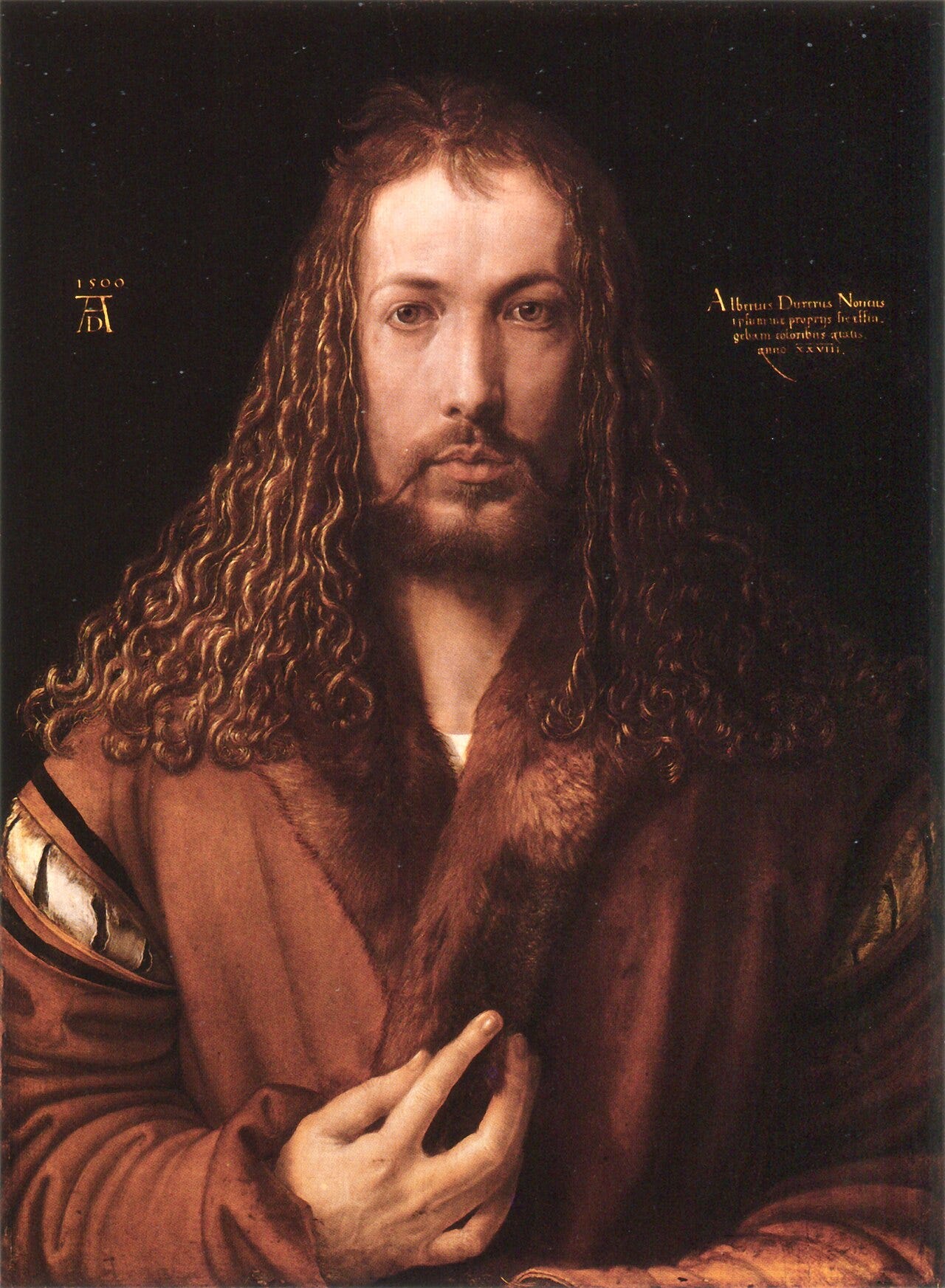
A serious young man with long curling hair stares straight out at us, his face perfectly symmetrical, his hand raised almost in blessing, painted exactly like a picture of Christ.
Durer, the greatest artist of the German Renaissance, showed himself at twenty eight in a deliberately holy, godlike pose, a startling claim about the divine gift of the artist.
No painter had ever put himself forward with such open confidence. He signed it with his famous monogram and the date, 1500, a new century for a new kind of artist.
It hangs in Munich, and Durer guarded that monogram so fiercely that he took a rival to court for copying it.
9. Piero della Francesca, Portrait of Federico da Montefeltro (about 1474)
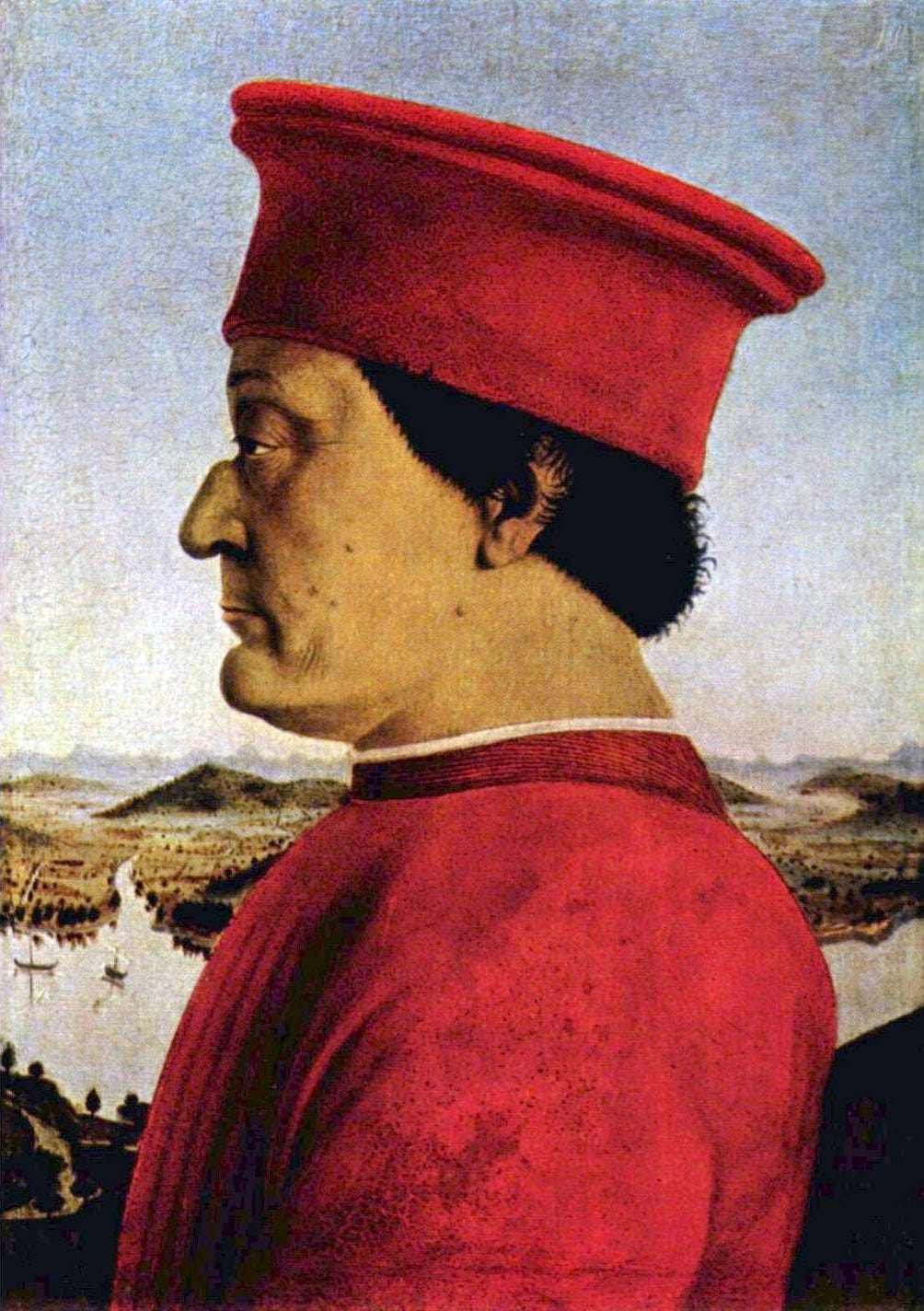
A powerful duke is shown in stern profile against a wide, hazy landscape, his hooked nose and one eye turned deliberately to his good side.
Piero della Francesca painted the ruler of Urbino with cool, geometric calm, a man who had lost an eye and the bridge of his nose in a tournament.
By showing only his left profile, the portrait hides the wound and turns a scarred soldier into a timeless icon of power. Piero was as much a mathematician as a painter, and spent his last years writing books on geometry rather than painting.
The double portrait of the duke and his wife now hangs in the Uffizi, a scarred warlord made perfect forever.
10. Masaccio, The Holy Trinity (about 1427)
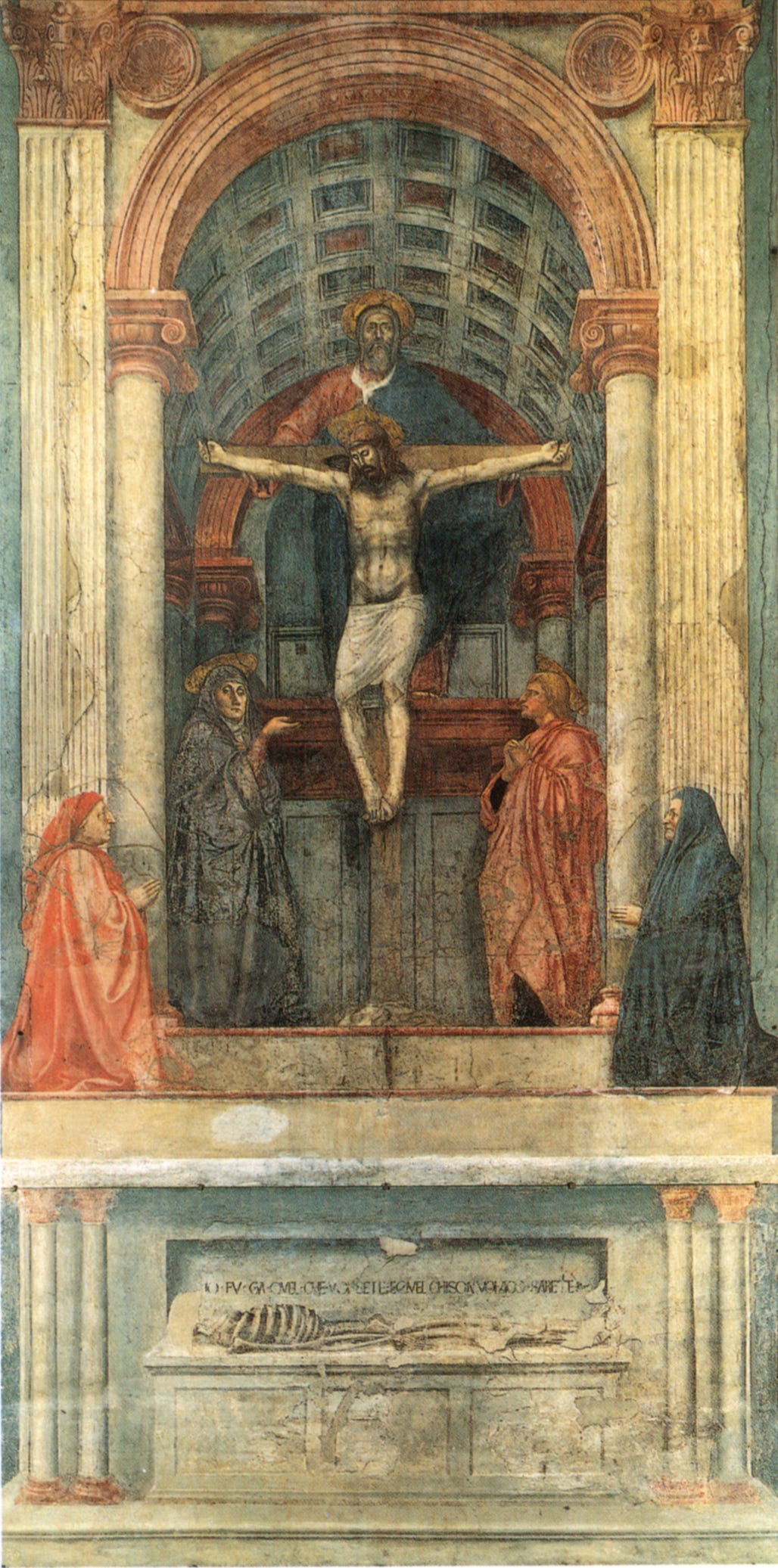
When people first saw this fresco in a Florence church, they said it looked as if a real chapel had been knocked straight through the solid wall.
Masaccio, a young painter dead by twenty seven, used the brand new science of perspective to build a painted space so convincing it fooled the eye completely.
Below the holy figures, a painted skeleton in a tomb bears a chilling inscription, I was once what you are, and what I am you will become. He made ordinary people look heavy, real and standing on solid ground for the first time in a thousand years.
In 1570 the fresco was hidden behind a stone altar, and was only uncovered again three centuries later.
11. Giorgione, The Tempest (about 1508)
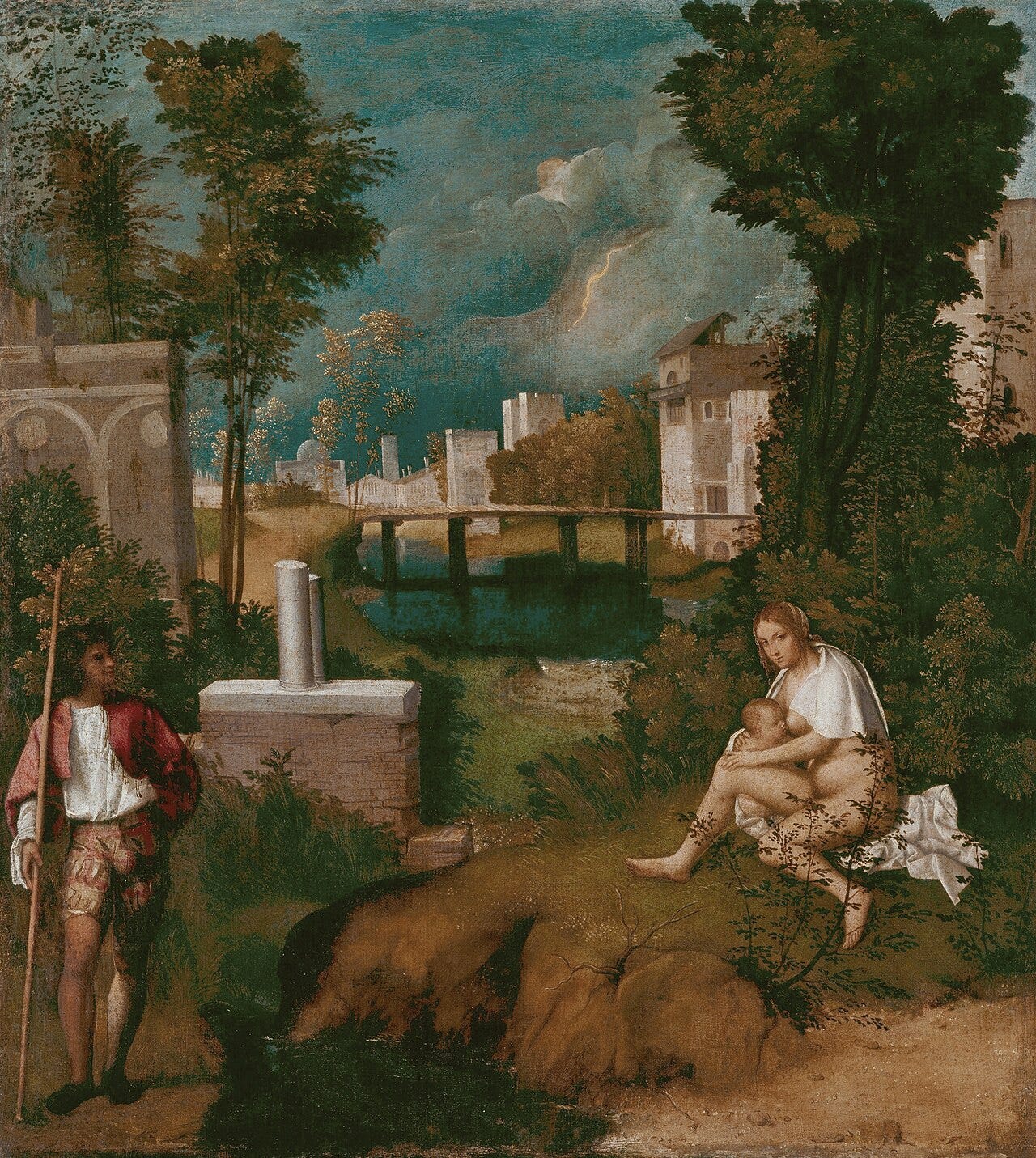
A soldier and a half naked nursing mother sit apart in a strange landscape while a bolt of lightning splits the stormy sky behind them, and nobody has ever agreed what it means.
Giorgione, a mysterious Venetian who died young of the plague, painted one of the first pictures where the mood and the landscape matter more than the story.
There is no clear subject, no myth or saint anyone can name, just a charged, dreamlike air before a storm. An X ray showed that he even painted over another figure, changing his mind as he went.
It has hung in the Accademia in Venice since 1932, its meaning still unsolved.
12. Hans Holbein the Younger, The Ambassadors (1533)
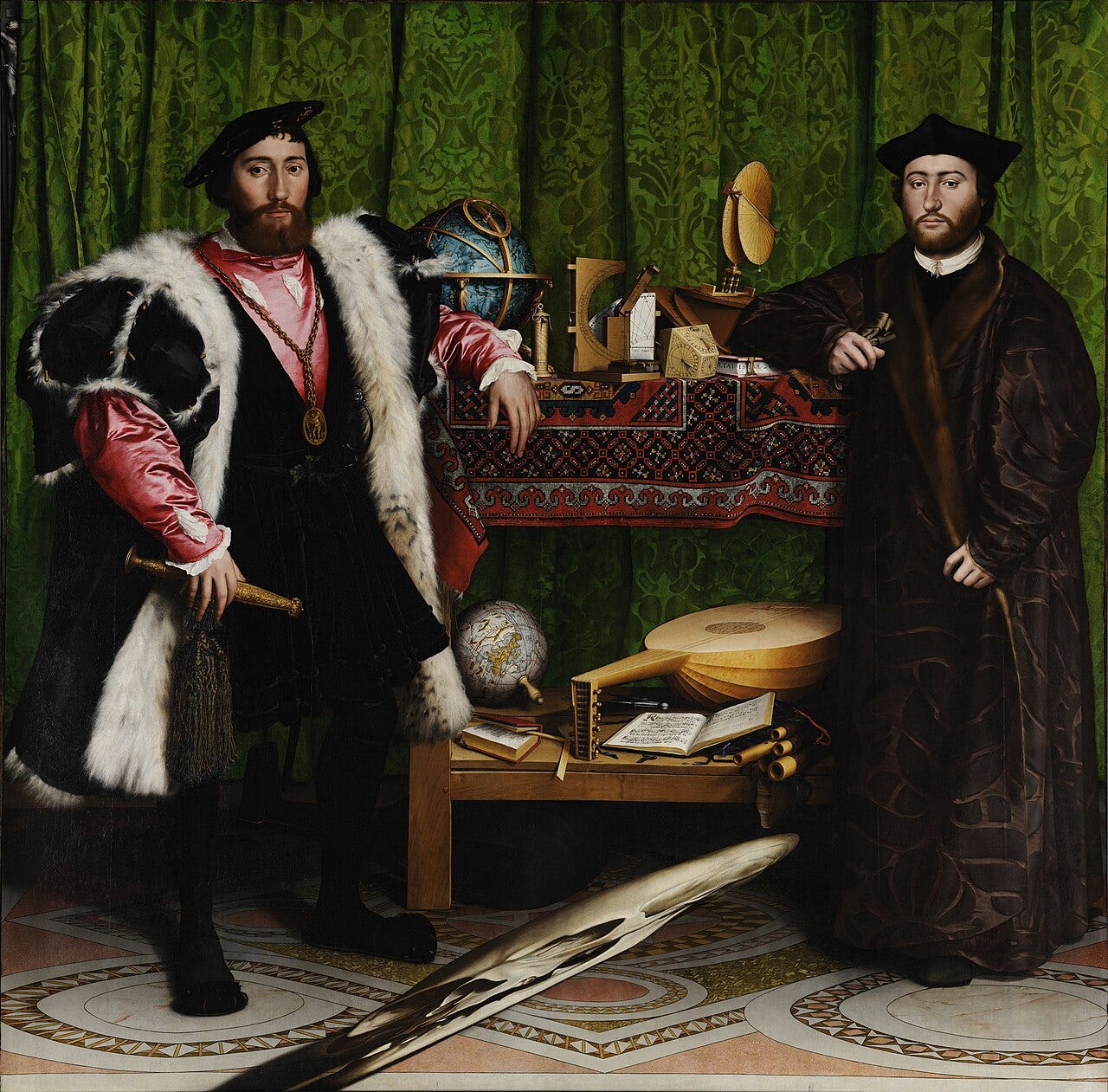
Two wealthy young men stand on either side of a shelf loaded with globes, books and instruments of learning, at the very peak of Renaissance knowledge and pride.
But stretched across the floor is a strange, smeared shape, and only when you walk past at a sharp angle does it snap into focus, a human skull.
Holbein hid this warning about death, a trick called anamorphosis, right at the feet of two men who seemed to have everything.
Every object in the picture carries a hidden meaning, from a broken lute string to a half hidden crucifix in the corner. The skull only snaps into focus from one spot at the right of the picture, exactly where a visitor would stand as they left the room.
Renaissance art, questions people ask
What is Renaissance art? Art of roughly the fourteen and fifteen hundreds that revived the ideals of ancient Greece and Rome, with realistic figures, perspective and human emotion.
Who are the most famous Renaissance painters? Leonardo da Vinci, Michelangelo, Raphael, Botticelli and Titian in Italy, and van Eyck, Durer and Holbein in the north.
What made the Renaissance new? The rediscovery of perspective, the study of anatomy and light, and a new focus on the individual and the real world.
What is the most famous Renaissance painting? Leonardo's Mona Lisa, followed by his Last Supper and Michelangelo's Sistine Chapel ceiling.
How do the Italian and Northern Renaissance differ? Italy chased grand ideal forms and ancient myth; the north chased sharp realistic detail and the new power of oil paint.
If these paintings pulled you in, you will love these too:
Twelve famous portraits and the real people, the faces behind the paintings
Lady with an Ermine, detail by detail, why she is holding that animal
Luncheon of the Boating Party, detail by detail, who everybody at that table actually was
The rebirth that never ended
In two centuries these painters solved problems that had stumped artists for a thousand years, how to show real space, real light, real human feeling.
They turned Bible stories and old myths into scenes you could believe were happening in front of you. Every painting since, in some way, still lives in the world they built.
The Renaissance was called a rebirth, and it is one that has never quite stopped happening.