
Famous Baroque Paintings: 12 Icons of Drama and Light
Baroque art turned up the volume on everything, drama, light, motion and emotion, until a painting grabbed you by the collar.
Born around 1600 as the Catholic Church fought the Reformation with spectacle, Baroque art used deep shadow, twisting bodies and theatrical light to make faith and power feel overwhelming.
Here are twelve of the most famous Baroque paintings, all now in the public domain. I have gathered the works that turned a wall into a stage and a saint into a movie star.
For the full story, not the summary
If you like knowing what is actually going on inside a picture, start with these three:
The darker truth about Gauguin, the part of the Tahiti story that never makes the wall label
Vermeer, Woman Holding a Balance, what is actually on those scales
Inside Monet house at Giverny, room by room, including his own bedroom
1. Caravaggio, The Calling of Saint Matthew (1600)
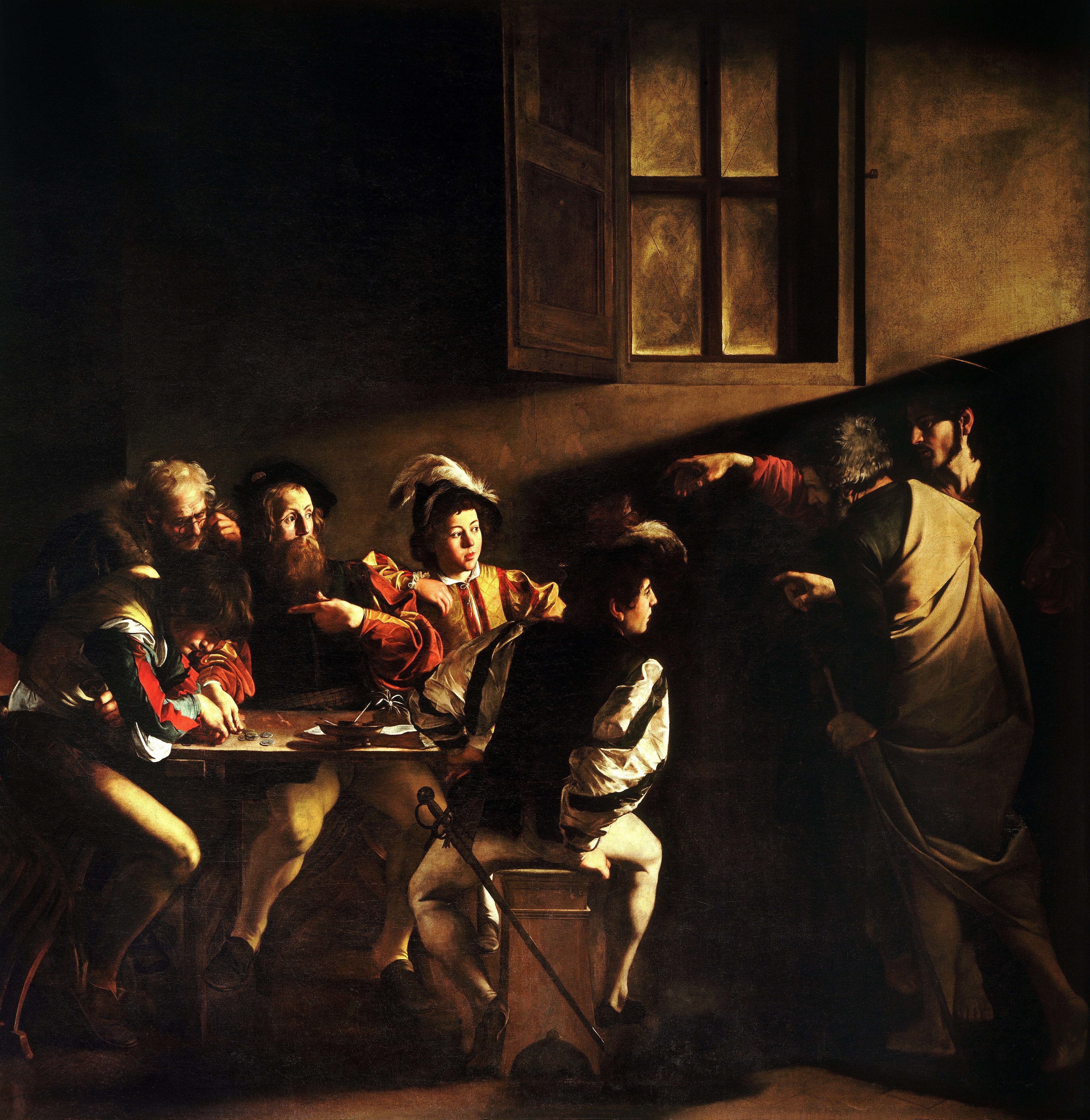
A shaft of light cuts across a dim tavern and lands on a tax collector who has just been called to follow Christ, and the whole of Baroque painting begins right here.
Caravaggio lit the scene like a spotlight in the dark, a style called tenebrism, dragging holy drama down into a grimy, real room. Matthew points at himself, as if to say, who, me, while Jesus reaches out a hand borrowed straight from Michelangelo.
The men at the table wear the fashion of Caravaggio's own day, not ancient robes, and I unpack his hidden games in the full piece on the Caravaggio code The picture still hangs in the Roman chapel it was painted for, where crowds feed coins into a light box to make it glow.
2. Artemisia Gentileschi, Judith Slaying Holofernes (about 1620)
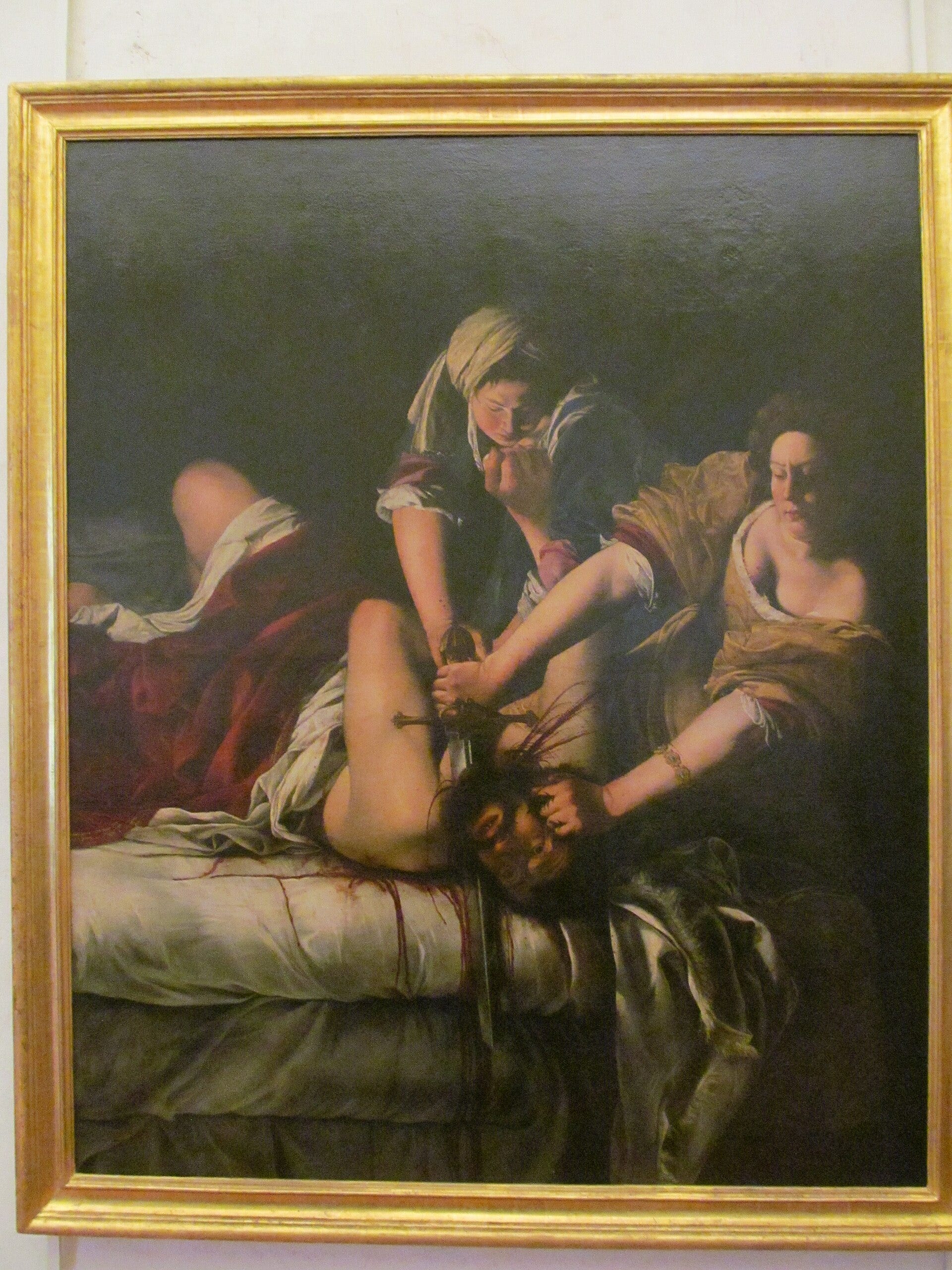
Two women pin a screaming general to a bed and saw through his neck with a sword, blood spraying across the sheets in the most violent painting of the age.
Artemisia Gentileschi, the greatest woman painter of the century, had herself been raped as a teenager and had put her attacker on trial.
Many read the fury of this Judith as her revenge in paint, though she painted the subject more than once as a proven crowd pleaser.
The two women work together with grim, practical force, their sleeves rolled up like laborers. The Uffizi keeps it today, made by the first woman ever admitted to Florence's academy of art.
3. Peter Paul Rubens, The Descent from the Cross (1614)
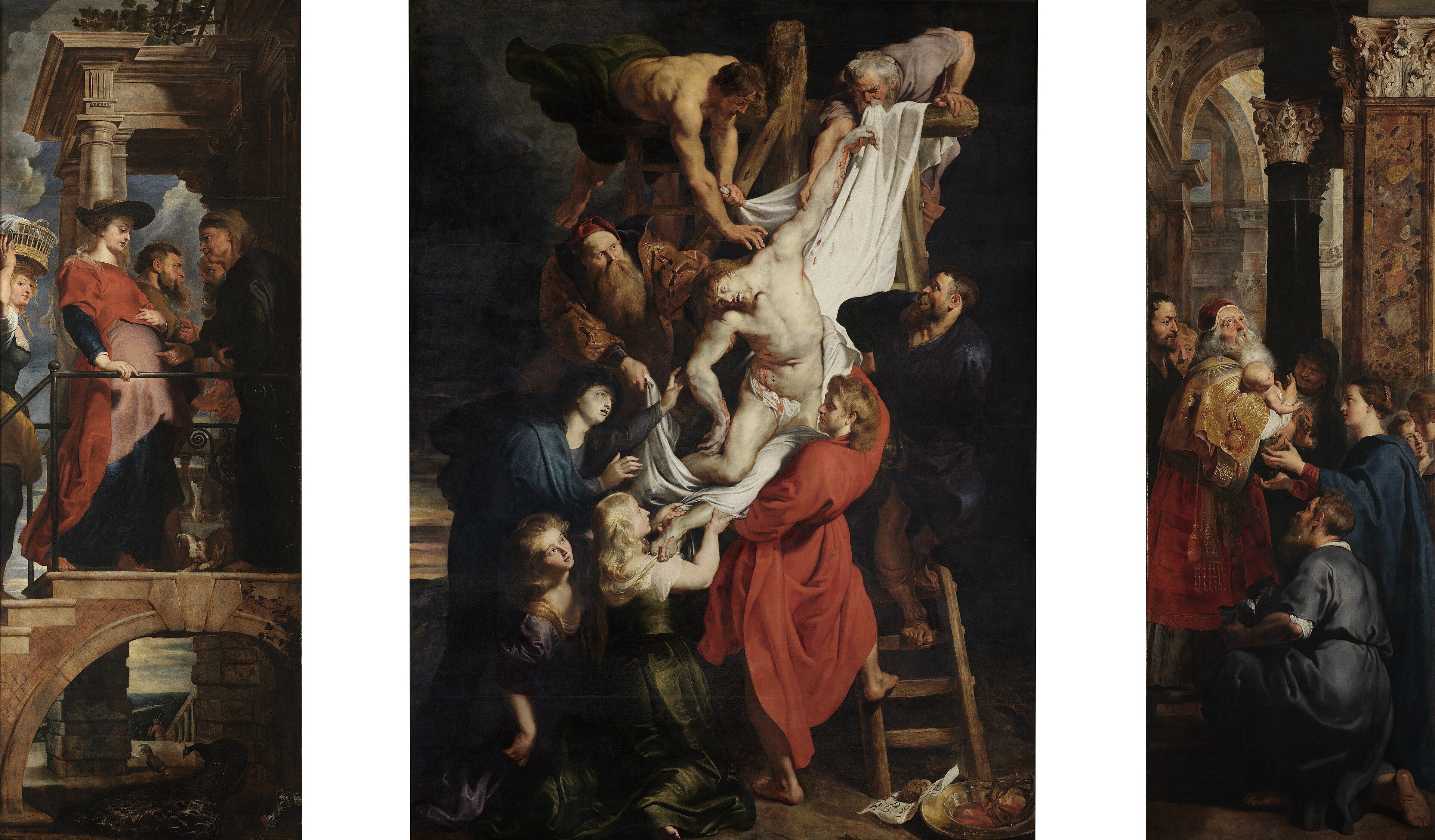
Rubens ran the biggest, busiest painting workshop in Europe, and this towering altarpiece shows why every king wanted him. Nine figures strain to lower the dead Christ from the cross on a diagonal sweep of pale flesh and blood red cloth, all muscle and motion and grief.
He had studied in Italy and carried its drama north to Antwerp, mixing Italian power with Flemish detail. Look closely and the body of Christ seems to slide right out of the frame toward you.
Rubens was a diplomat and a knight as well as a painter, and he built a palace on his fees.
4. Diego Velazquez, Las Meninas (1656)
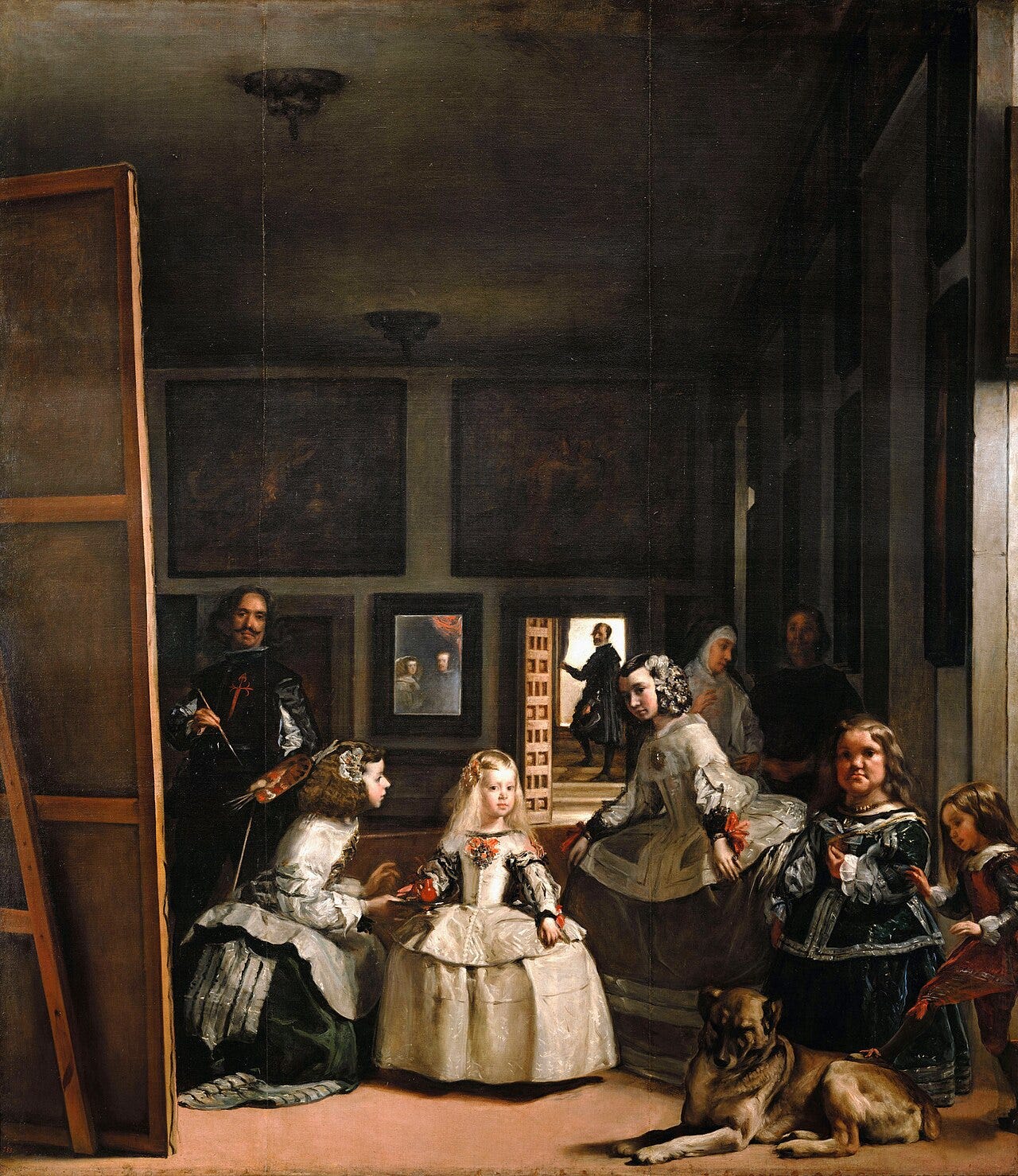
Velazquez painted himself at a giant canvas, staring out at us, while a little princess and her maids freeze in a shaft of palace light, and to this day nobody agrees what is really happening.
The king and queen appear only as a blurred reflection in a mirror at the back, so we seem to stand exactly where they stand. Is the painter painting us, or them?
The picture folds the viewer into the scene like nothing before it, and the Prado guards it as the pride of Spain. Picasso grew so obsessed he made fifty eight versions of it, still trying to work out how it holds together.
5. Rembrandt, The Return of the Prodigal Son (about 1668)
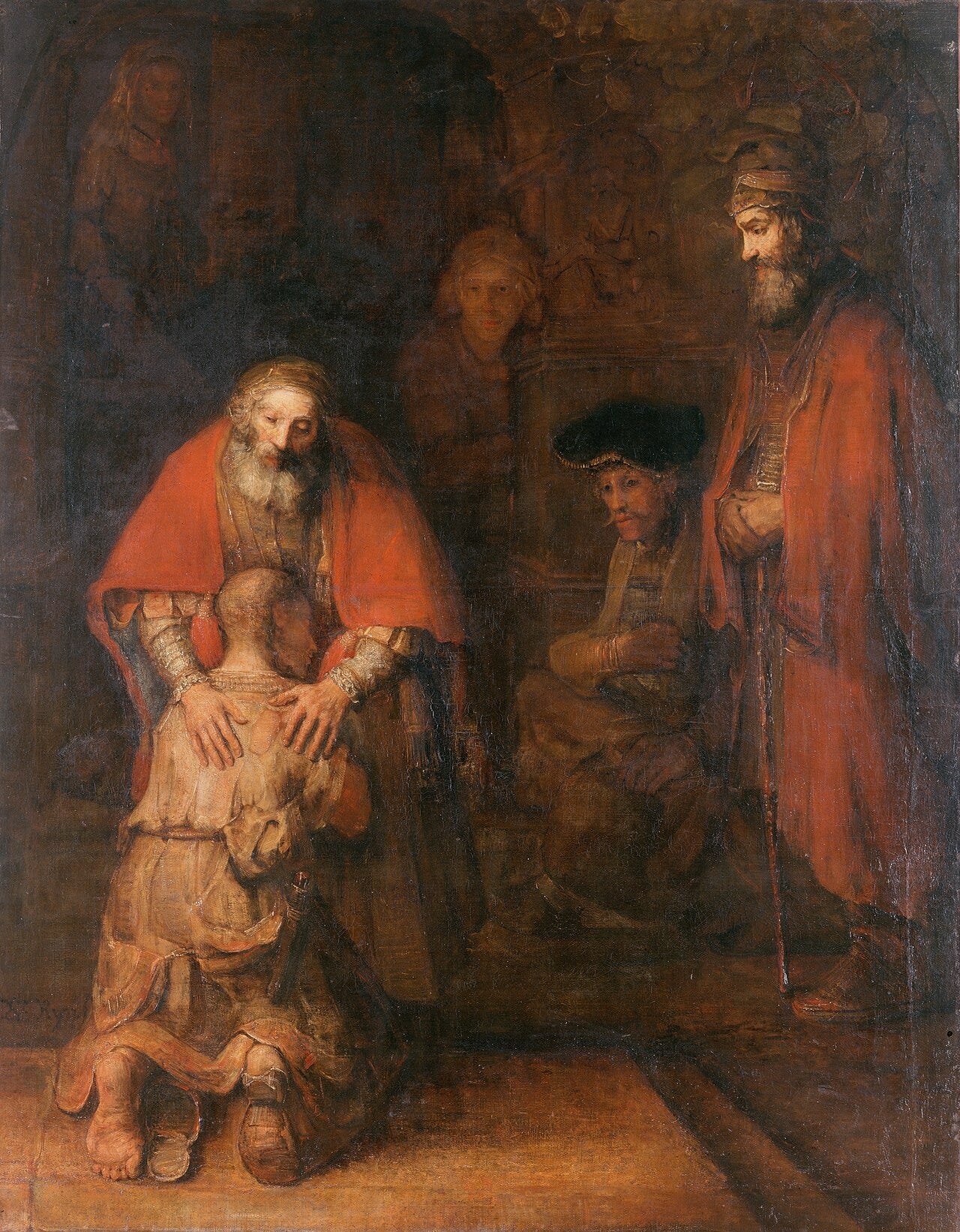
An old, nearly blind Rembrandt painted this scene of forgiveness at the very end of his ruined life, and it may be the most tender picture in all of art.
The ragged son kneels and buries his face in his father's chest, one shoe fallen off, while the father lays two worn hands on his back to welcome him home.
Most of the huge canvas is deep brown shadow, with the light pooling only on the two faces and those hands. The picture now hangs in the Hermitage in Saint Petersburg, painted by a man who had lost his wealth, his wife and most of his children, and who died soon after in an unmarked grave.
6. Nicolas Poussin, Et in Arcadia Ego (about 1638)
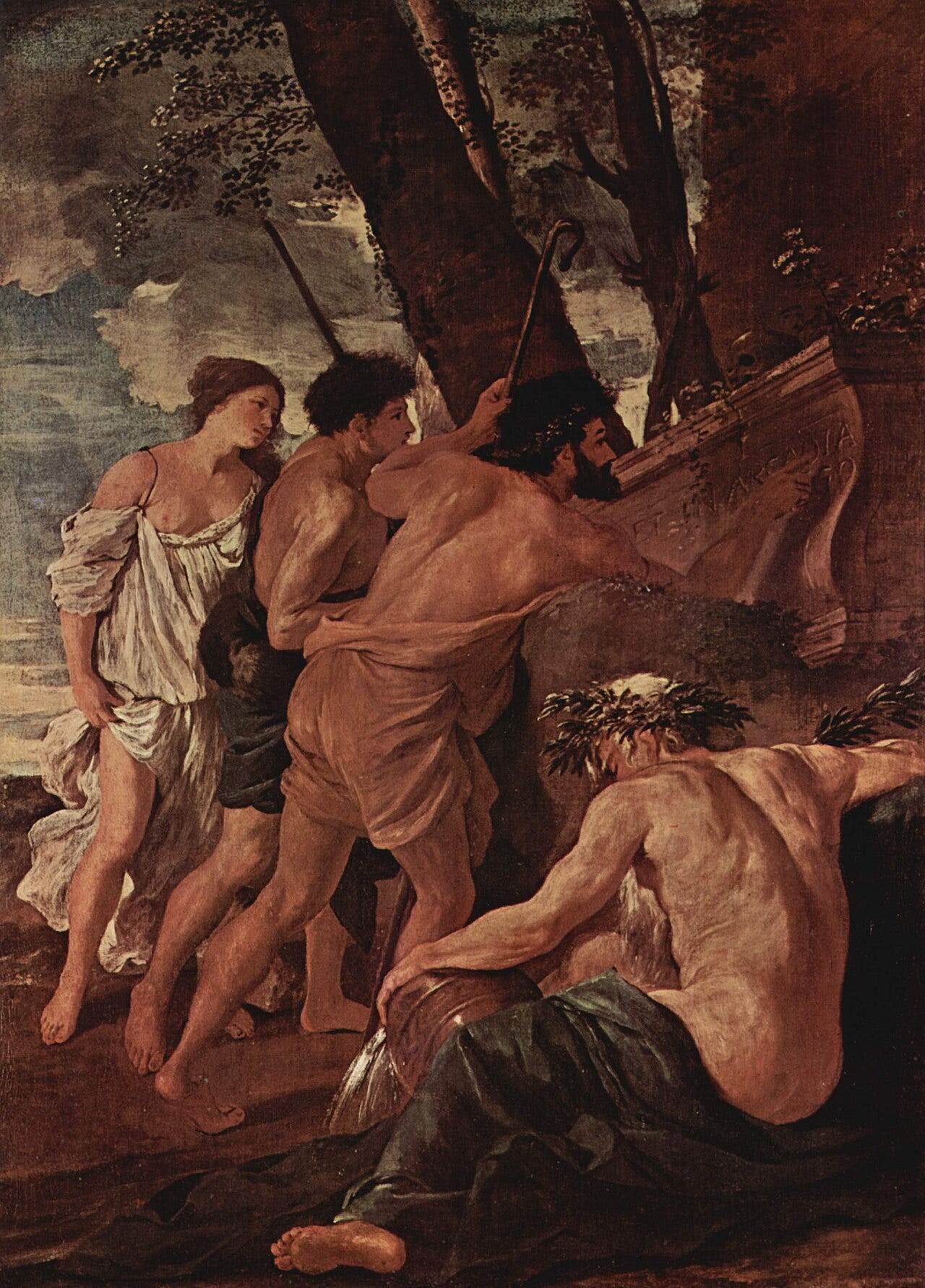
Three shepherds and a woman gather around a stone tomb in a sunny idyll, puzzling over the carved words, even in Arcadia, I am here. The speaker is death, reminding even the happiest people in paradise that it waits for them too.
Poussin, a Frenchman who spent his life in Rome, painted calm, ordered, deeply thoughtful pictures, the opposite of Caravaggio's raw shock. He believed a painting should be read slowly, like a poem, every gesture and glance carrying meaning.
This quiet meditation on death later became a favorite puzzle for scholars and conspiracy theorists alike.
7. Anthony van Dyck, Charles I at the Hunt (about 1635)
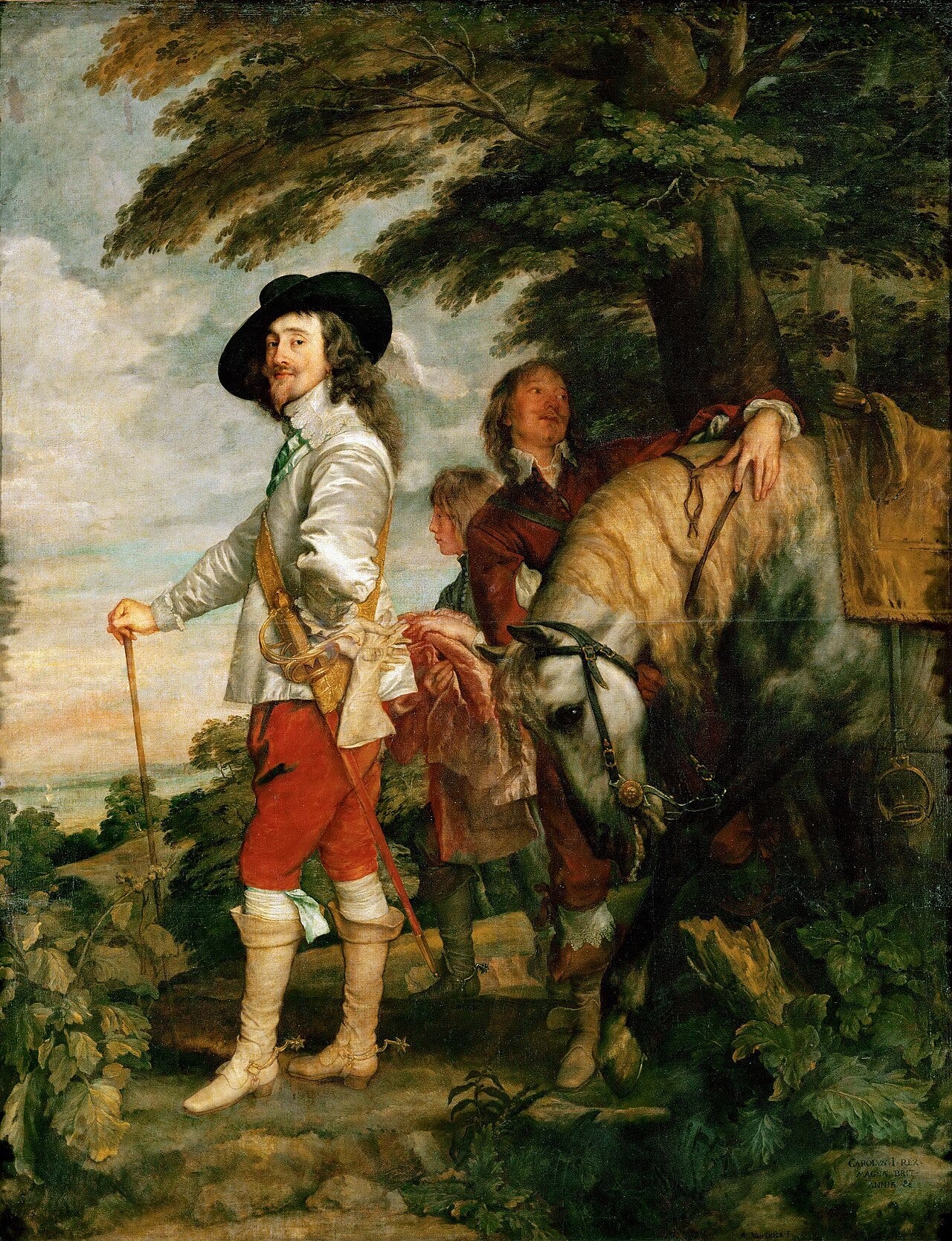
No one ever made a king look more effortlessly noble than van Dyck made Charles the First of England. Here the king stands in a field in casual riding clothes, one hand on a cane, gazing down at us as if he owns the ground and the sky both.
Van Dyck, a star pupil of Rubens, became the English court painter and invented the relaxed, elegant royal portrait that shaped British art for two centuries.
He flattered a short, awkward man into an image of easy grace. Within a decade Charles would lose a civil war and his head, and van Dyck himself was dead by 1641, spared the sight of the king he had glorified losing his own.
8. Guido Reni, Aurora (1614)
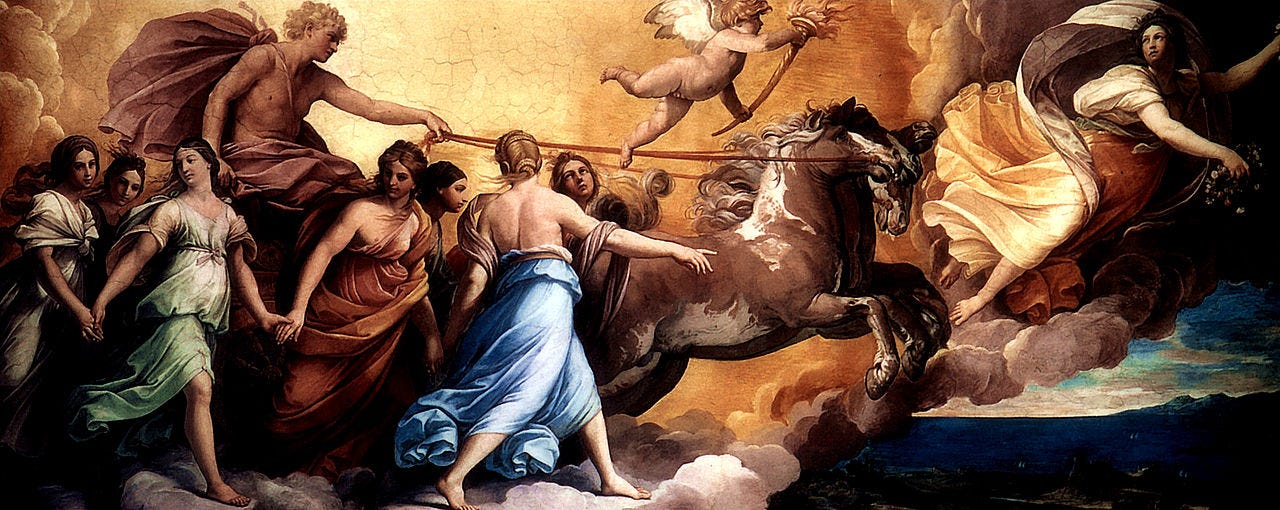
On the ceiling of a Roman garden house, the goddess of dawn flies ahead of the sun god's chariot, scattering flowers across a golden morning sky.
Guido Reni painted the fresco to be seen from below, so the horses and figures seem to gallop across the heavens above your head.
It is calm, graceful and radiant, the classical side of the Baroque rather than the shadowy side. For two hundred years travelers on the Grand Tour rated it among the greatest paintings in Rome.
Reni was so famous in his day that he earned more than almost any painter alive, then gambled the whole fortune away.
9. Georges de La Tour, The Fortune Teller (about 1630)
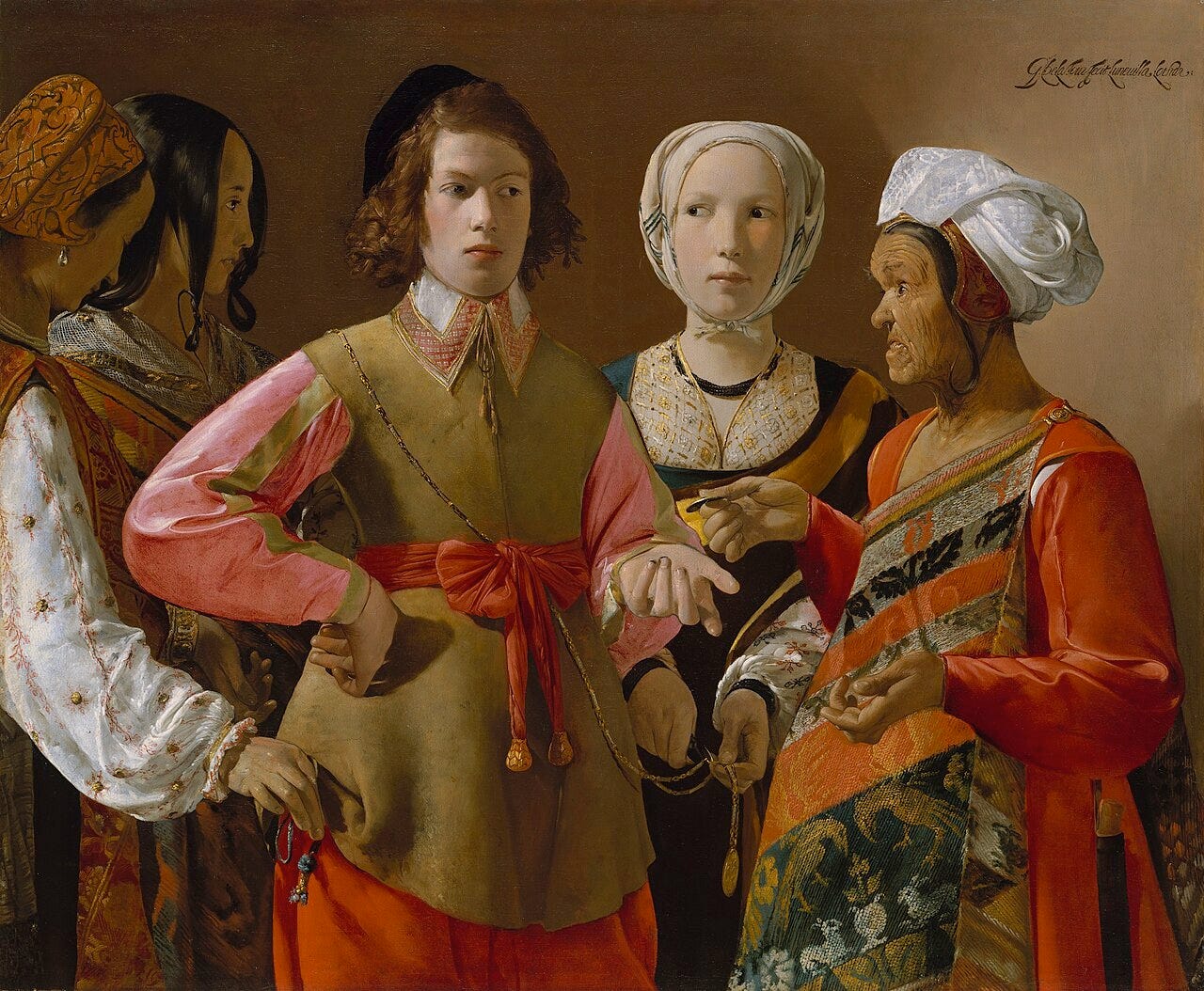
A rich young man has his palm read by an old woman while, all around him, her accomplices quietly pick his pockets and cut his gold chain. La Tour catches the exact instant of the con, every eye sliding sideways, every hand busy.
This scene is bright and sharp, painted with a dry wit and cool chiaroscuro, far from his hushed candlelit saints. The boy is so lost in the old woman's patter he notices nothing.
It is a four hundred year old warning that still lands: watch your wallet when a stranger flatters you.
10. Jusepe de Ribera, The Clubfoot (1642)
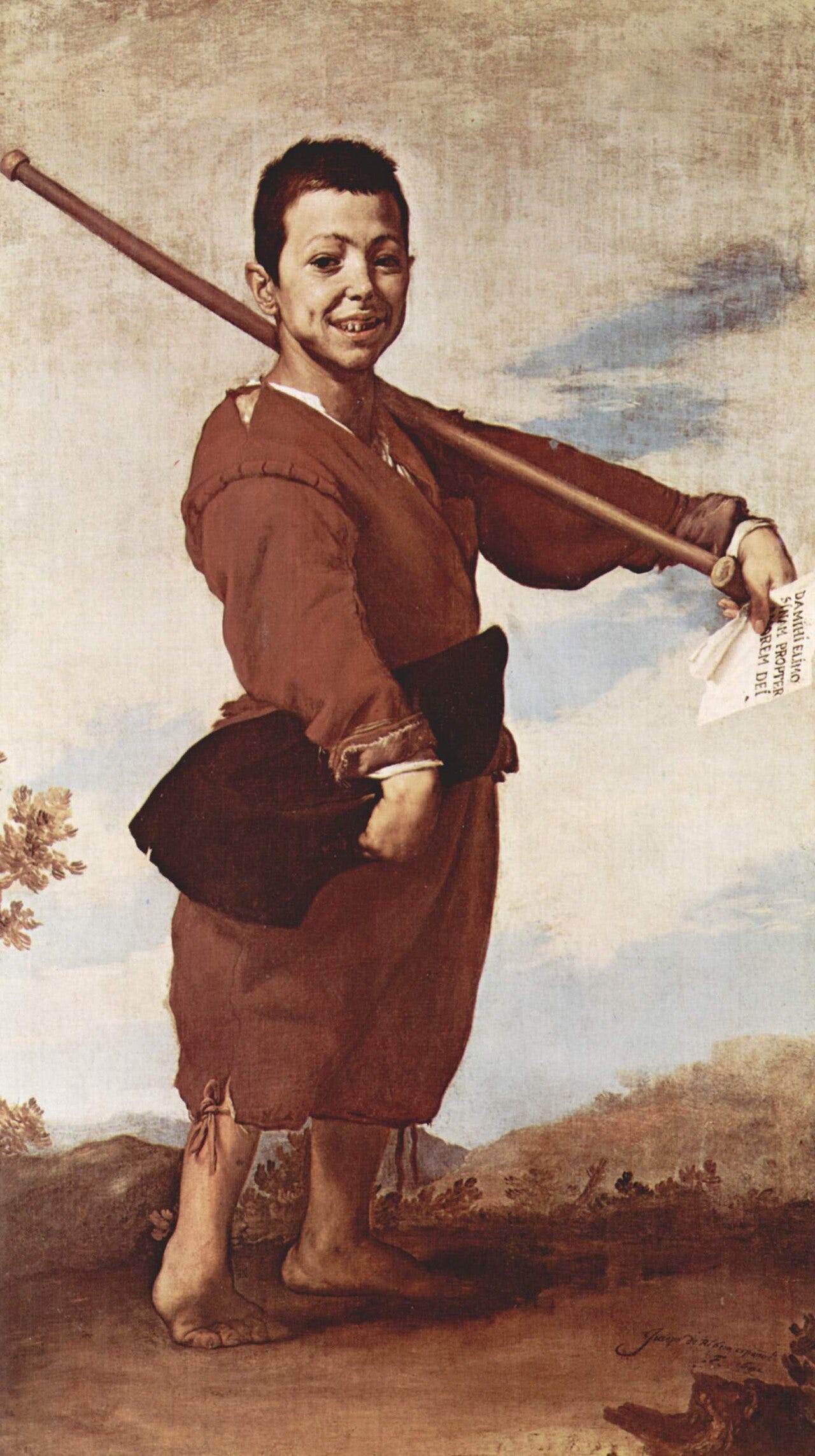
A poor boy with a twisted foot grins straight at us, his crutch over his shoulder, holding a scrap of paper that begs for charity in the name of God.
Ribera, a Spaniard working in Naples, painted the beggar life size and full length, a treatment normally saved for kings and saints. He gives the boy dignity and cheer instead of pity, lit against a wide, plain sky.
In an age that hid the poor, painting a disabled beggar like a nobleman was a quiet shock. The Latin words on his paper ask for alms, a sly joke, since the boy himself could never have read them.
11. Bartolome Esteban Murillo, The Immaculate Conception (about 1678)
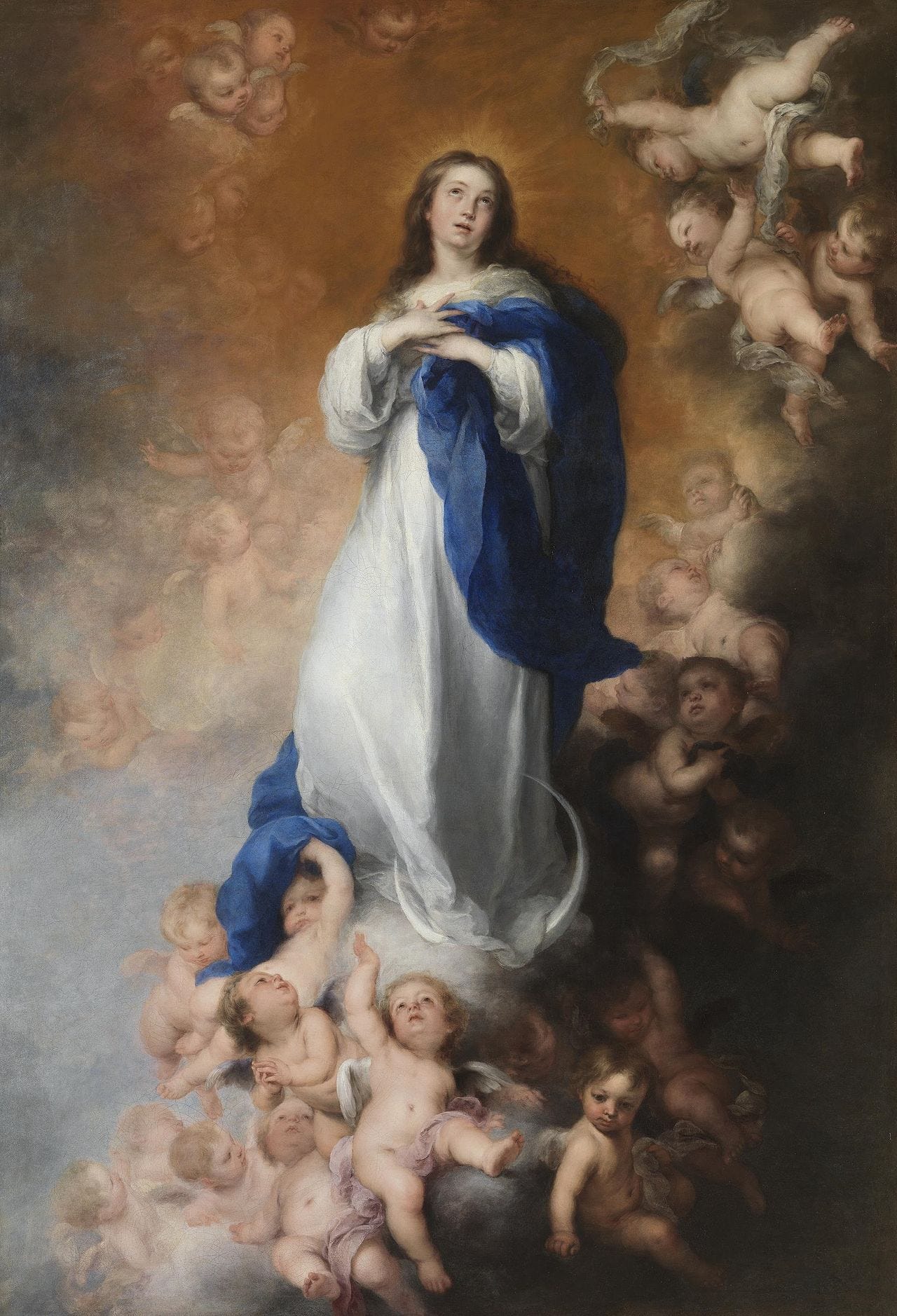
The Virgin Mary floats up to heaven on a bank of cloud, ringed by tumbling baby angels, her eyes raised and hands pressed together in soft ecstasy.
Murillo, the great painter of Catholic Seville, made dozens of these sweet, glowing visions, and they became the model for holy pictures for centuries after.
His Madonnas are gentle and warm where Caravaggio's saints are gritty, aimed straight at the heart of ordinary worshippers. Napoleon's troops looted this very one and carried it to Paris.
Spain won it back only in 1941, in a straight swap for an archive of old documents.
12. Andrea Pozzo, The Apotheosis of Saint Ignatius (1694)
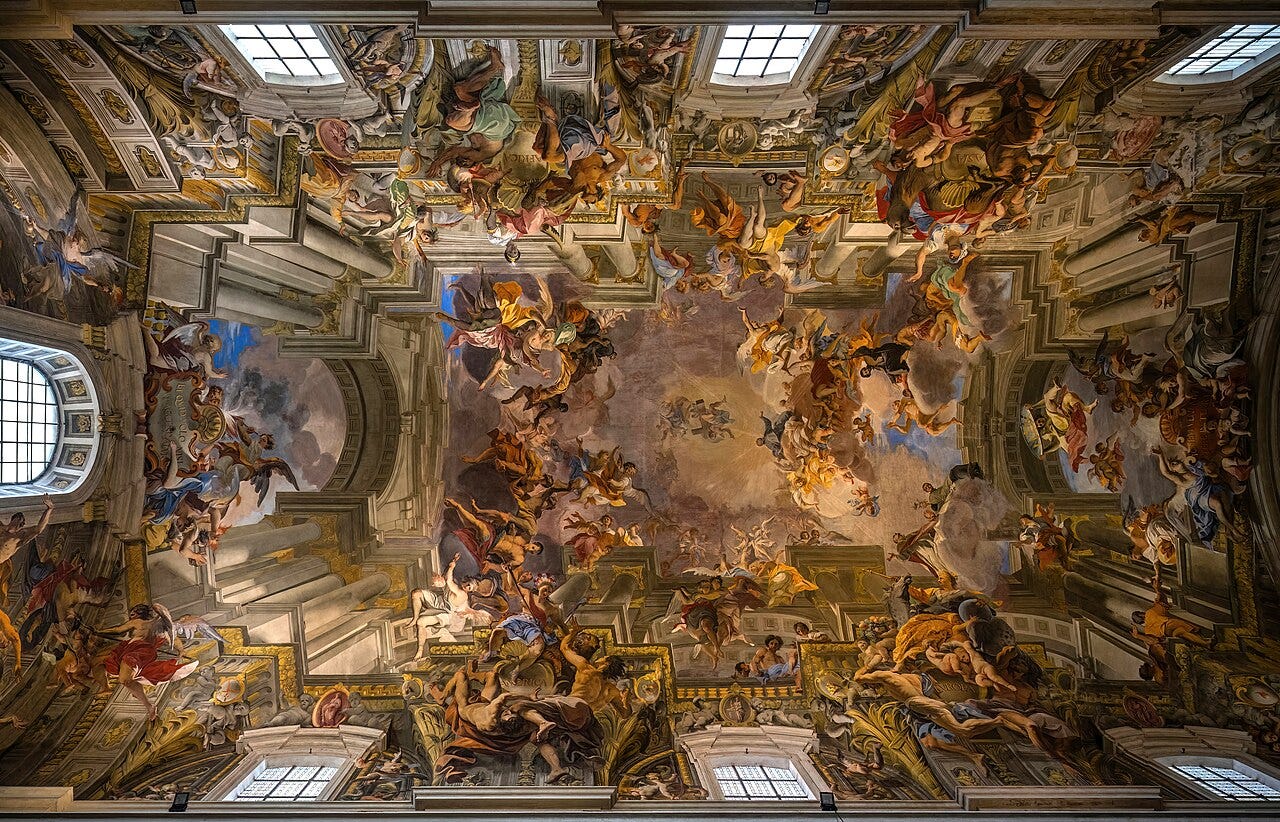
Look up in a certain Roman church and the ceiling seems to dissolve, the roof opening onto an infinite golden sky full of saints soaring up to heaven.
Andrea Pozzo, a Jesuit priest and master of illusion, painted the flat ceiling to look as if it rises hundreds of feet, a trick called quadratura A marble disc set into the floor marks the one exact spot where the illusion works perfectly, and step aside and the whole architecture warps and buckles.
It is the Baroque dream taken as far as paint can go, heaven punched straight through the roof. Three hundred years on, tourists still lie on the floor to photograph it.
Baroque painting, common questions
What is Baroque art? A dramatic style of the sixteen and seventeen hundreds, full of deep shadow, hard light, movement and intense emotion, born partly to inspire Catholic faith.
Who are the most famous Baroque painters? Caravaggio, Rubens, Rembrandt, Velazquez and Poussin are the usual big five.
How is Baroque different from Renaissance art? Renaissance art is calm, balanced and still; Baroque art is dramatic, dynamic and full of motion and shadow.
What is chiaroscuro? The sharp contrast of light and dark that Baroque painters used to pull figures out of deep shadow.
Why is it called Baroque? The word once meant an odd, irregular pearl, and was first used as an insult for art that seemed overwrought.
If these dramatic paintings pulled you in, you will love these too:
The Ambassadors, detail by detail, the object at the bottom that only works from one side
Luncheon of the Boating Party, detail by detail, who everybody at that table actually was
Was Monet really the first Impressionist, the painting that may have got there first
The art that grabs you
Baroque painting was made to move you, to stop you in a church doorway with a jolt of light and feeling. It served popes and kings who wanted awe, but the awe still works on anyone, believer or not, who stands in front of it.
Strip away the religion and the royalty, and what is left is pure theater, the moment a painting reaches out and pulls you in. Four hundred years later, it still does.