
Famous Dance Paintings: 12 Icons of Movement and Joy
Dance is the one art that vanishes the instant it happens, which is exactly why painters have always tried to trap it.
From a peasant stamping in a village square to a ballerina frozen on one toe, artists have chased the impossible, a stillness that somehow moves. Here are twelve of the most famous paintings of dance, all now in the public domain.
I have gathered the works that caught the body in motion, in grand ballrooms, smoky cabarets and the quiet corner of a rehearsal studio.
Three deeper dives
The ones I would send you to next:
The darker truth about Gauguin, the part of the Tahiti story that never makes the wall label
Vermeer, Woman Holding a Balance, what is actually on those scales
Inside Monet house at Giverny, room by room, including his own bedroom
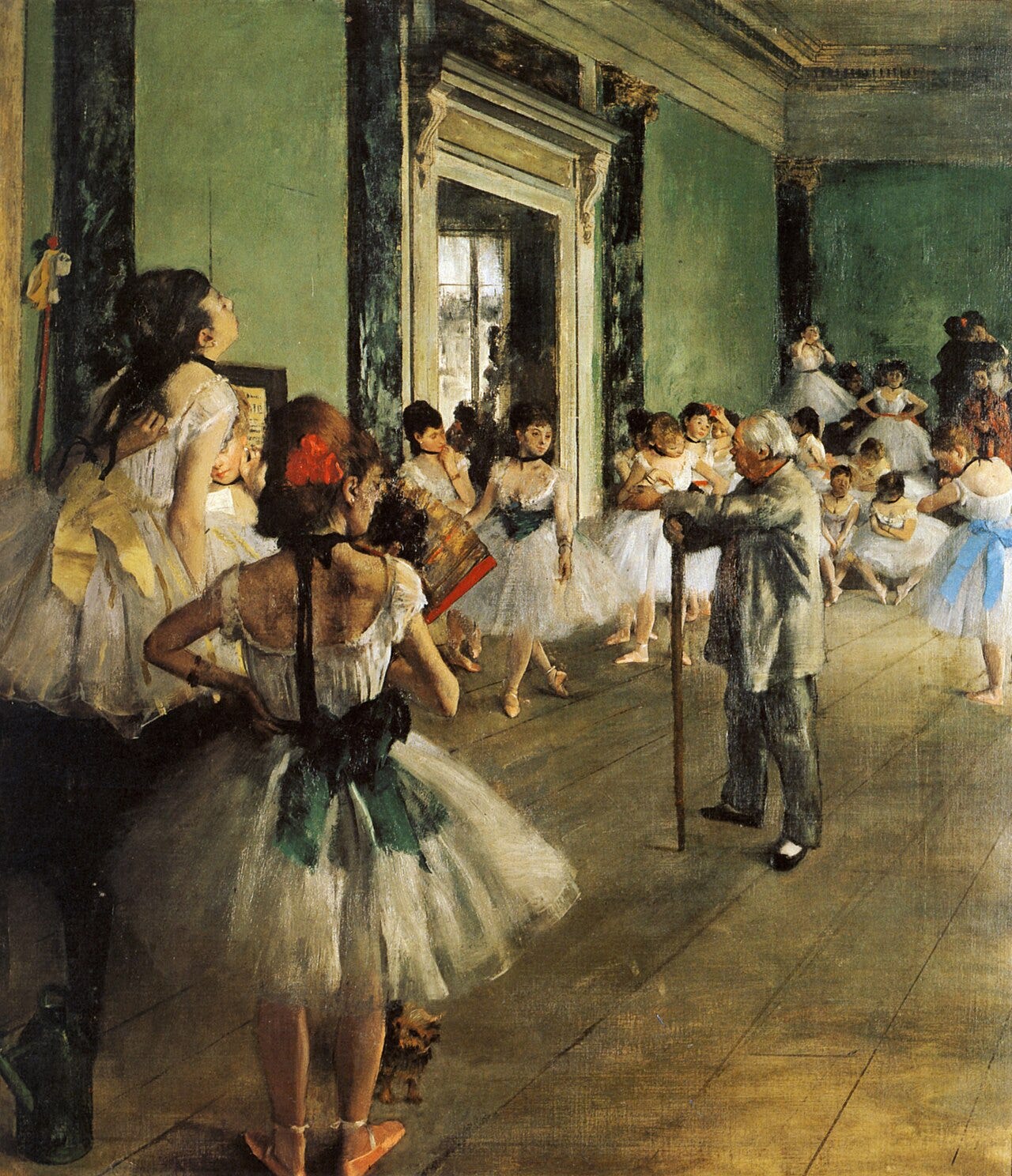
1. Edgar Degas, The Ballet Class (about 1874)
Young dancers wait, stretch, scratch and yawn in a rehearsal room while an old ballet master leans on his stick, and not one of them is actually dancing.
Degas painted the ballet more than any artist ever has, fascinated by the tired bodies and endless training hidden behind the glamour. He was a quiet, difficult man who haunted the wings and studios of the Paris Opera for years.
Here the light falls on tired girls in white tulle, adjusting a slipper, tugging an earring, waiting their turn. Many of the girls he painted were poor children, sent to the Opera to earn money their families badly needed.
2. Pierre Auguste Renoir, Dance at Bougival (1883)
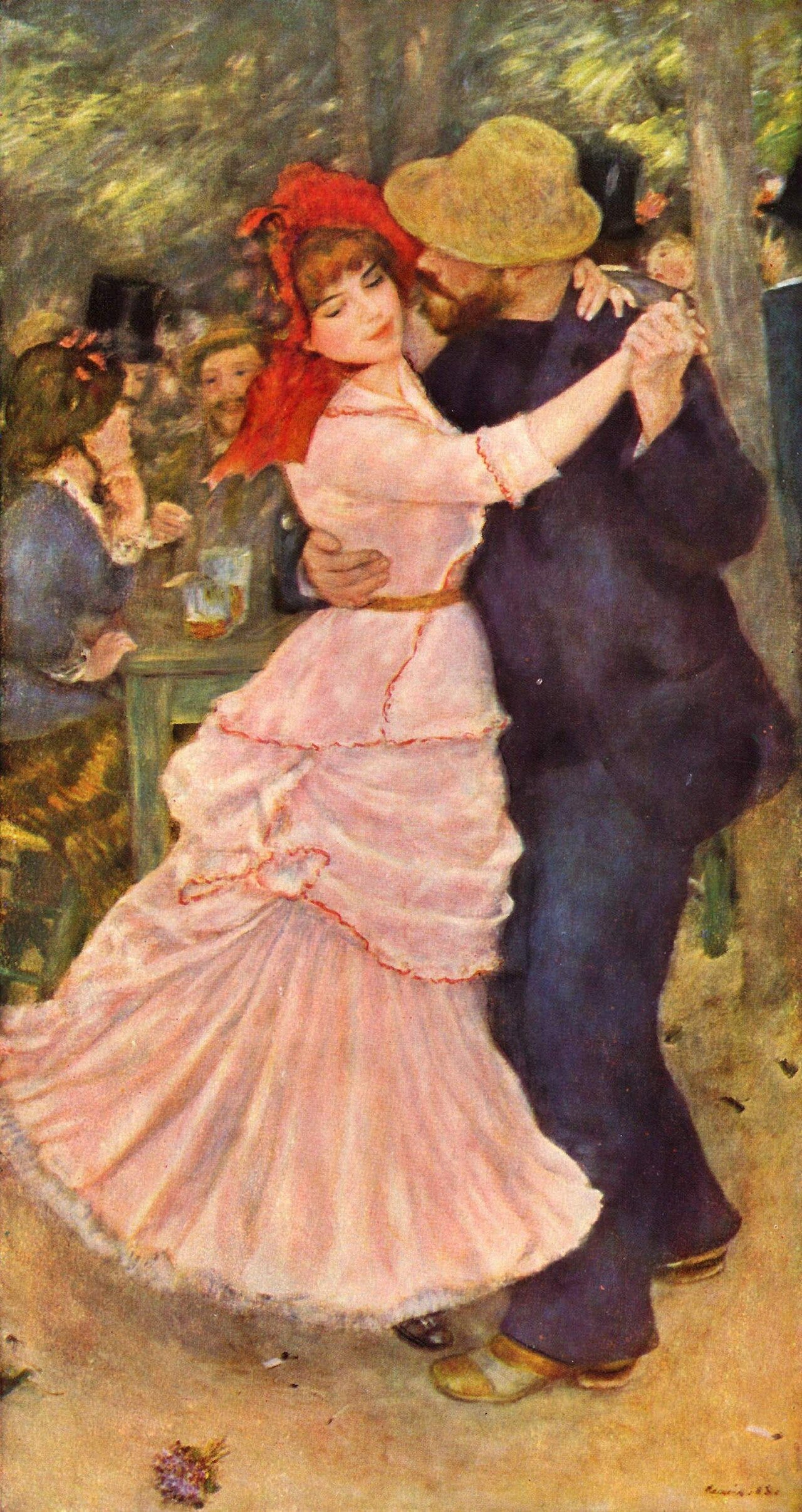
A young couple whirl in a riverside dance garden outside Paris, the woman in a red bonnet leaning into her partner, her whole body caught mid turn.
Renoir painted the pure joy of a Sunday afternoon, the crowd and the tables blurred into warm, dappled light behind them.
This was Impressionism at its happiest, ordinary people dancing, drinking and flirting in the sun. The woman is Suzanne Valadon, then an artist's model, who taught herself to paint and became one of the most admired women artists of the next generation.
It hangs today in the Museum of Fine Arts in Boston, still one of the happiest pictures the Impressionists ever made.
3. Nicolas Poussin, A Dance to the Music of Time (about 1636)
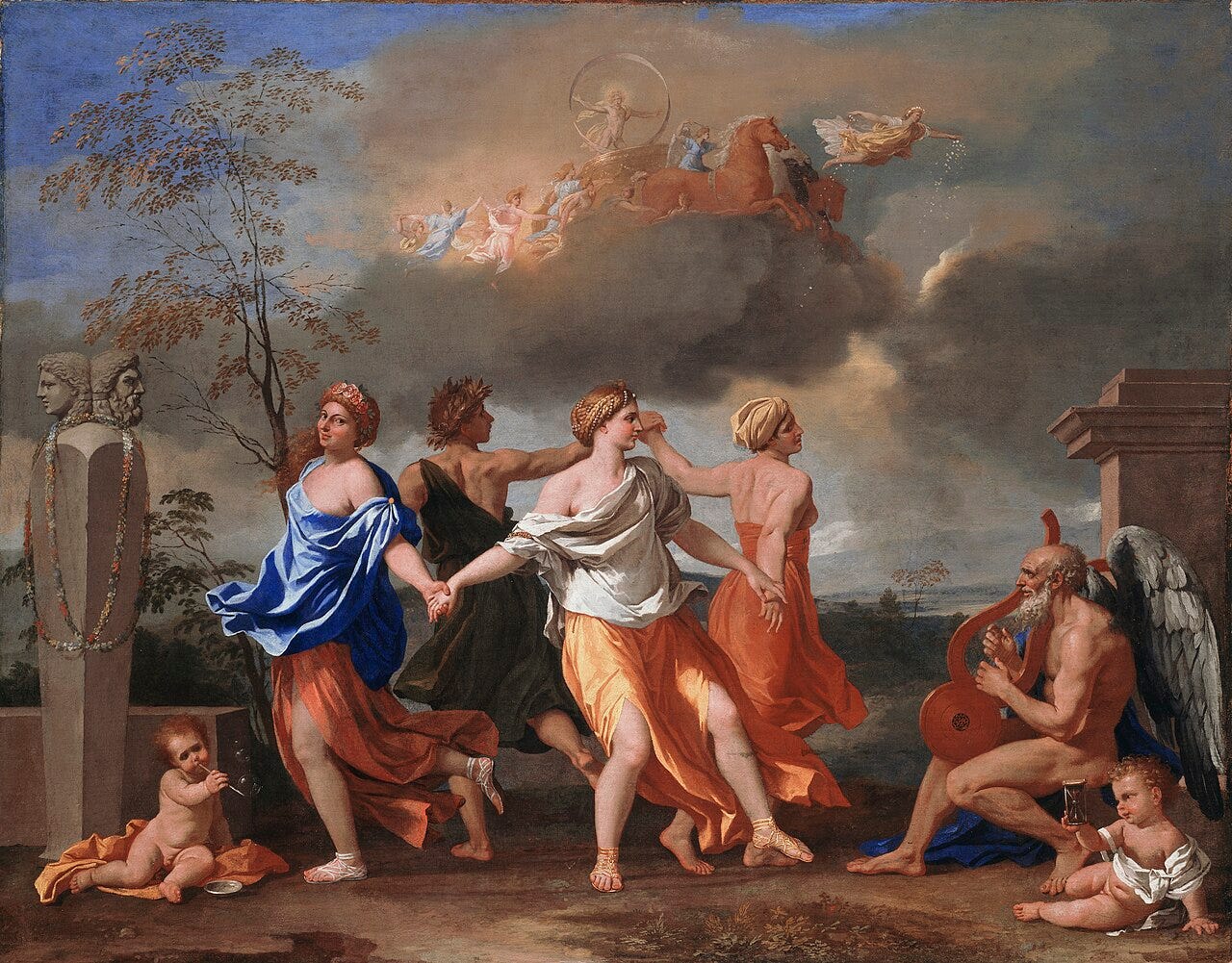
Four figures hold hands and dance in a slow circle while an old winged man plays a harp, and each dancer stands for a stage of human fortune, poverty, labor, riches and pleasure.
Poussin turned dance into deep philosophy, a picture about the endless turning wheel of life. Overhead the sun god drives his chariot across the sky, marking the very passage of time the dancers move to.
It is calm, ordered and full of hidden meaning, made for a learned Roman churchman who would one day become pope. The novelist Anthony Powell borrowed its title for a twelve volume novel cycle about the dance of English life.
4. Pieter Bruegel the Elder, The Peasant Dance (about 1567)
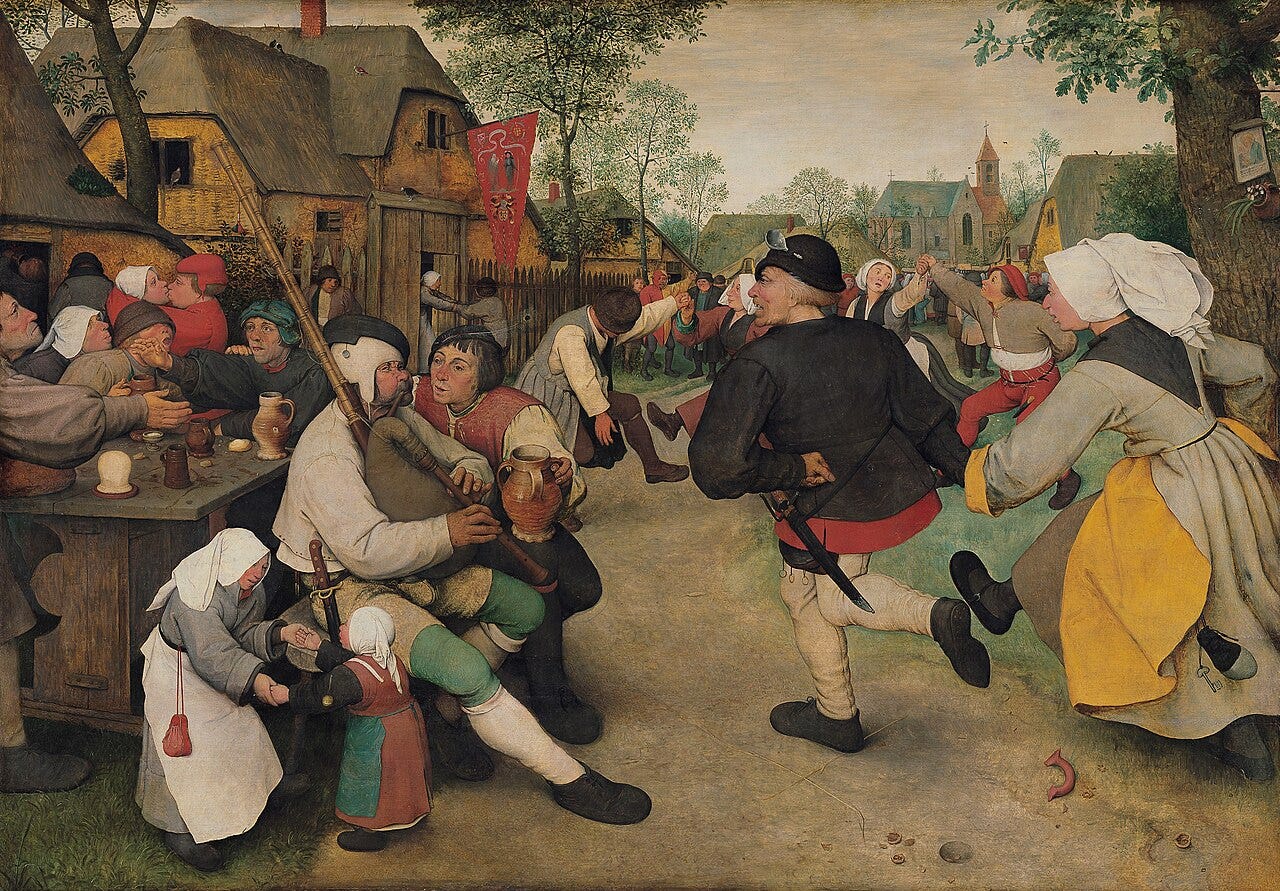
Villagers stamp and swirl at an outdoor festival, a bagpiper puffing away, a couple rushing in to join, everyone red faced with drink and heat.
Bruegel painted ordinary peasants with a mix of affection and sly moral warning, their dance tipping toward gluttony and lust.
Look closely and you see brawling, kissing and a church in the background that no one is looking at. The dance is joyous and slightly out of control, closer to a brawl than a ballet.
Bruegel made the humble peasant the hero of a grand painting a full century before anyone else dared.
5. Henri Matisse, Dance (1910)
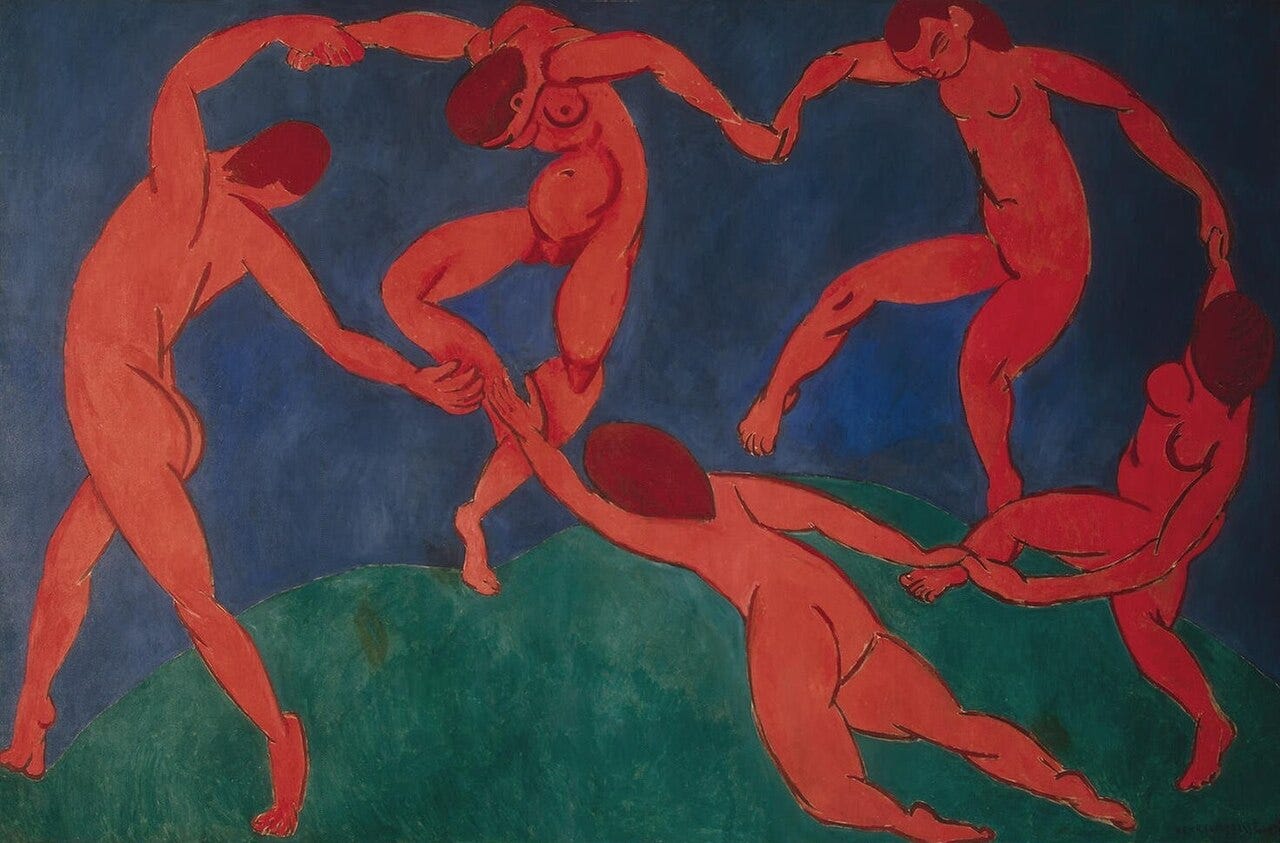
Five naked figures join hands and whirl in a ring against nothing but a band of blue sky and green earth, painted in flat, burning color Matisse stripped dance down to its raw essence, pure movement, three colors and the wild energy of bodies in a circle.
When he showed it, critics called it crude and childish, a scandal of red bodies and empty space. He said he had watched fishermen dance a wild round on a beach and wanted to catch that same abandon.
A Russian textile millionaire, Sergei Shchukin, commissioned it for the staircase of his Moscow mansion, where it shocked and thrilled the whole city.
6. Edgar Degas, The Rehearsal of the Ballet on Stage (about 1874)
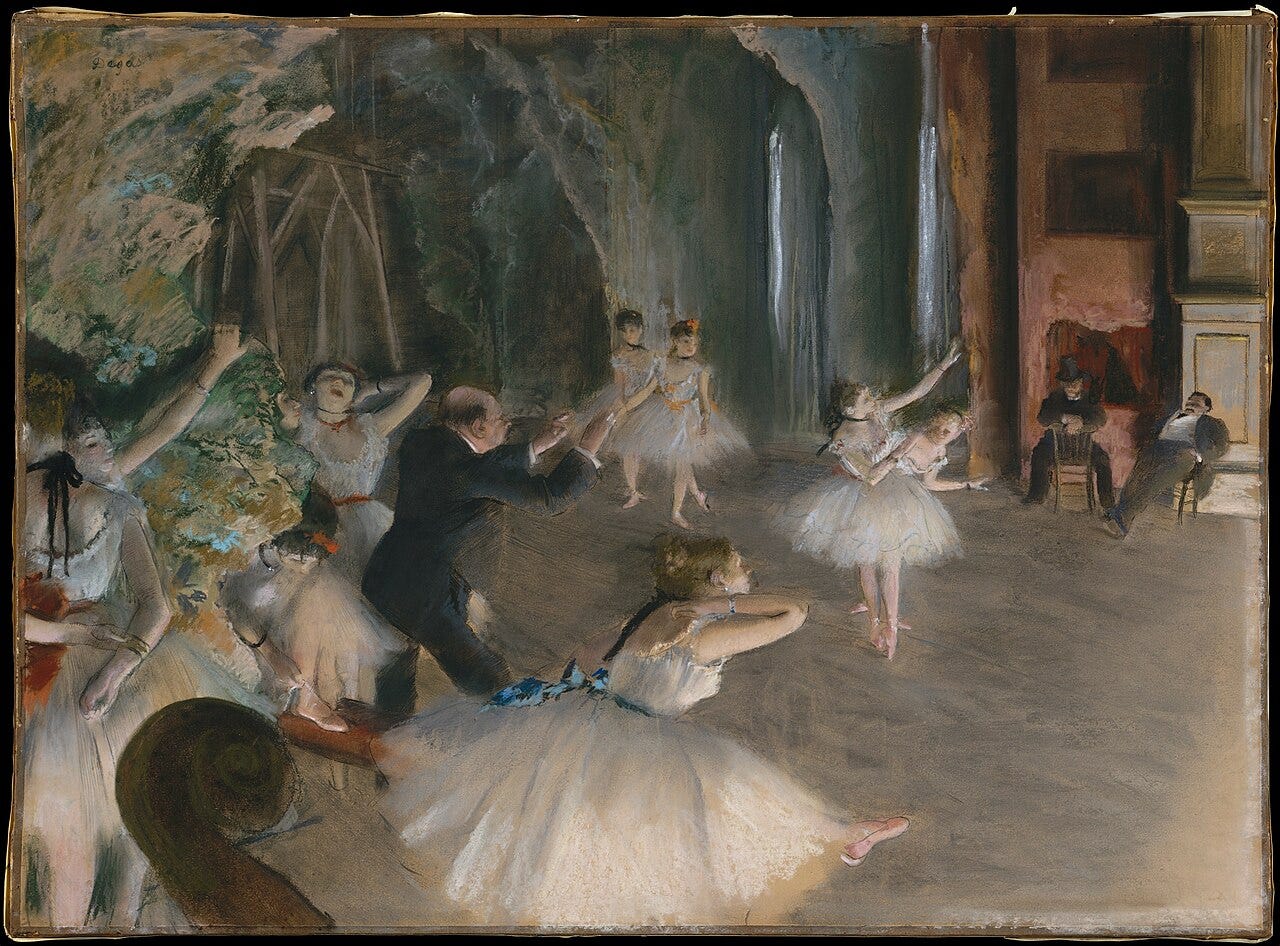
Dancers run through their steps on a bare stage while, at the edge of the picture, two men in black top hats lounge and watch. Degas made several versions of this rehearsal scene in pastel and thin oil, and those idle top hatted men are the abonnes, wealthy season ticket holders who paid for the right to prowl backstage among the young dancers.
What looks like a graceful ballet is really a marketplace, the girls performing for buyers as much as for art. Degas never let you forget the poverty and quiet exploitation under the ballet's beautiful surface.
A version of the scene hangs in the Metropolitan Museum, its floor tilted so steeply the dancers seem about to slide toward us.
7. Henri de Toulouse Lautrec, Marcelle Lender Dancing the Bolero (1895)
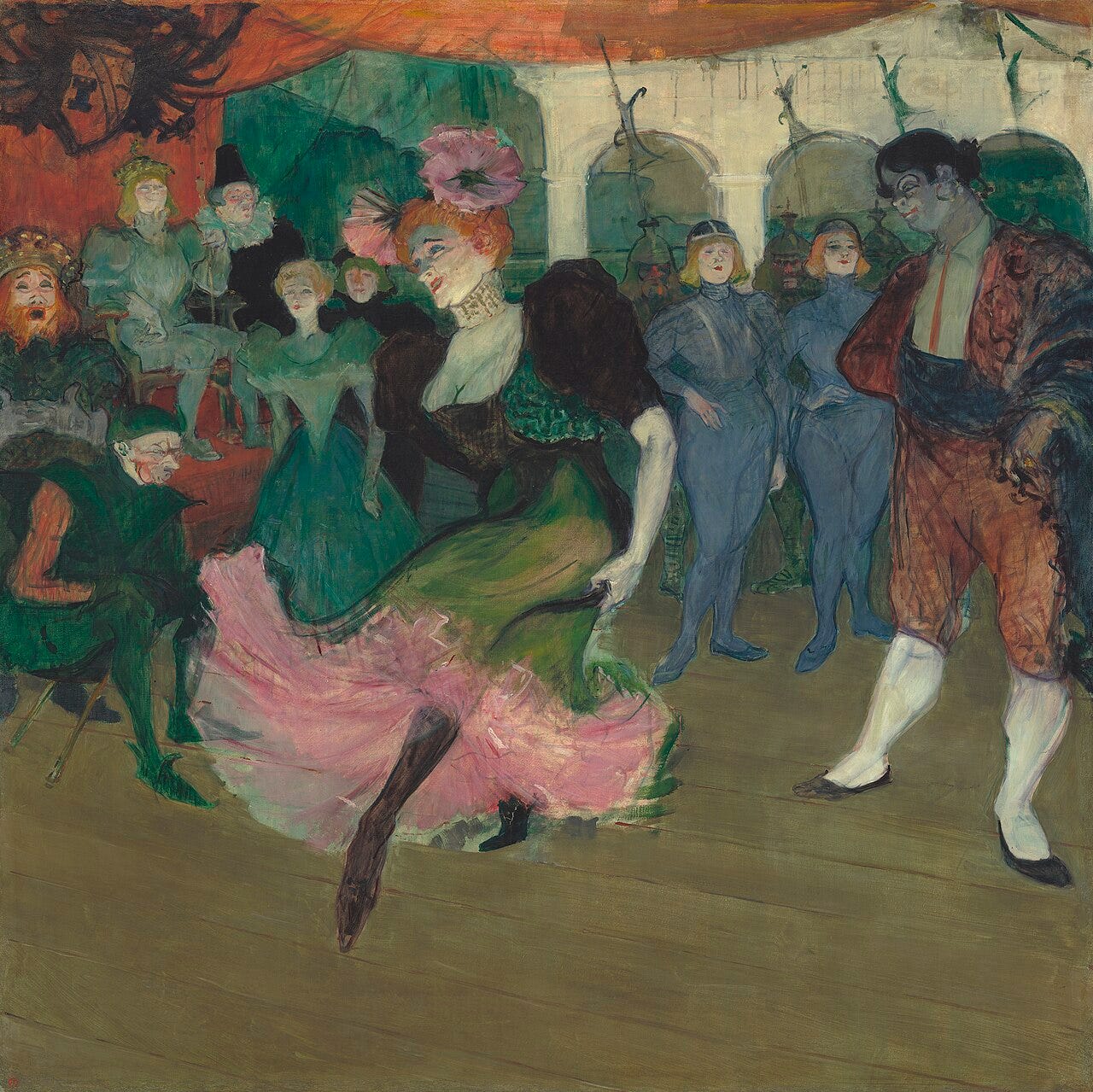
The music hall star Marcelle Lender spins across a stage in a froth of pink skirts, seen from below over the heads of the orchestra, exactly as Toulouse Lautrec watched her night after night.
He was obsessed with her, going to the same operetta some twenty times just to draw her again. The colors are loud and artificial, the whole scene lit by the harsh glow of the footlights.
Lautrec loved the electric, tawdry world of the Paris cabaret and painted it without judgment. He also made a large color print of Lender in the same role, one of the finest lithographs of the whole cabaret age.
8. Anders Zorn, Midsummer Dance (1897)
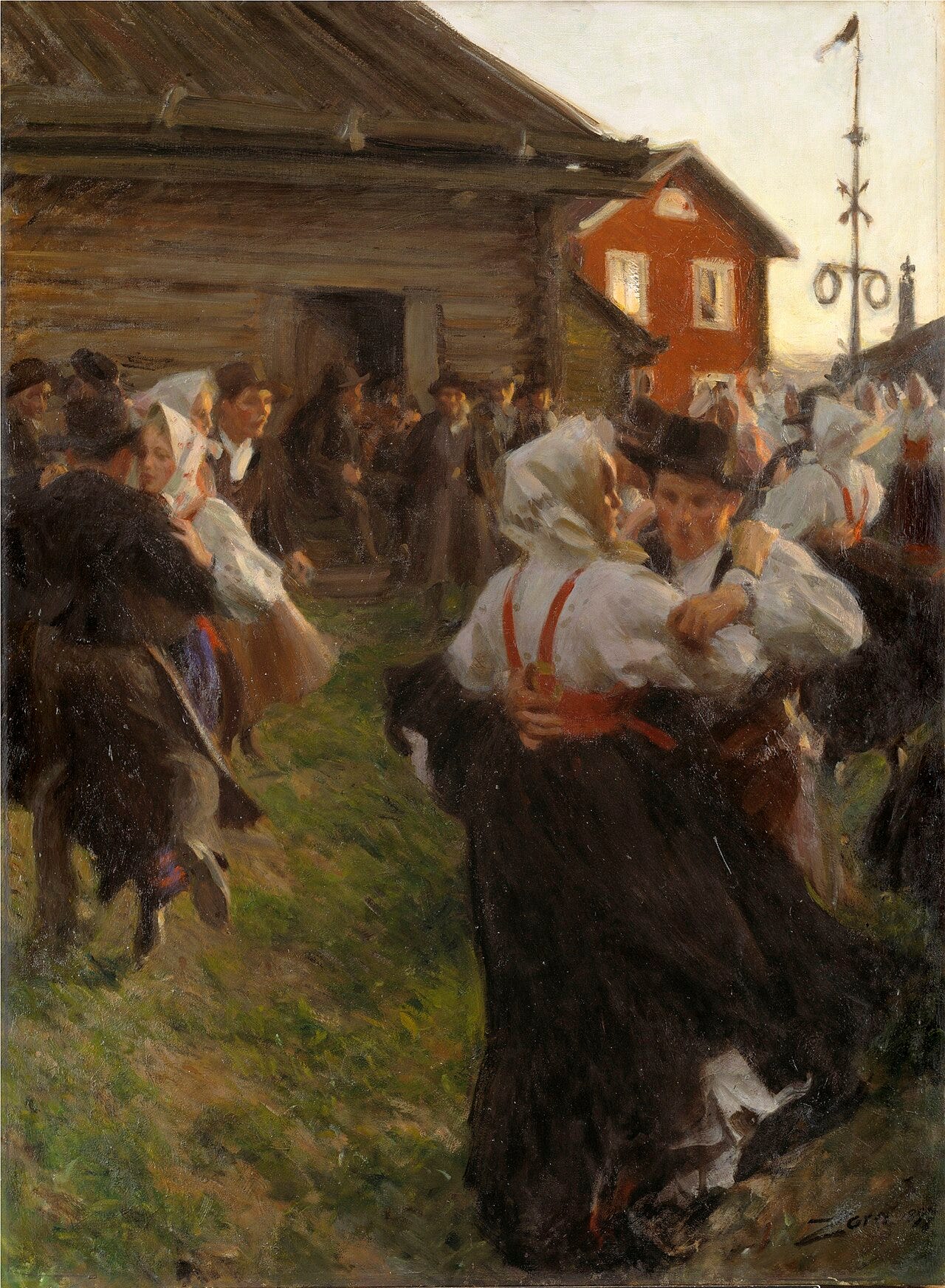
Under a pale Swedish night that never quite goes dark, villagers dance around a maypole in front of a red wooden cabin, whirling in traditional dress.
Zorn, Sweden's greatest painter, caught the glow of the long northern summer evening and the swing of the folk dance he grew up with. The couples spin so fast their feet blur, while others rest and watch in the grass.
It is a picture of a whole community and its oldest rituals, painted with total pride and love. Zorn grew so rich from painting American presidents and tycoons that he could go home and paint whatever he pleased.
9. Edvard Munch, The Dance of Life (1900)
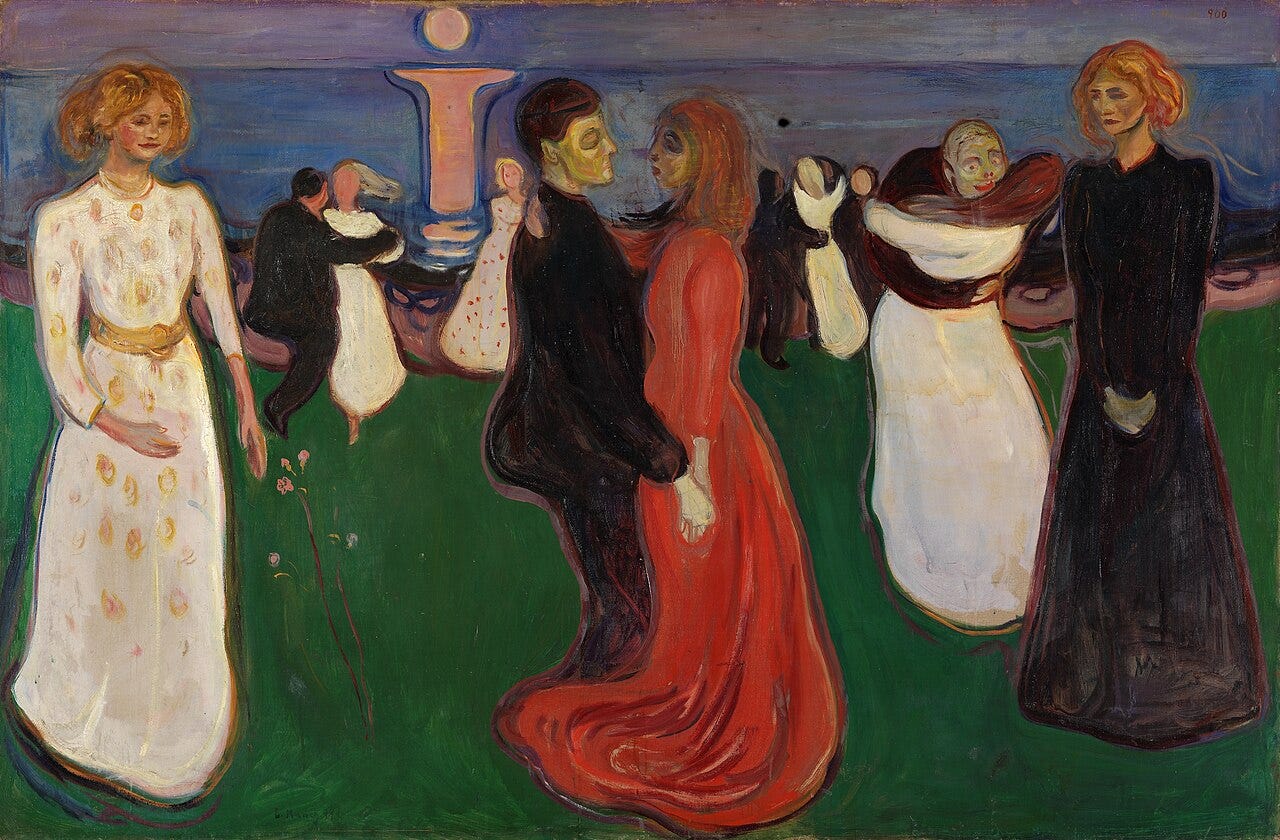
Munch turned a simple dance into the whole arc of a life, and the same woman appears three times on a moonlit shore, in white, in red and in black, as innocent girl, passionate lover and grieving widow.
In the middle a couple dance stiffly, locked together yet somehow alone, the man modeled on Munch himself. The Symbolist meaning is everywhere, the phases of woman, the passing of youth, the loneliness inside desire.
It is one of the darkest, most personal dance paintings ever made, a party where nobody is happy. Munch made it as part of his great Frieze of Life, the cycle about love and death he worked on for decades.
10. John Singer Sargent, El Jaleo (1882)
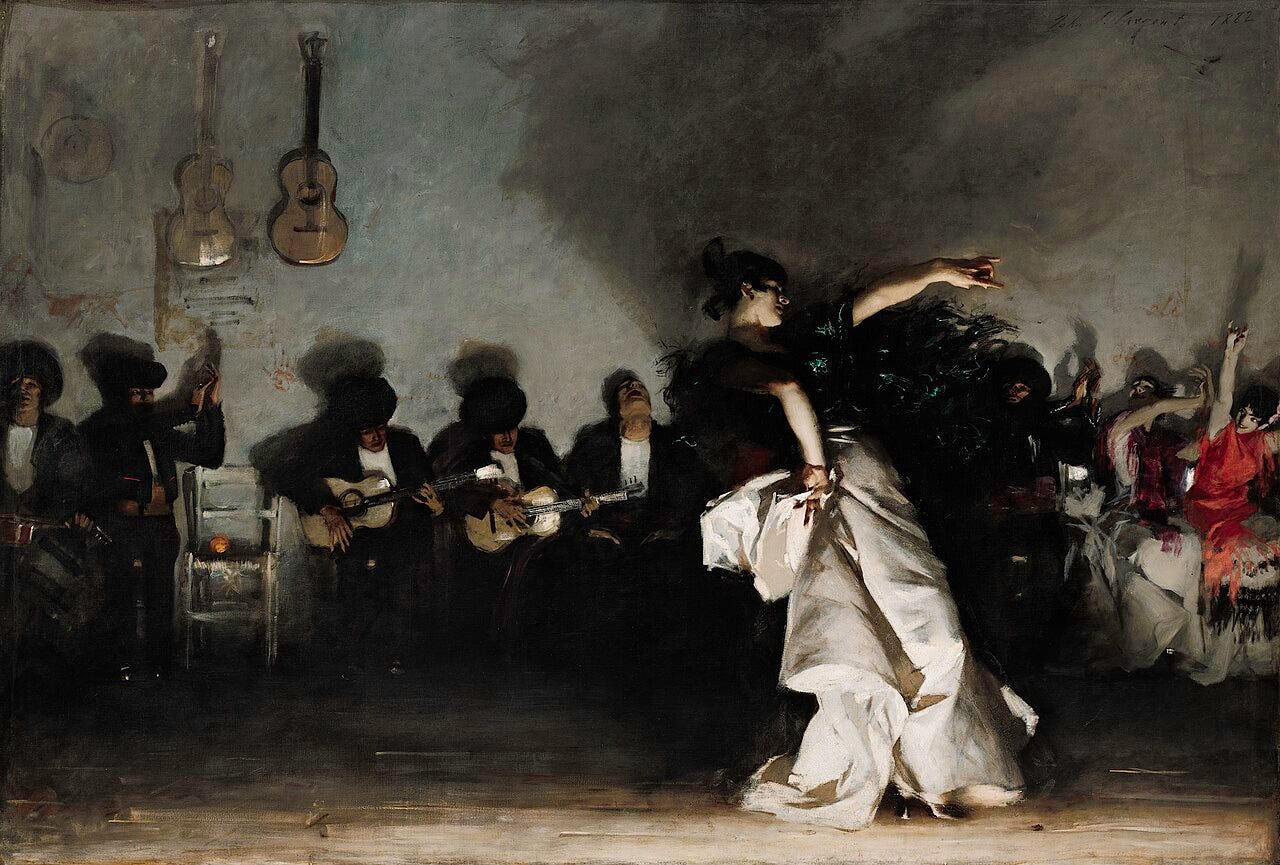
A flamenco dancer arches back in a swirl of white skirt, one arm flung out, lit from below in a smoky Spanish tavern while guitarists play against the wall behind her.
Sargent painted this huge canvas after a trip through Spain, entranced by the raw power of flamenco. The lighting is theatrical and steep, the shadows enormous, the dancer's pose caught at its most extreme.
It made a sensation in Paris and helped launch his career. A collector later built a special Spanish alcove in her Boston museum just to display it, lit exactly as she wanted.
11. William Blake, Oberon, Titania and Puck with Fairies Dancing (about 1786)
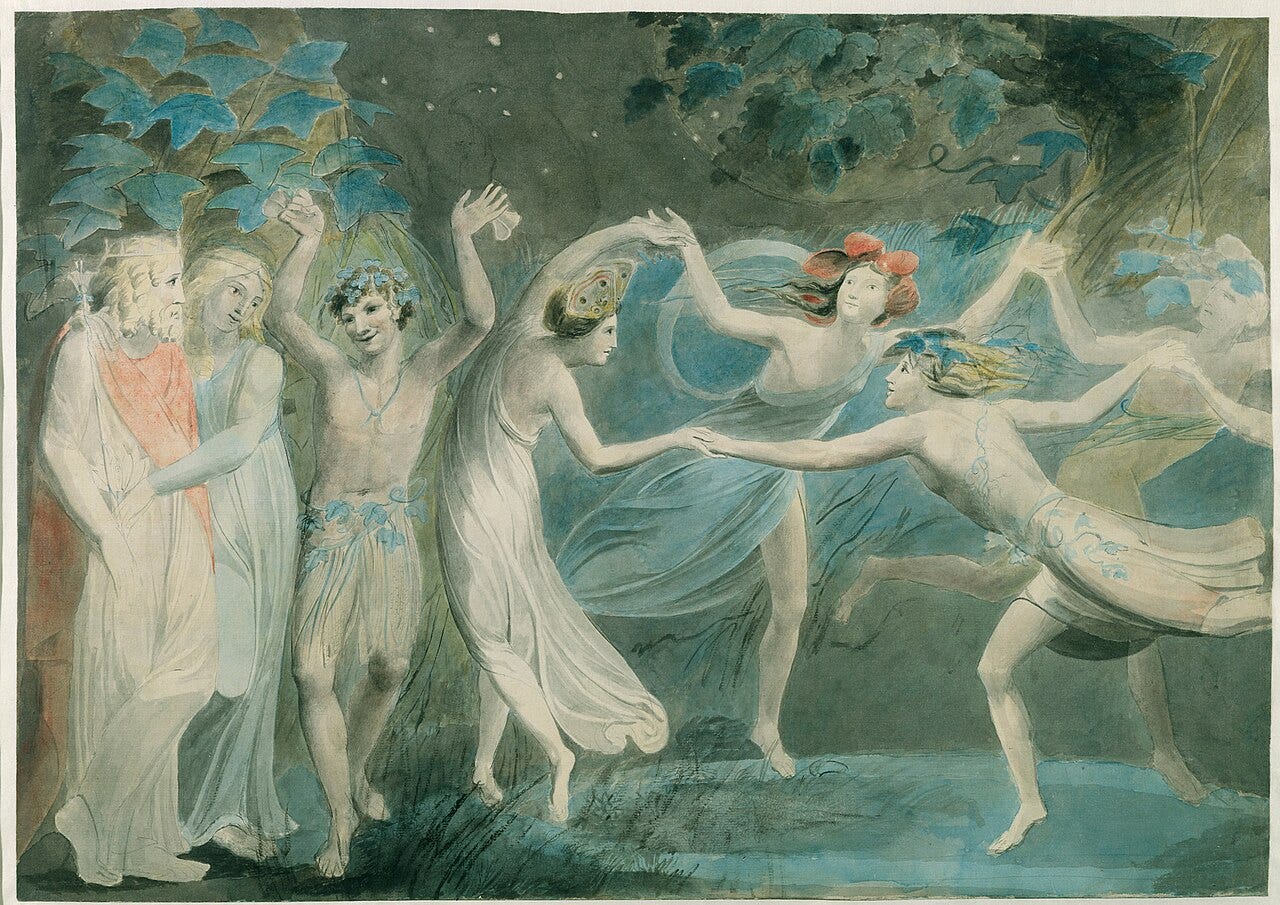
In a moonlit glade the fairy king and queen watch a ring of tiny fairies dance hand in hand, their bodies weightless and glowing, straight out of a dream of Shakespeare.
Blake, the strange visionary poet and painter, saw fairies and angels as real, and drew them with flowing, otherworldly grace. The dance here is pure magic, the sort of thing Blake claimed he actually witnessed in his own garden.
His figures float and curve as though gravity does not apply to them. Ignored and thought mad in his own lifetime, Blake is now seen as one of the most original artists Britain ever produced.
12. Pierre Auguste Renoir, Dance in the Country (1883)
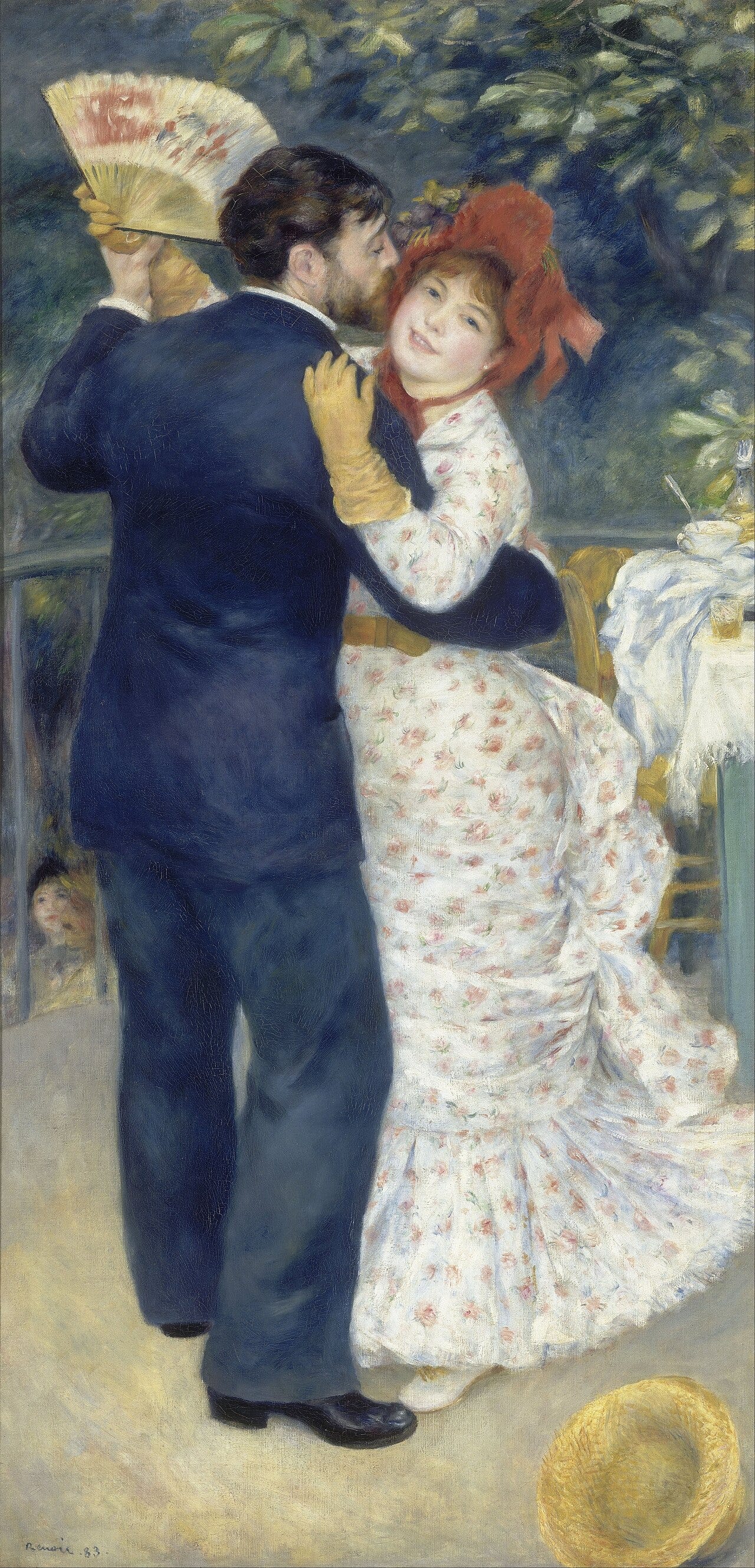
A laughing woman in a red bonnet is swept around a country dance floor by her partner, her face lit with open, delighted joy, her fan tumbling from her hand.
Renoir painted this as one of a pair, a country dance and a city dance, to show two very different kinds of pleasure. The country dance is all warmth, laughter and easy happiness, the woman looking straight out at us, thrilled.
The model was Renoir's future wife, Aline Charigot. Its cooler, more formal city twin now hangs beside it in the Musee d'Orsay, the two dances forever paired.
What people ask about dance in painting
Who painted the most dance paintings? Edgar Degas, who made around fifteen hundred works of dancers, more than half of everything he ever produced.
Why did Degas paint so many ballet dancers? He was fascinated by trained bodies in motion and by the hard, hidden labor behind the glamour, and the Opera let him watch for years.
What is the most famous dance painting? Matisse's Dance and Degas's ballet scenes are the usual answers, along with Renoir's sunny dance parties.
Why is dance so hard to paint? Dance is pure motion, and a painting is frozen, so the artist has to suggest movement in a body that will never actually move.
What do dance paintings often symbolize? Joy and freedom above all, but also the passing of time, the stages of life, and the fleeting nature of youth and beauty.
If these dancers pulled you in, you will love these too:
The Ambassadors, detail by detail, the object at the bottom that only works from one side
Luncheon of the Boating Party, detail by detail, who everybody at that table actually was
Ten women artists you need to know, the names the textbooks skipped
The step that never ends
A dance lasts only a moment, then it is gone forever, which is what makes these paintings feel almost like magic. The dancers on these canvases have been mid step for a hundred years or more, never tiring, never finishing the turn.
We know that in life the music stopped long ago, the dancers grew old, the party ended. Yet here they still spin, caught in the one place motion can last, on a wall, forever about to take the next step.