
Famous Garden Paintings: 12 Painted Paradises
A garden is nature tamed into art, so it is no surprise that painters have loved them for thousands of years, from a Roman wall painted with birds and roses to Monet's obsessive pond.
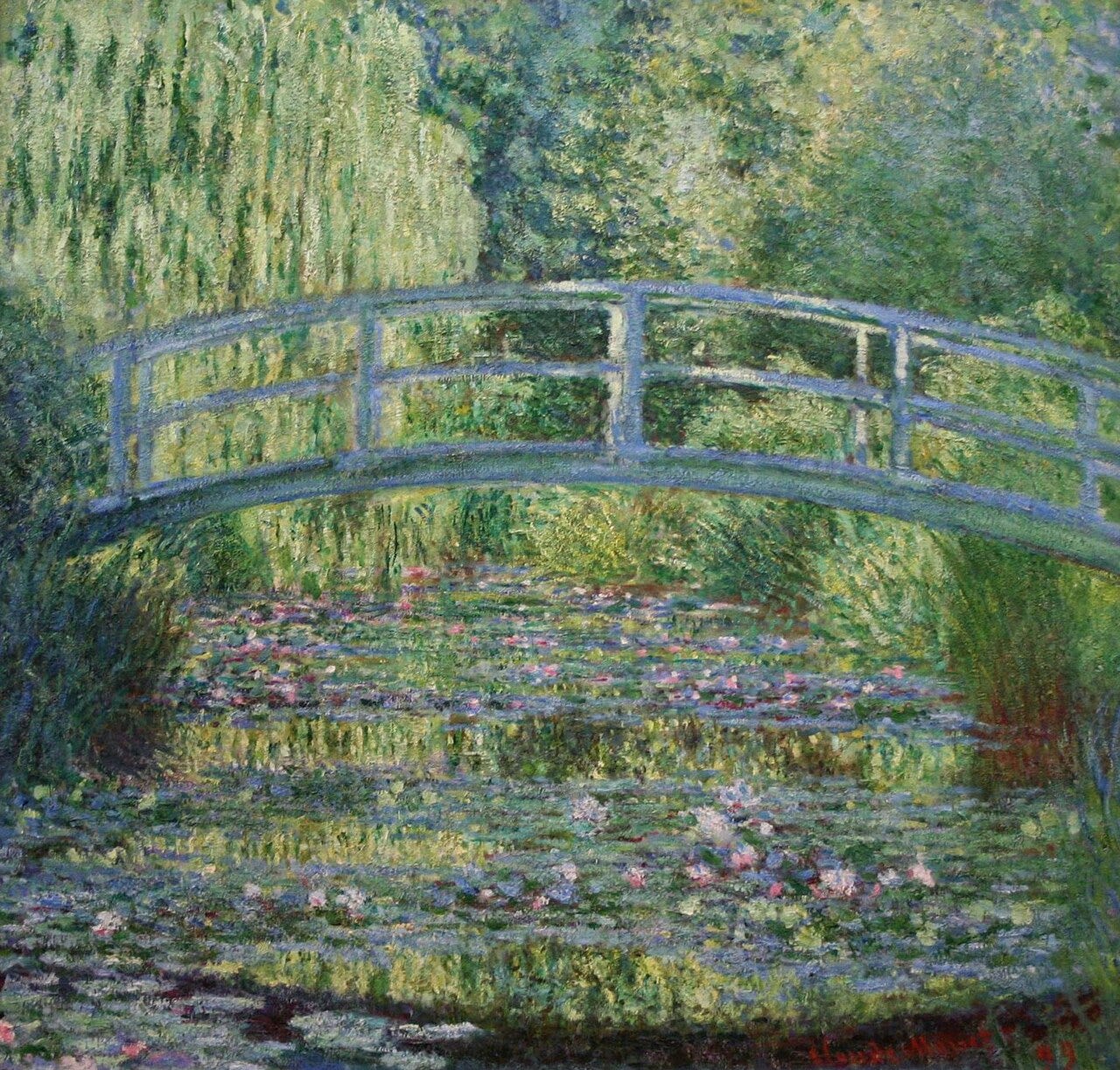
Gardens in art can mean paradise, escape, desire or the whole story of Eden. Here are twelve of the most famous garden paintings, all now in the public domain.
I have gathered the works that turned flowers, hedges and green shade into something to lose yourself in.
Where to spend the next half hour
If you want the detail rather than the summary:
Inside Monet house at Giverny, room by room, including his own bedroom
Was Monet really the first Impressionist, the painting that may have got there first
The Last Supper, detail by detail, the detail hiding at that table
1. Claude Monet, The Water Lily Pond (1899)
Monet dug his own pond at Giverny, planted it with water lilies and a Japanese footbridge, and then spent the rest of his life painting it.
This early view of the bridge, wreathed in willow and reflected in still green water, was the start of an obsession that filled his last decades.
He was, in a real sense, painting a garden he had built specifically to be painted, both gardener and artist at once. He worked outdoors in the changing light, chasing the same scene at different hours of the day.
By the end his water lilies had grown into vast canvases you could almost walk into.
2. Hieronymus Bosch, The Garden of Earthly Delights (about 1500)
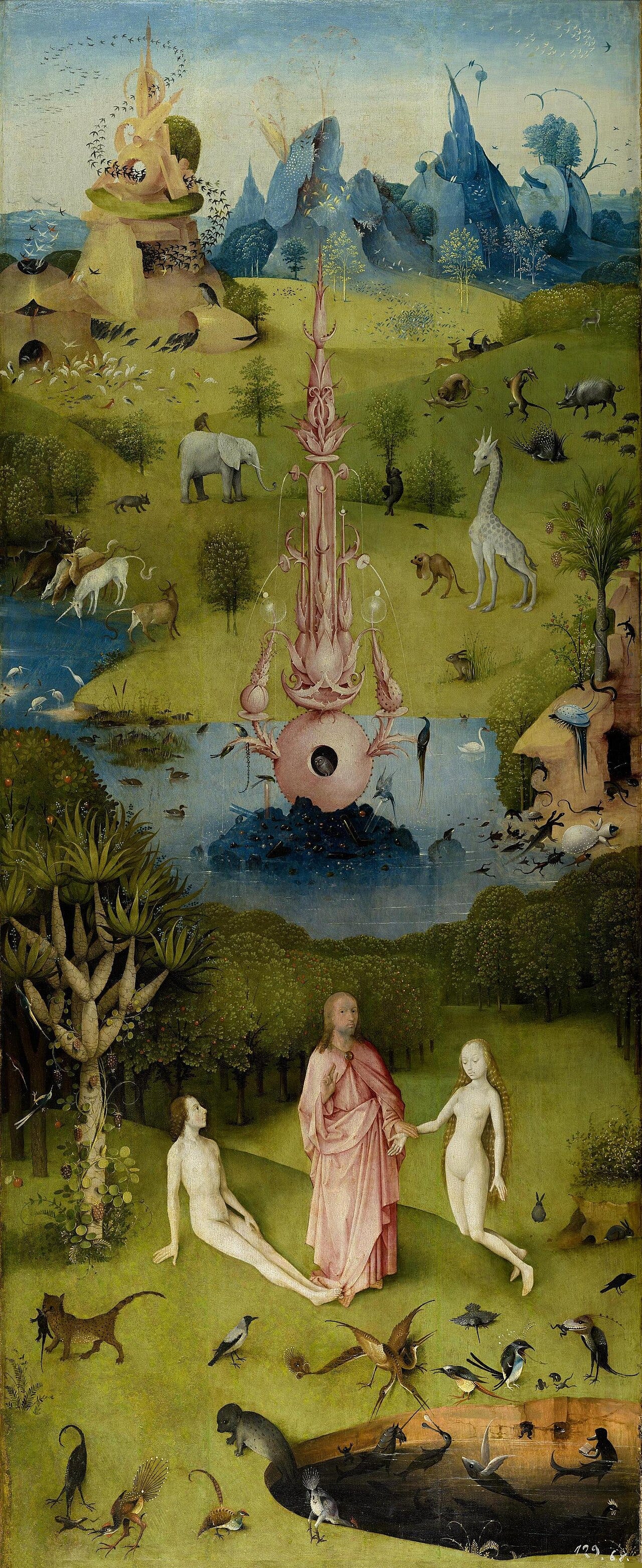
The strangest garden ever painted is not a real one at all, but a nightmare vision of humanity gone wild with pleasure. Bosch filled the central panel with hundreds of naked people frolicking among giant fruit, birds and impossible pink fountains, a paradise curdling into sin.
To the left is the calm Garden of Eden, to the right a burning hell where the fun turns to torture. It hangs in the Prado in Madrid, and even after five centuries no one has fully agreed whether it is a warning against sin or a secret hymn to pleasure.
It is the most famous garden in art, and it once belonged to King Philip the Second of Spain, who hung this whole feast of sin in his royal palace.
3. John Singer Sargent, Carnation, Lily, Lily, Rose (1886)
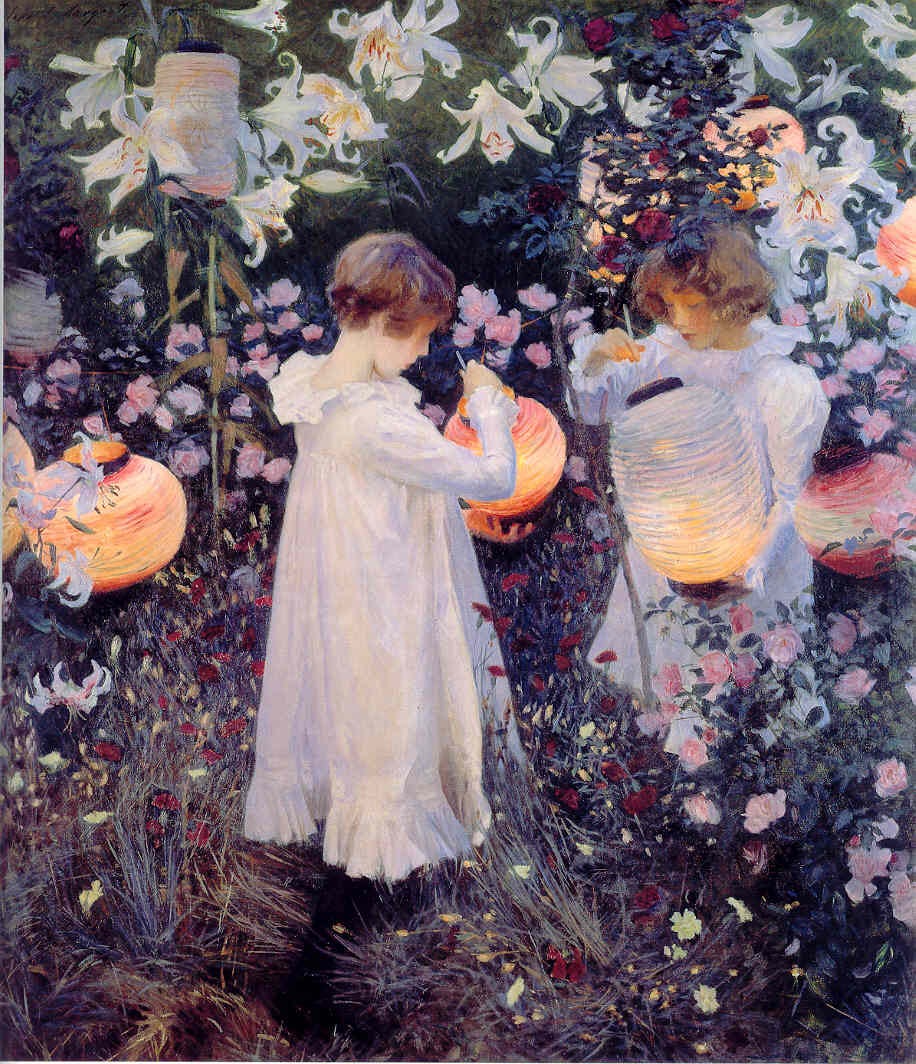
Two little girls in white light paper lanterns at dusk in an English garden overflowing with lilies, roses and carnations, the whole scene glowing in the blue last light of day.
Sargent painted it obsessively over two autumns, working for only a few minutes each evening when the light was exactly right, then stopping until the next day.
The flowers had to be replaced as they died and the girls kept growing, so he was chasing a moment that would not hold still. The strange title comes from a popular song of the time.
When it was shown in 1887 the public loved it so much that the Tate bought it at once.
4. Peter Paul Rubens, The Garden of Love (about 1633)
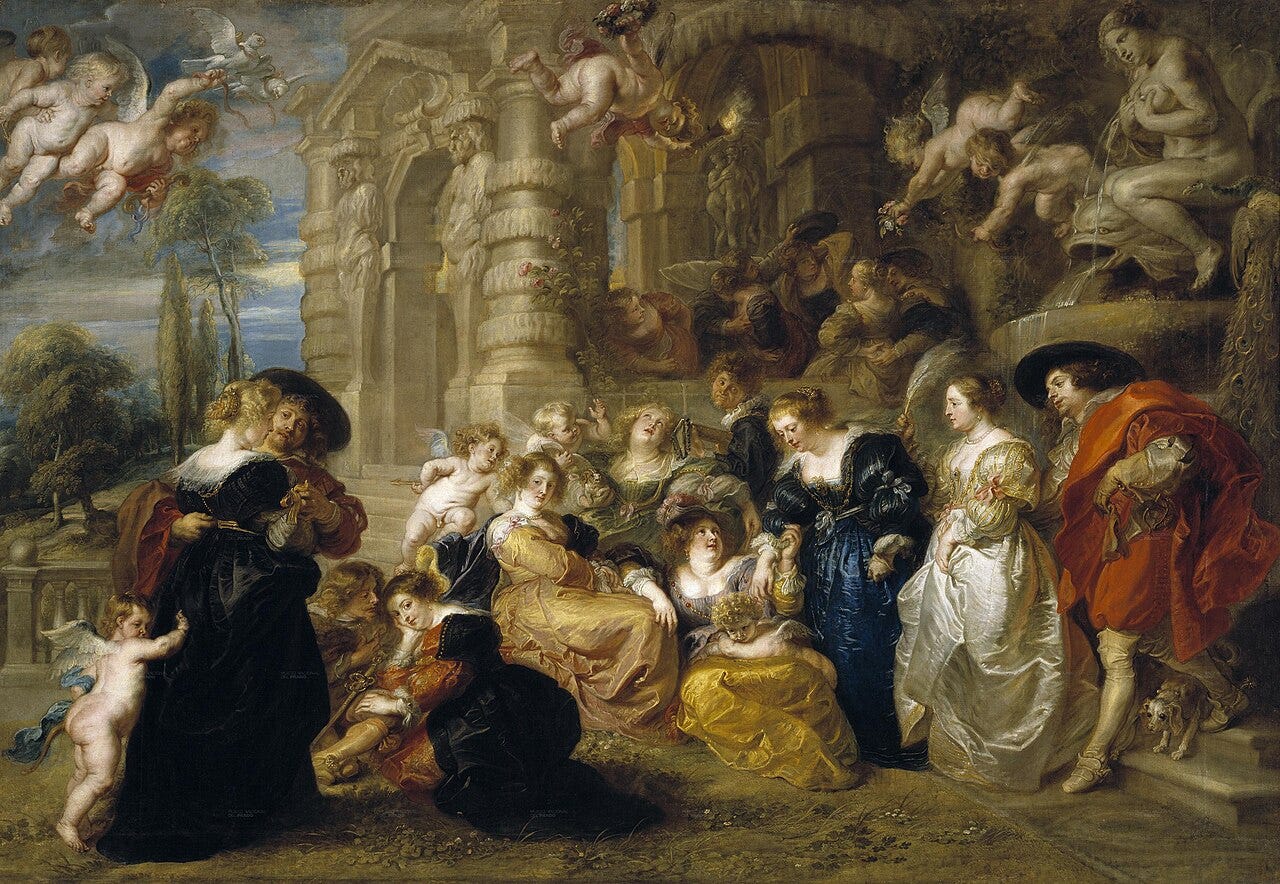
Elegant couples flirt, lounge and are gently pushed together by cupids in a lush garden beside a grand house, in a picture of pure aristocratic pleasure.
Rubens painted it soon after marrying his young second wife Helena, and filled it with the warmth of his own late happiness. The garden is a dream of courtship, all soft flesh, silk and roses, watched over by a fountain statue of Venus.
He loved it so much he kept it for himself and had it copied as a print. It became the model for a whole century of romantic garden scenes, right up to the Rococo.
5. Villa of Livia, The Garden Room (about 20 BC)
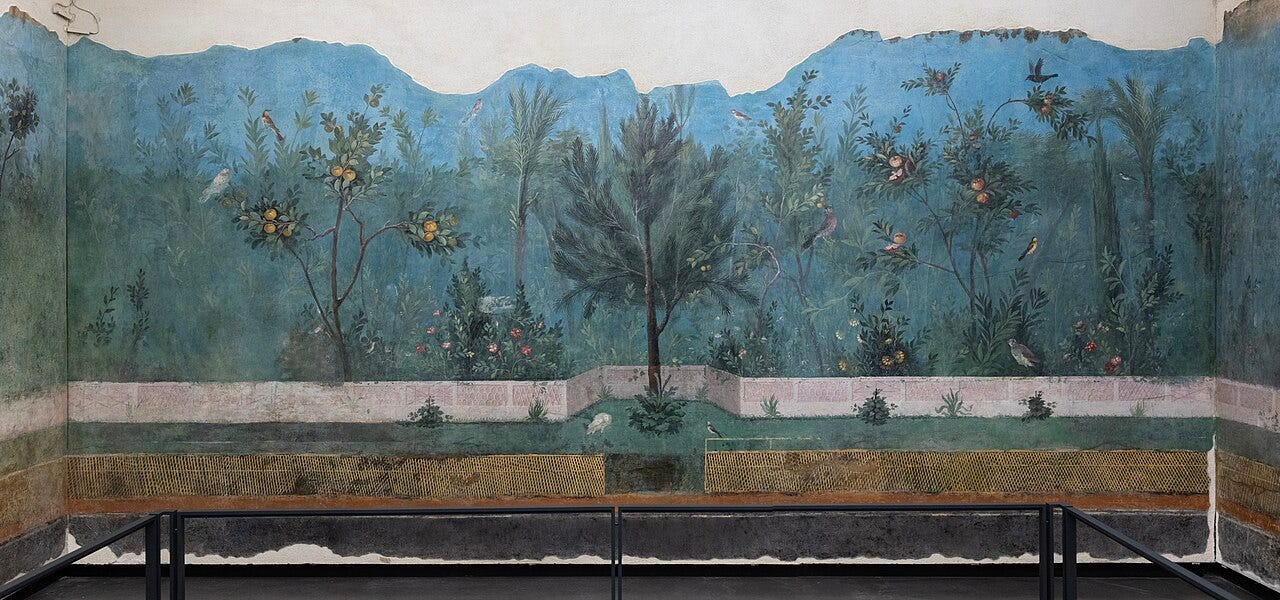
Two thousand years ago, a Roman painter covered all four walls of a cool underground room with a single, endless garden, so that stepping inside felt like walking out into an orchard.
Made for Livia, the wife of the emperor Augustus, it shows fruit trees, roses, birds and a low fence, painted with astonishing freshness and life. There are no people at all, only nature, held in perpetual spring.
It is one of the oldest and most beautiful landscape paintings to survive from the ancient world. The frescoes were later lifted from the walls and now line a room in a Rome museum, the birds still seeming about to sing after twenty centuries.
6. Gustave Caillebotte, The Gardeners (1877)
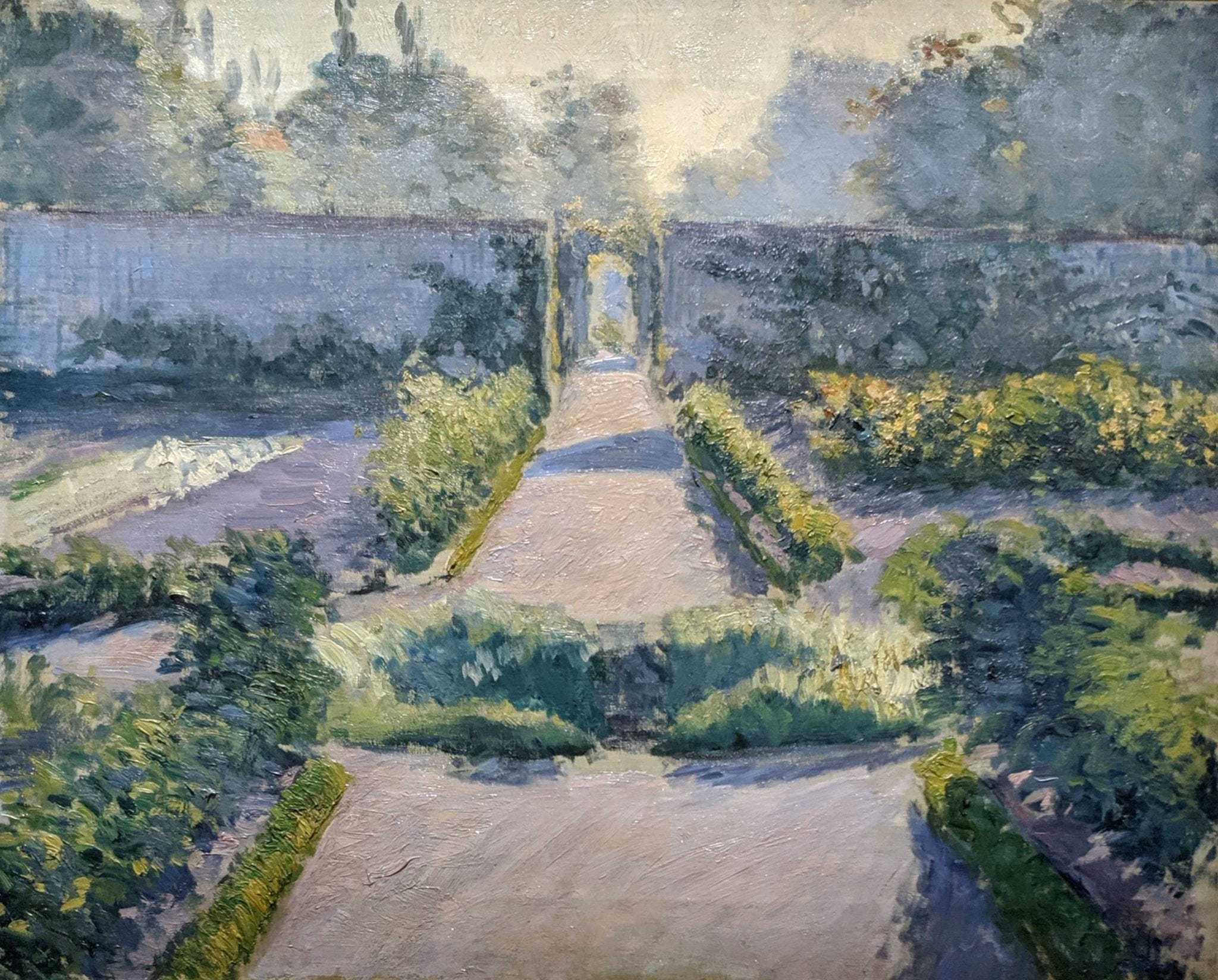
Two gardeners in blue smocks water rows of vegetables in a bright kitchen garden, bending to their watering cans under a clear sky.
Caillebotte was a keen gardener himself, and where most painters showed flowery pleasure grounds he showed a working plot, all straight beds, tools and honest labor.
The high viewpoint and sharp lines make the garden look almost like a diagram of itself. He would later grow so absorbed in real gardening that he half gave up painting for it.
His own garden at Petit Gennevilliers, dahlias and all, became his greatest late subject.
7. Diego Velazquez, View of the Garden of the Villa Medici (about 1630)
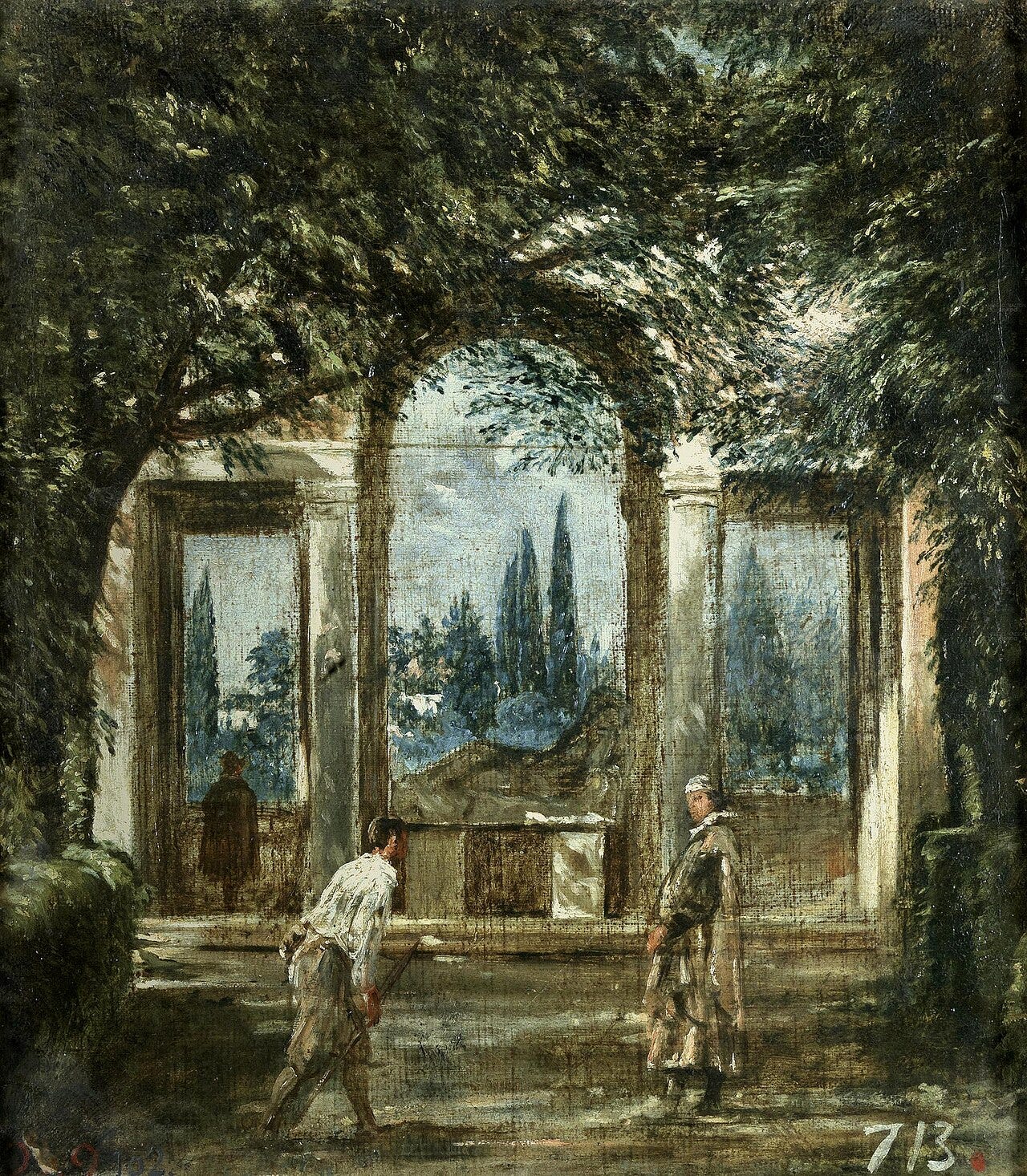
Velazquez painted this small, fresh view of a garden in Rome while staying at the grand Villa Medici, catching a quiet corner with a stone archway and dark cypress trees.
It is astonishingly loose and modern, painted quickly outdoors, more than two centuries before the Impressionists made that fashionable. Two tiny figures stand talking in the shade, and washing hangs to dry, an ordinary moment in a noble garden.
Velazquez was the greatest Spanish painter, far better known for kings and popes than for trees. He made only a handful of pure landscapes like this, and they were so ahead of their time that scholars long refused to believe he had painted them outdoors.
8. Camille Pissarro, Kitchen Gardens at the Hermitage, Pontoise (1874)
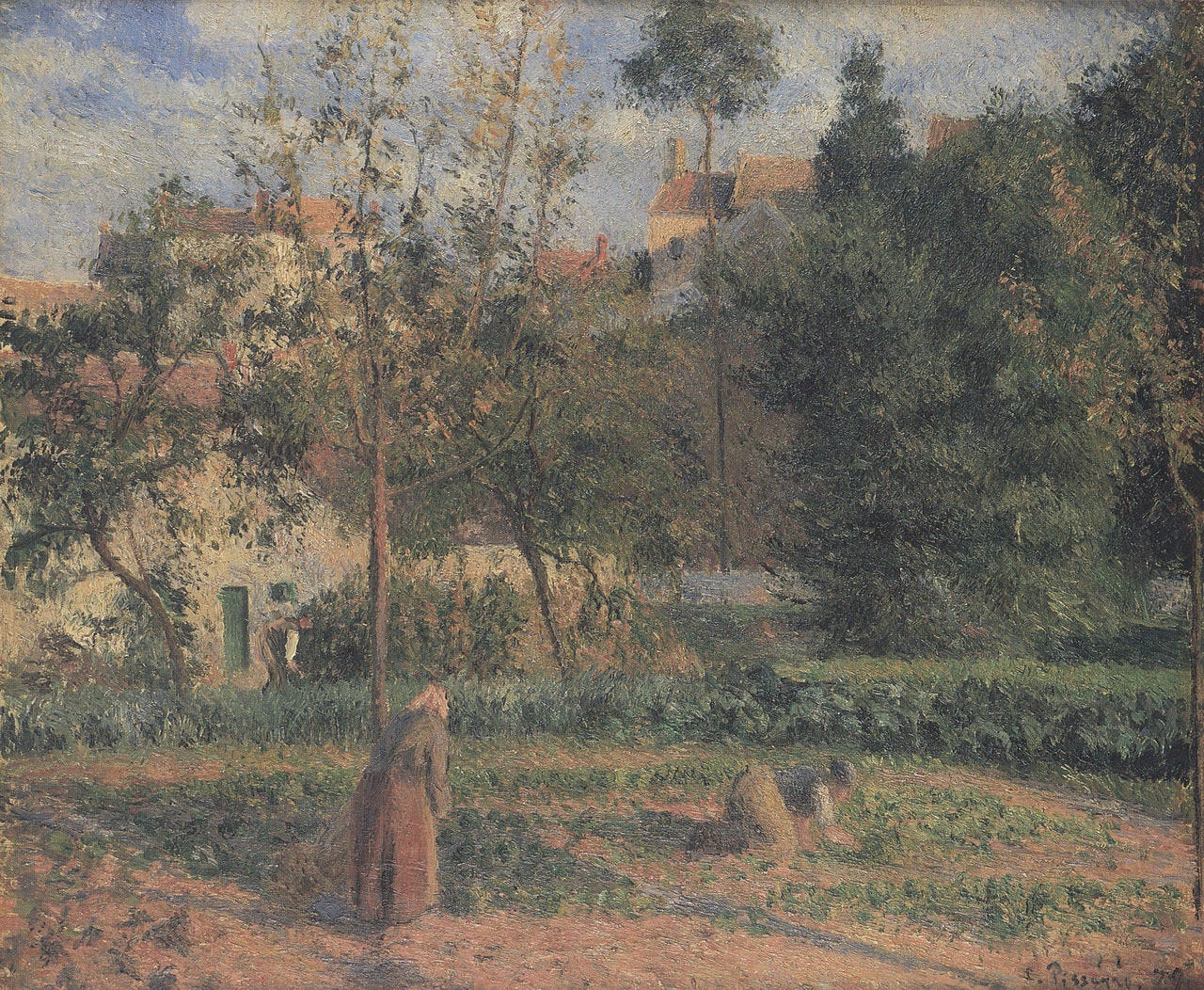
Pissarro painted the humble vegetable plots on a hillside outside the town of Pontoise, cabbages and fruit trees climbing the slope under a wide sky.
He was the quiet, steady heart of Impressionism, the only painter to show in all eight of the group's exhibitions, and he loved the ordinary working countryside.
There is no drama here, just the patient beauty of cultivated land and the people who tend it. When war forced him to flee in 1870, soldiers used his abandoned studio as a butchery and destroyed most of twenty years of work.
Only about forty of his paintings from before that year are thought to survive, which makes early garden pictures like this one rare.
9. Edouard Manet, The Monet Family in Their Garden at Argenteuil (1874)
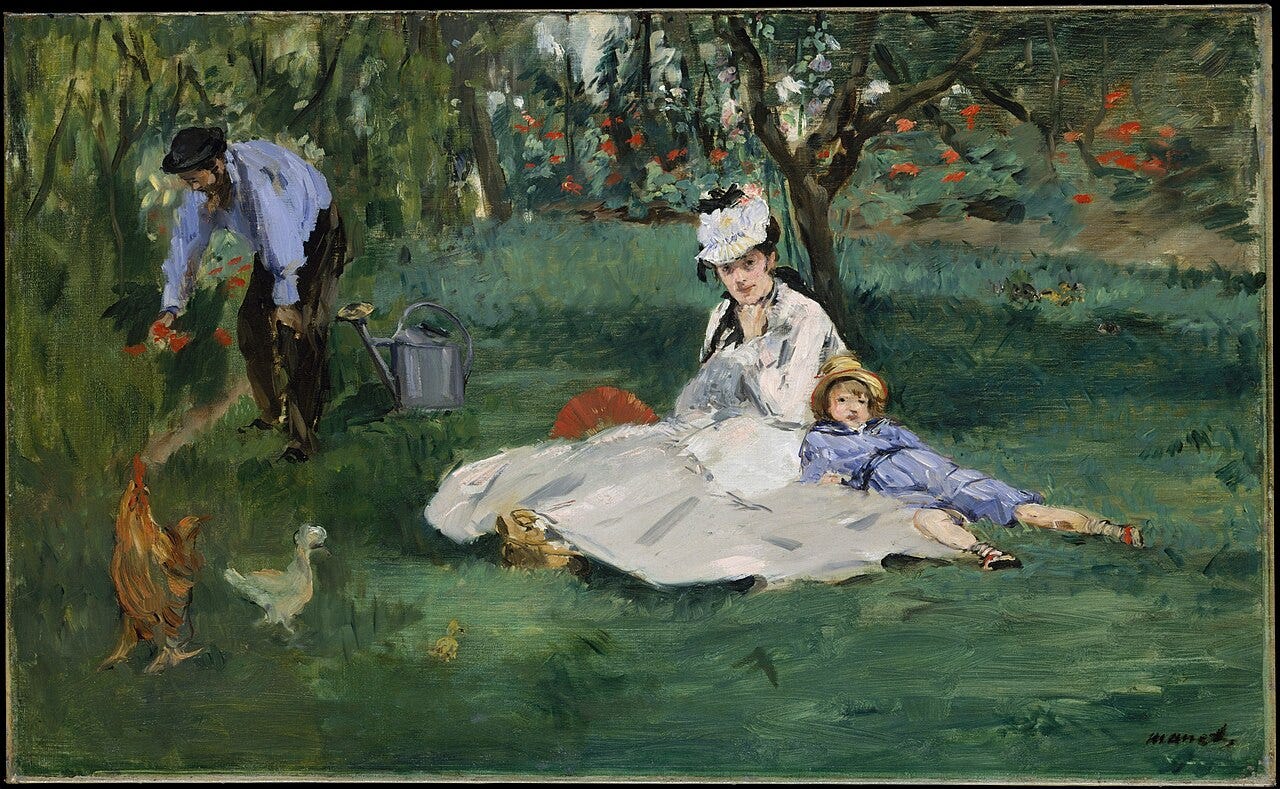
Monet's wife and small son sit on the grass in a sunny garden while a rooster struts nearby, painted by Manet in loose, bright dabs on a single summer afternoon.
Manet made this on a visit to Monet, the two friends painting side by side, and Monet himself is just out of frame, tending his flowers.
Renoir turned up too and painted almost the same scene, so three great painters worked in that one garden at the same time.
The picture glows with easy friendship and dappled Impressionist light. Watching Monet paint so freely outdoors, Manet loosened his own careful style for good that afternoon.
10. Berthe Morisot, In the Garden at Maurecourt (about 1884)
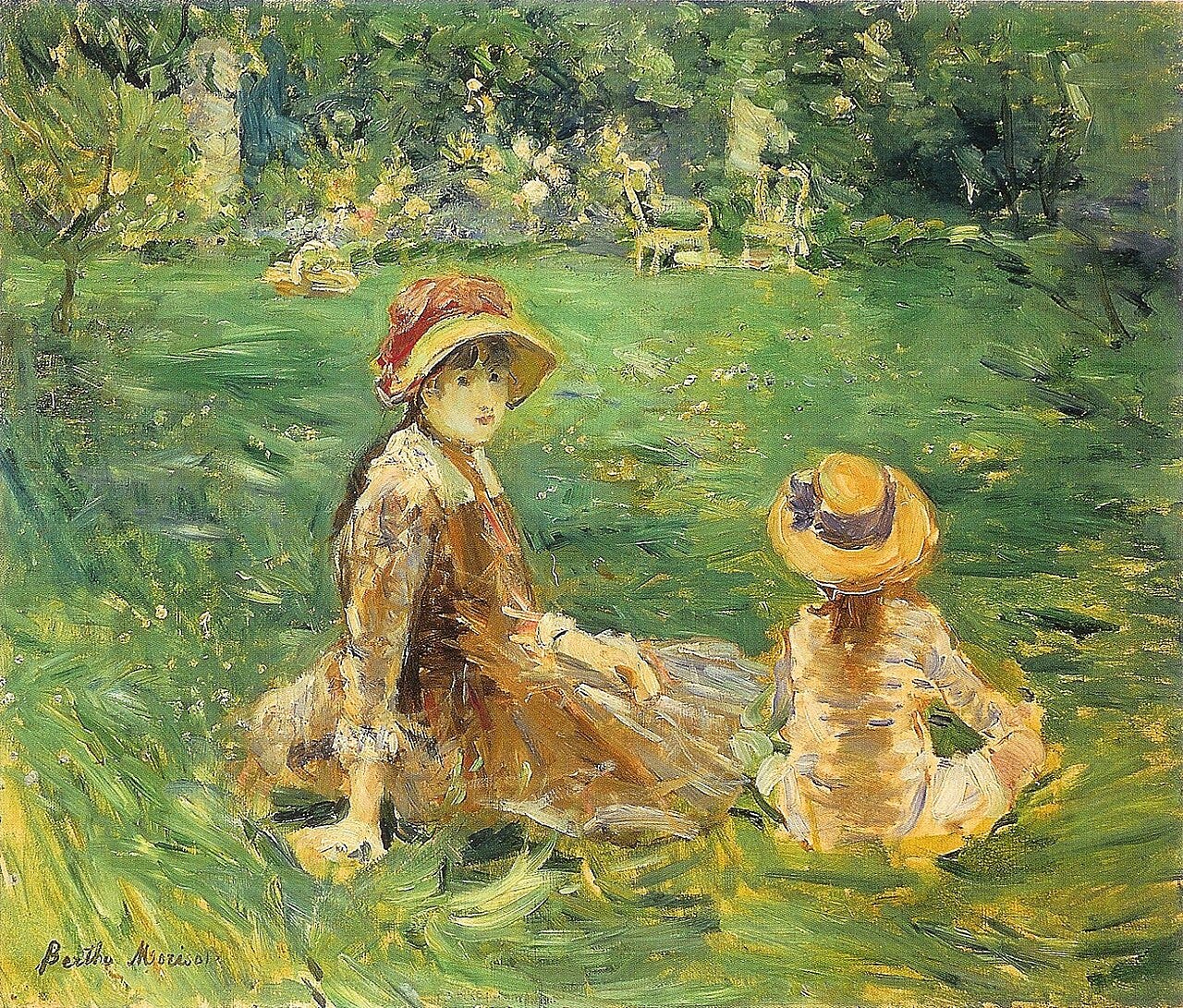
A mother and child rest on a sunlit lawn among flowerbeds, painted in quick, feathery strokes that seem to dissolve into the summer air.
Berthe Morisot was one of the very few women at the heart of Impressionism, and she painted the private world of gardens, families and quiet afternoons better than anyone.
Her brushwork is so loose and free that the whole scene feels half melted into light and leaves. She often painted her own sister and her children in their gardens.
Long overshadowed by the men around her, she was given a major touring retrospective in 2018 and is now ranked among the finest of all the Impressionists.
11. Gustav Klimt, Farm Garden with Sunflowers (1907)
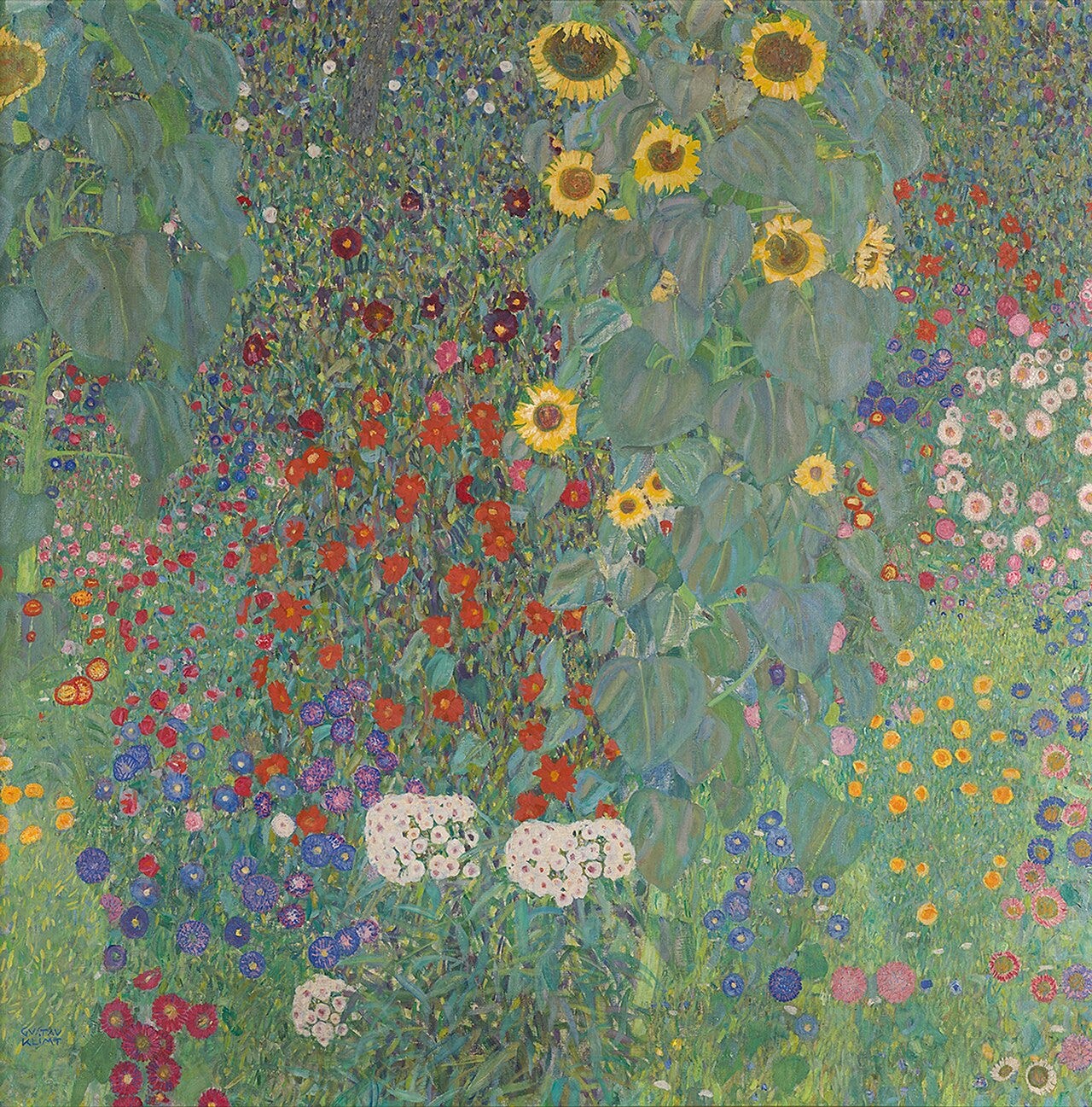
Klimt, famous for gold and bare skin, spent his summers by an Austrian lake painting dense, glowing gardens where flowers pile up almost to the top of the canvas.
This one is a wall of green leaves studded with sunflowers, poppies and daisies, with barely any sky, a garden seen so close it becomes pure pattern.
He painted these squares through a homemade cardboard viewfinder, cropping the world into flat, jeweled color. There are no people, just an overwhelming, glowing abundance of flowers.
In his hands a country garden became as rich as any of his gold portraits, and one of these flower pictures later sold for more than fifty million dollars.
12. Pierre Auguste Renoir, The Garden in the Rue Cortot, Montmartre (1876)
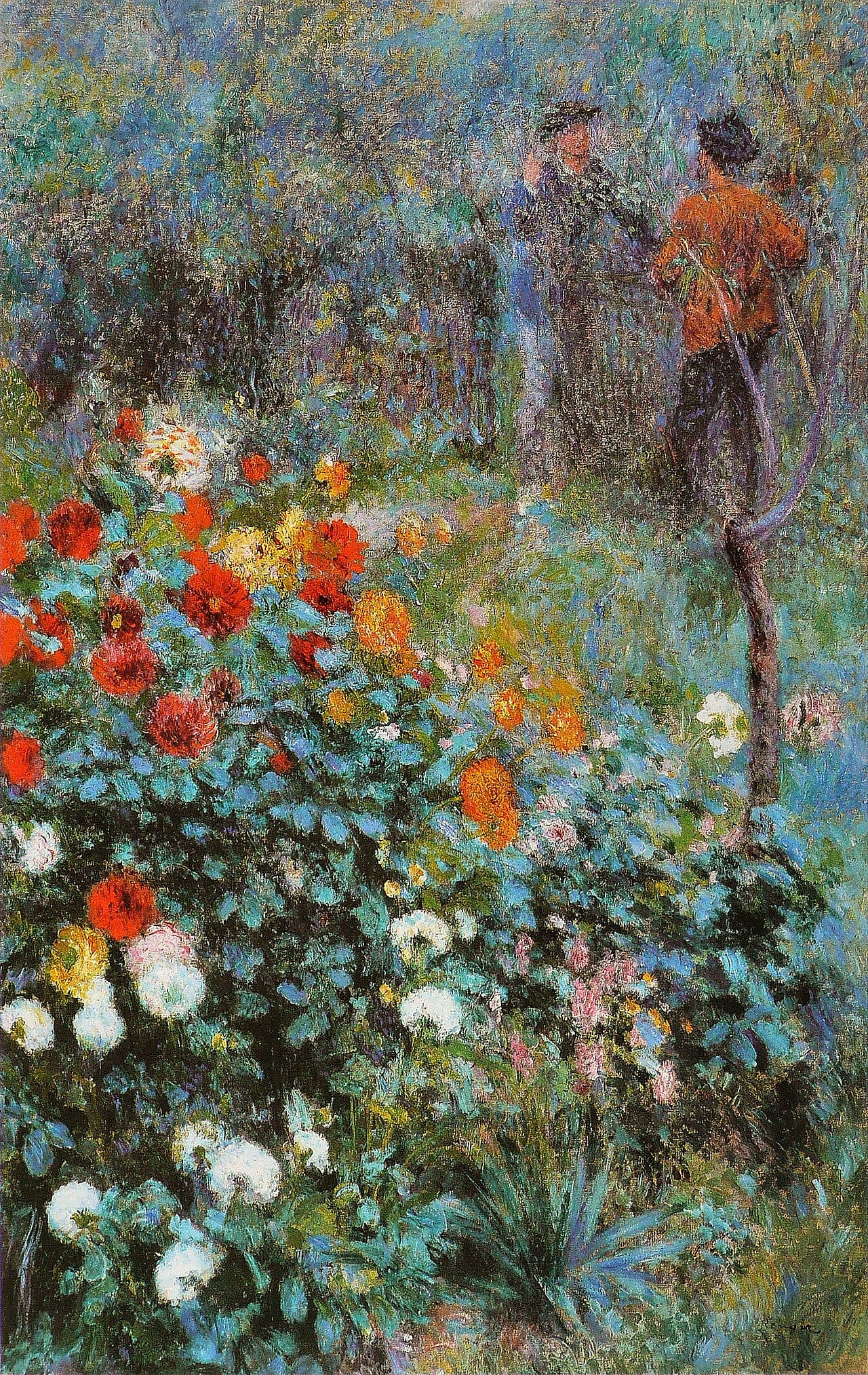
Impressionism was born partly in a wild, overgrown garden on the hill of Montmartre, where Renoir rented a studio and painted his friends among the tall grass and dahlias.
This tangled, sun struck plot, half wilderness, gave him exactly the dappled light he loved, sun falling in patches through the leaves onto skin and cloth.
It was here, in and around this garden, that he worked up his great dance and party scenes. The garden itself is a riot of green and flowers, painted with pure joy.
That scruffy Montmartre plot is now the courtyard of a museum devoted to the artists who once painted in it.
Garden paintings, a few common questions
Who is the most famous garden painter? Claude Monet, who built his own garden at Giverny specifically so that he could paint it for the rest of his life.
What do gardens symbolize in art? Paradise above all, the lost Garden of Eden, but also love, escape, wealth and the fleeting beauty of nature.
What is the oldest garden painting? A Roman fresco made for the empress Livia around 20 BC, which turned a whole room into a painted garden.
Why did the Impressionists love gardens? Gardens gave them exactly what they wanted, bright natural light, changing color and flowers to paint outdoors from life.
What is the most famous garden in art? Bosch's Garden of Earthly Delights, a wild dreamlike garden of pleasure and sin, is the most argued over of all.
If these gardens pulled you in, you will love these too:
The secret behind Monet Magpie, one bird in the snow, and why it matters
Six women, one monster, what Picasso did to the women who loved him
The darker truth about Gauguin, the part of the Tahiti story that never makes the wall label
The garden we carry
Every painted garden is a small act of hope. The artist takes the mess and decay of real nature and holds it at its most perfect moment, in full bloom, forever.
Gardens themselves are the most fragile of things, needing constant care, dying back every winter, gone the moment they are left alone. On a canvas, though, the roses never fade and the light never leaves.
Monet knew this better than anyone, whose real garden at Giverny has flooded and run to weed more than once, yet whose painted ponds still bloom in museums on every continent.