
Famous Paintings of Birds: 12 That Took Flight
Birds have flown through art for centuries, a goldfinch chained to a perch, a swan flinging its wings wide in fury, a flock of crows scattering over a wheat field.
Painters have always loved birds, for their color, their meaning and the near impossible challenge of pinning down feathers and flight in still paint.
A single bird could stand for the soul, freedom, love, death or pure showing off. Here are twelve of the most famous paintings of birds, all now in the public domain.
I have picked the ones where the feathers almost twitch.
The proper reads
Three worth opening next:
The Last Supper, detail by detail, the detail hiding at that table
Six women, one monster, what Picasso did to the women who loved him
The darker truth about Gauguin, the part of the Tahiti story that never makes the wall label
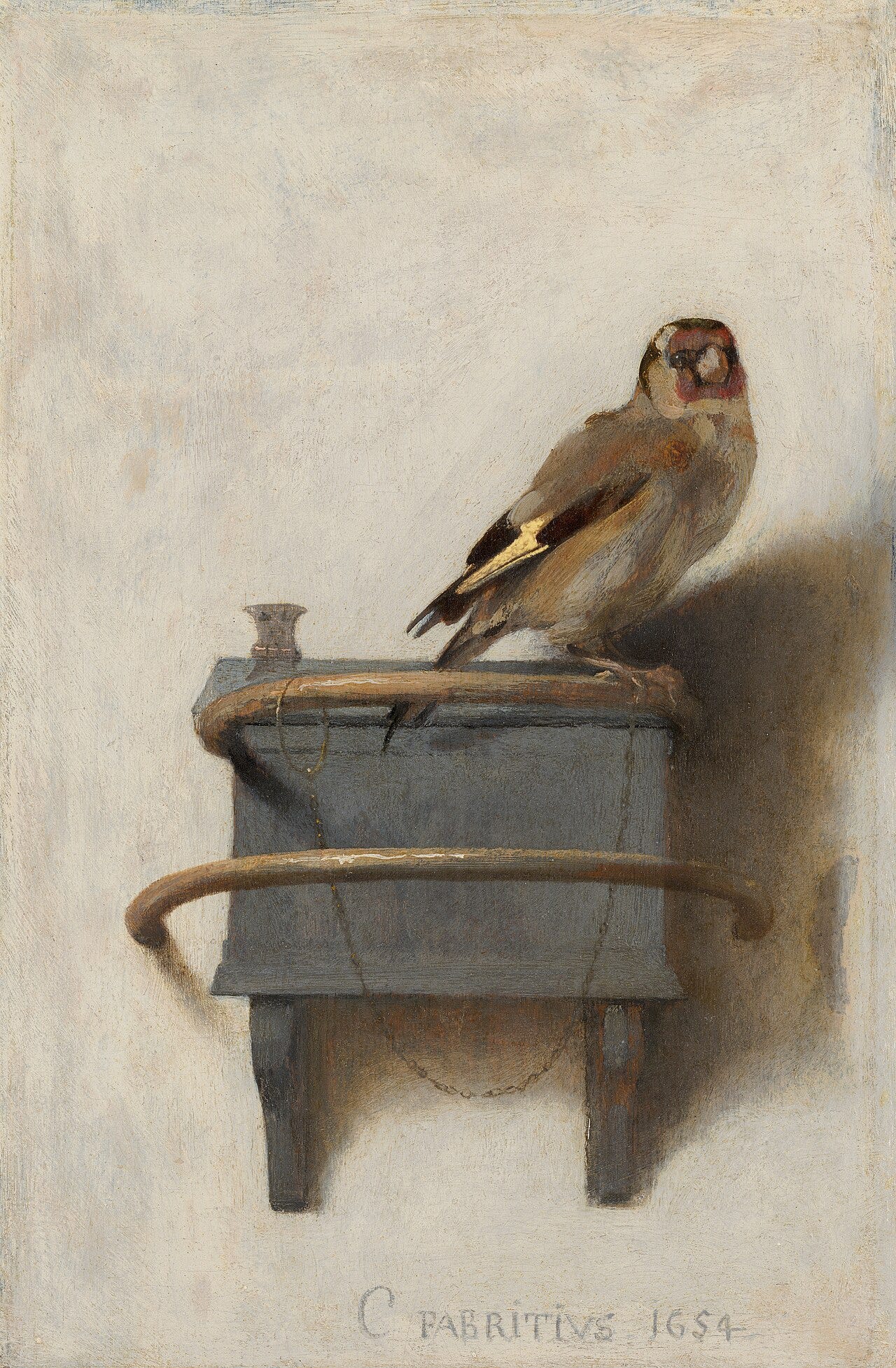
1. Carel Fabritius, The Goldfinch (1654)
A small goldfinch sits chained by one leg to its feed box, painted life size against a pale wall, so plain and so real that it fools the eye.
Fabritius, a gifted pupil of Rembrandt, made this tiny oil panel the same year a gunpowder store exploded and leveled much of Delft, killing him at thirty two.
Only about a dozen of his works survive, which makes this bright little bird almost unbearably precious. Up close the paint is loose and quick, more suggestion than detail, centuries ahead of its moment.
A bestselling novel and film named after it turned this once forgotten panel into a modern celebrity.
2. Jan Asselijn, The Threatened Swan (about 1650)
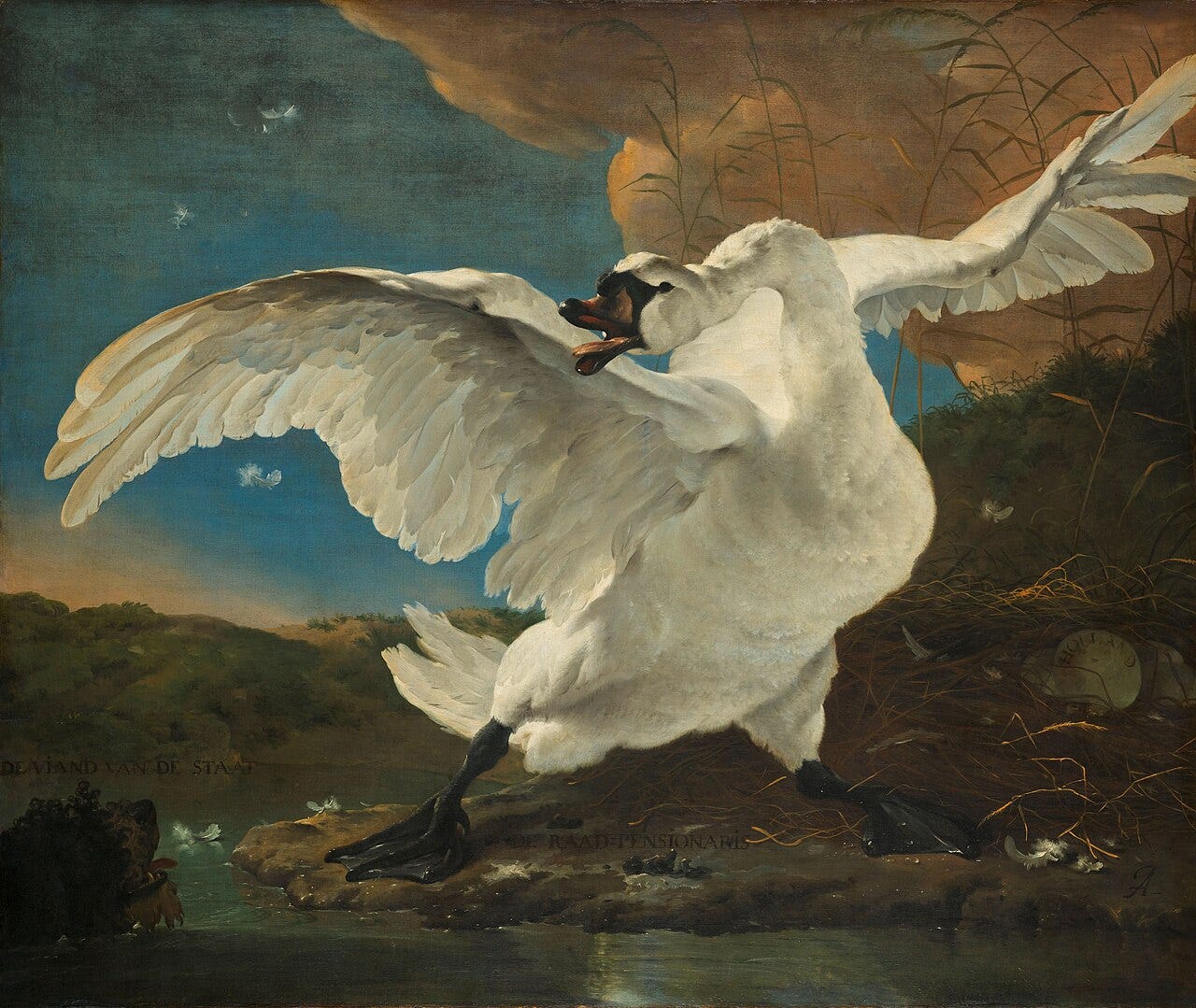
A huge white swan rears up with wings flung wide and beak open, hissing and defending its nest against a small dog paddling in the water below.
Asselijn painted the bird at furious full stretch, feathers flying, one of the most dramatic single animals in all of Dutch art.
Long after his death, someone added inscriptions turning the swan into a political symbol, the nest as Holland and the swan as a heroic statesman guarding it.
Stripped of that story, it is simply a magnificent animal in a rage. It became the very first painting bought for the collection that grew into the Rijksmuseum.
3. Melchior d'Hondecoeter, The Floating Feather (about 1680)
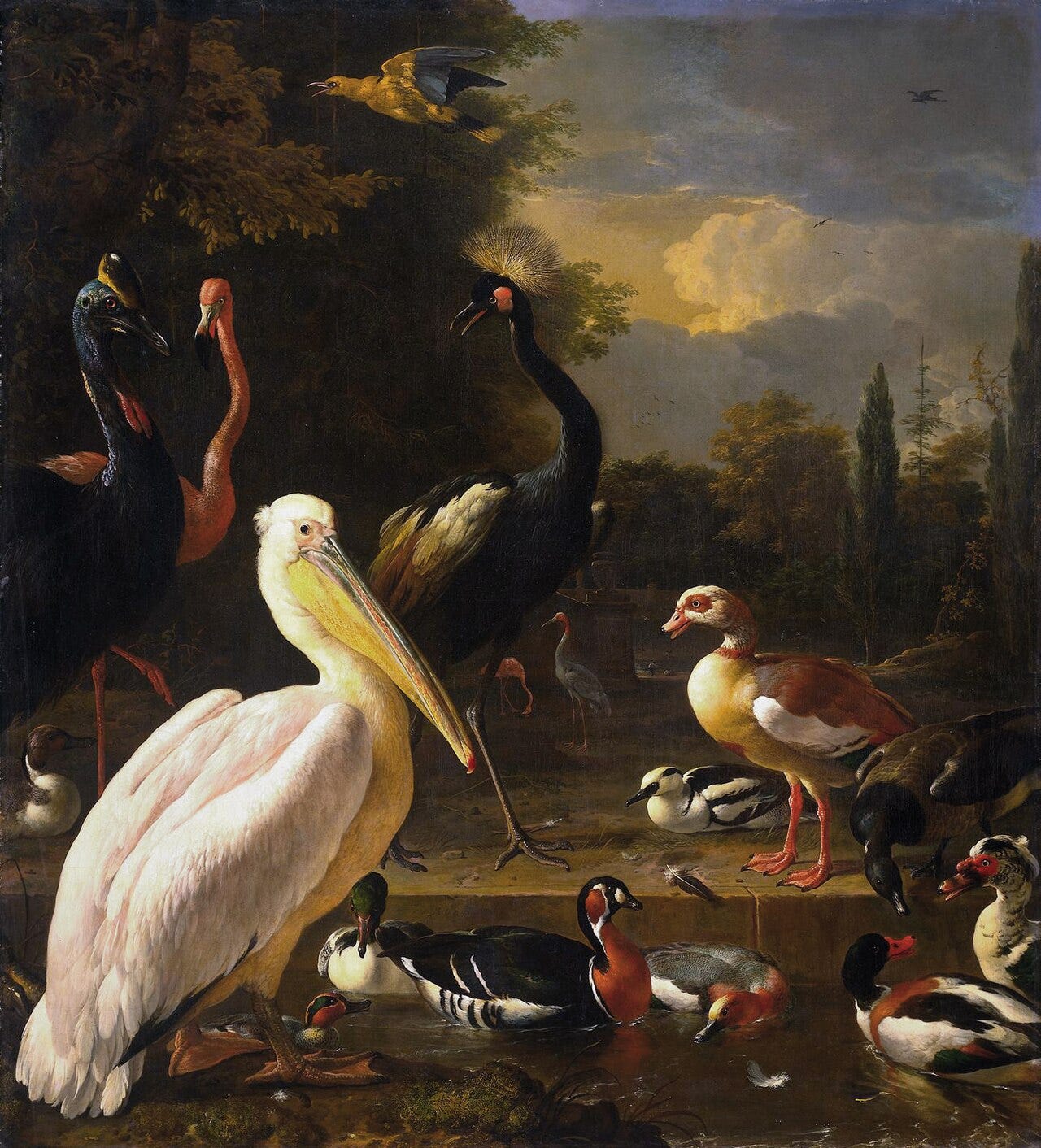
A pelican, a flamingo and a crowd of exotic waterfowl gather at the edge of a pond in a grand aviary, ruled over by their painter, the acknowledged master of the bird still life Hondecoeter came from a family of painters and specialized so completely in birds that he was often called the Raphael of bird painters.
It hung for centuries in Dutch palaces before entering the Rijksmuseum. By one old legend he even trained a live rooster to hold a pose on command.
Right at the bottom, a single downy feather drifts on the water, the quiet detail that gave the whole painting its name.
4. Frans Snyders, Concert of Birds (about 1630)
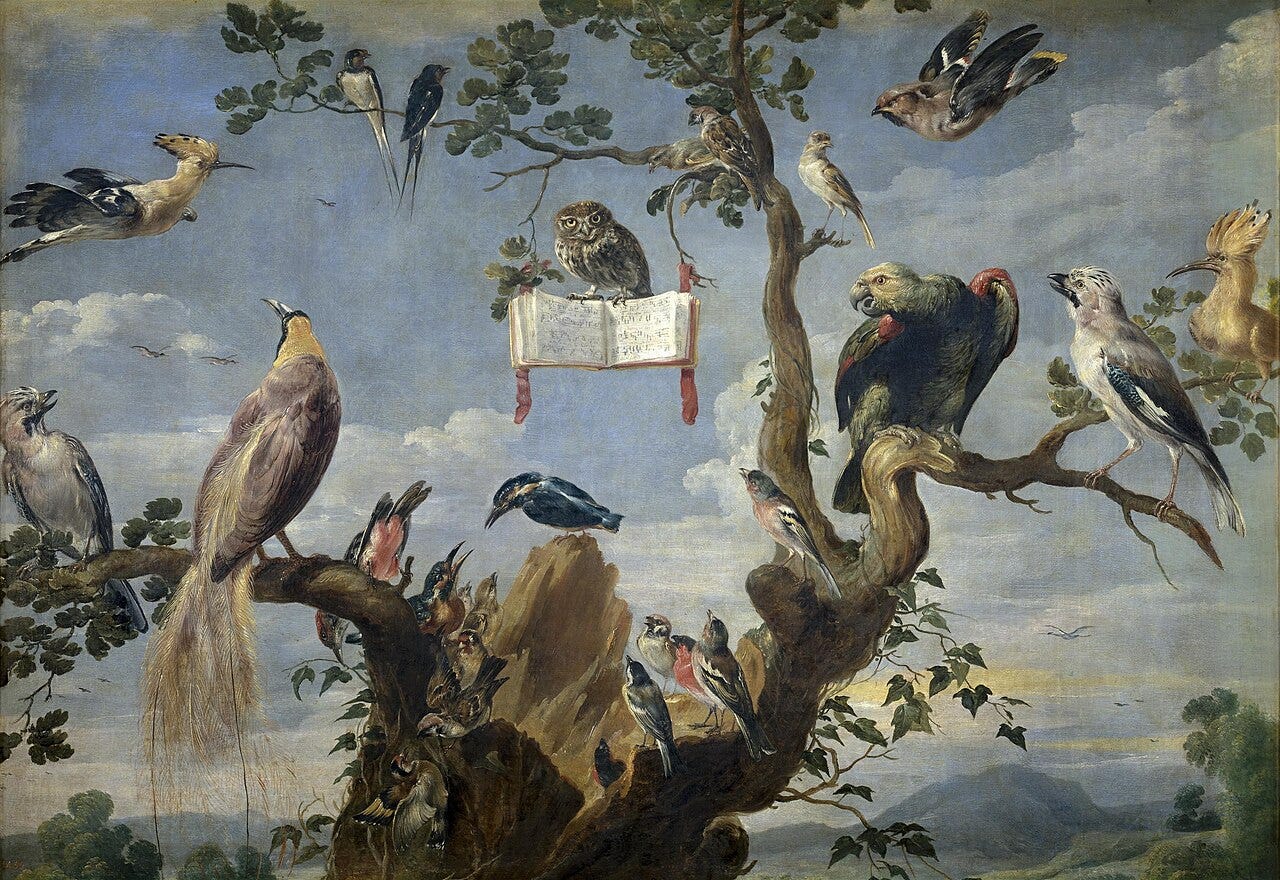
Dozens of birds of every kind perch in a tree and squabble around an owl holding an open songbook, as if conducting a chaotic choir.
Snyders, the greatest animal painter of Flanders, based it on an old fable in which the birds gather to sing and the owl beats time.
Each species is painted with a naturalist's accuracy, from parrots to peacocks to a strutting turkey. He often worked beside Rubens, adding the animals to his friend's grand scenes.
The subject was so loved that Snyders and his workshop painted the squabbling bird concert again and again.
5. Jan Baptist Weenix, Still Life with a Dead Swan (about 1651)
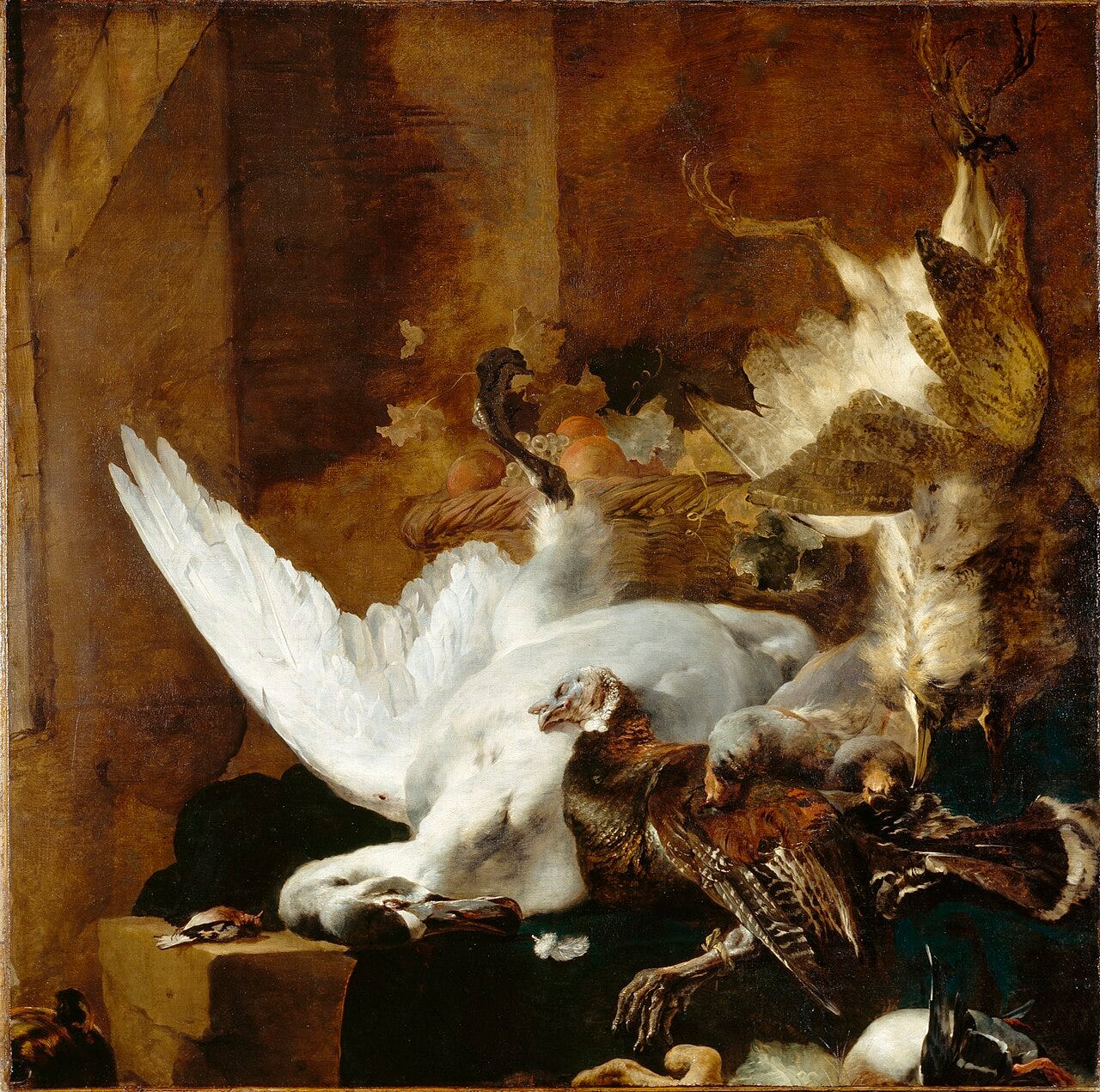
A great white swan hangs upside down by one leg, wings spilling open across the whole canvas, its long neck trailing down among the tools and spoils of the hunt.
Weenix painted dead game like this on a grand, near heroic scale, turning a plain kitchen still life into high drama. The pure white of the feathers against the dark background was a way of showing off, the hardest thing in paint pulled off with ease.
A dead swan also carried a hush of mortality, beauty and death hanging side by side. It became one of the treasures of the Detroit Institute of Arts, saved when the bankrupt city nearly sold off its art in 2013.
6. John James Audubon, American Flamingo (1838)
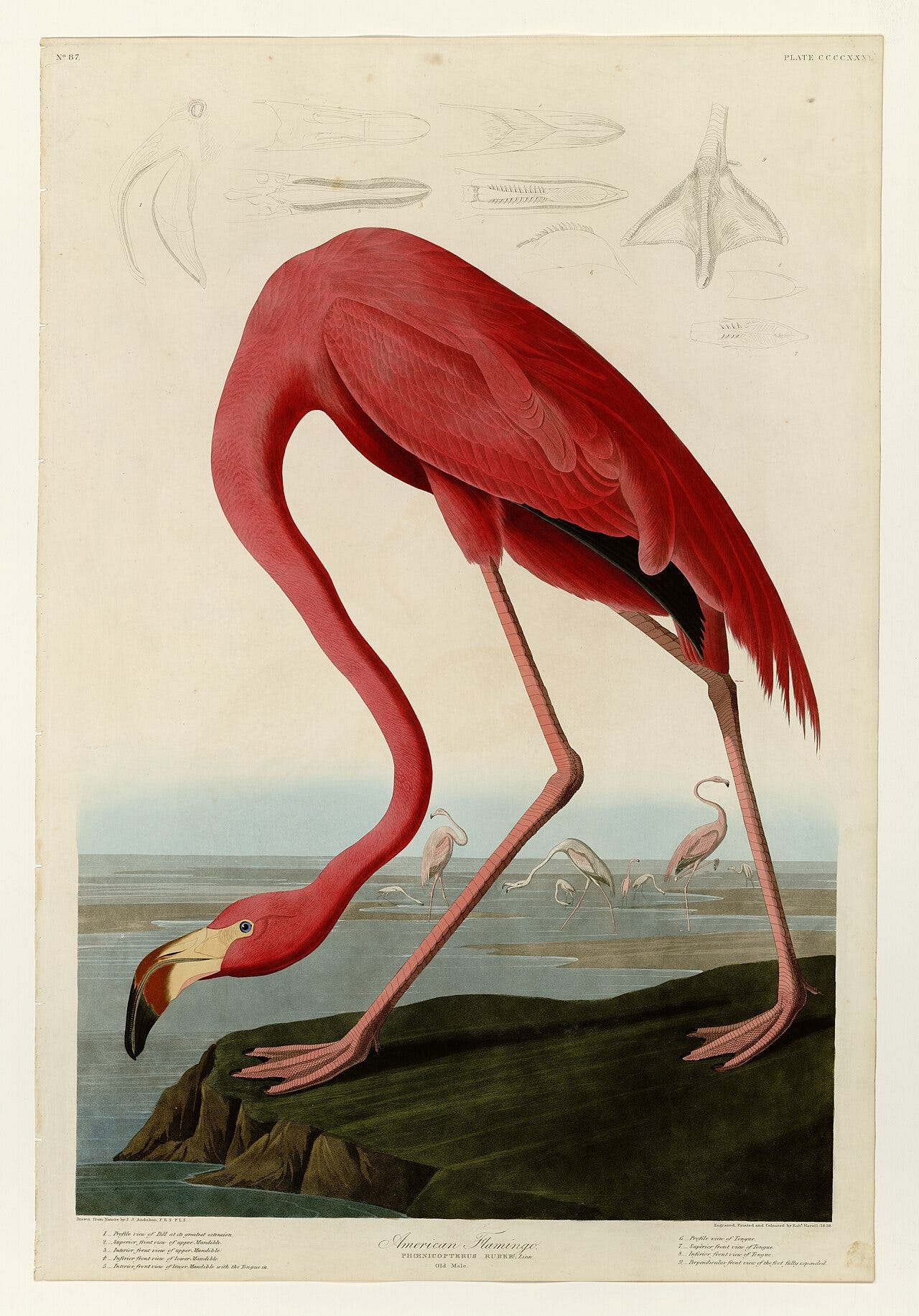
A flamingo bends its whole long neck down to the ground so its body could fit on the page, blazing pink against a low strip of shoreline.
Audubon set out to paint every bird in America at life size, which meant folding a six foot flamingo into this strange, memorable pose.
He was a showman and a self taught naturalist who often propped freshly shot birds on wires to look alive. His giant book, The Birds of America, is one of the most valuable printed books on earth, a complete copy selling for millions.
To get the colors right, every plate was engraved and then painted by hand, one bird at a time.
7. Gustave Courbet, Woman with a Parrot (1866)
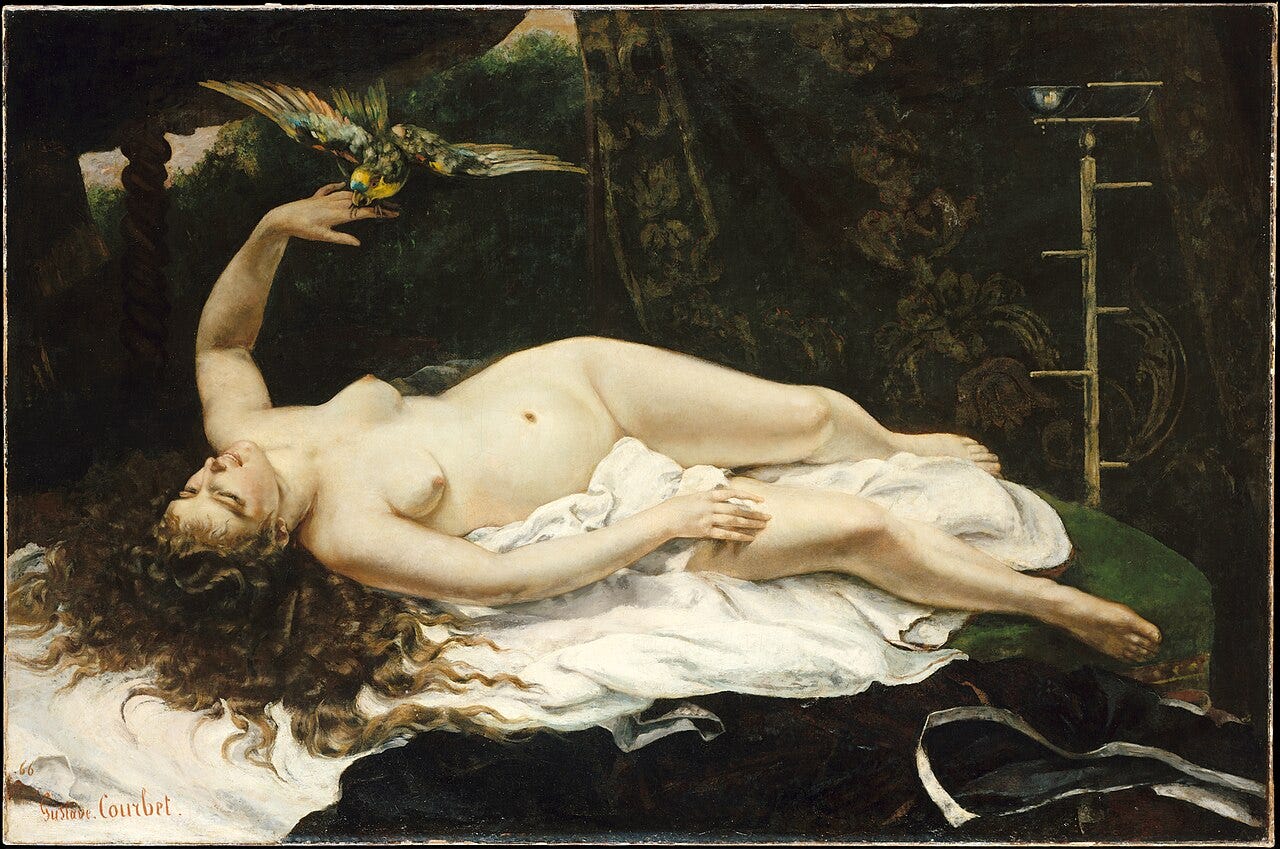
A naked woman lies back on a rumpled bed with her hair loose, laughing as a bright parrot perches on her raised hand and beats its wings.
Courbet scandalized the Paris Salon with her, the loose hair and abandoned pose read as far too frank and real for a respectable nude.
The parrot, a fashionable exotic pet, adds a note of luxury and a hint of the erotic. Critics who disliked it sneered at her ungainly pose and messy hair, missing how alive she looked.
It hangs today in New York, one of the pictures that helped drag the nude out of myth and onto a real bed.
8. Van Gogh, Wheatfield with Crows (1890)
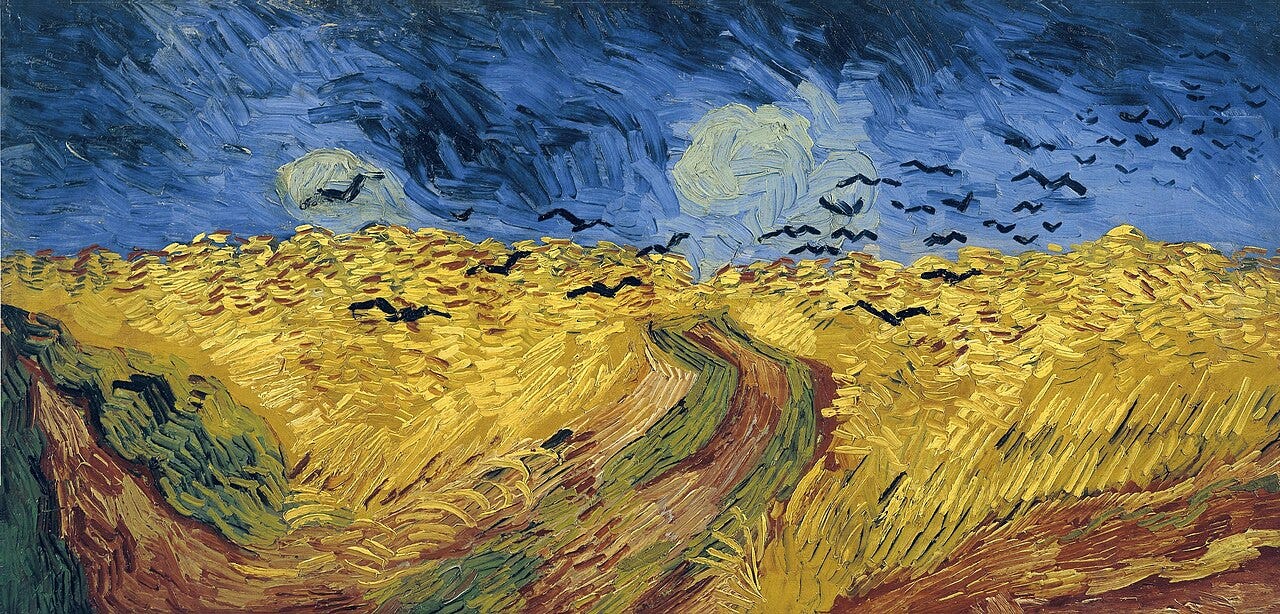
A flock of black crows scatters up out of a stormy wheat field under a heavy blue sky, painted in the last weeks of Van Gogh's life.
For years people called it his final painting and read the crows as an omen of the suicide that came soon after, though that timeline is not actually certain.
The three paths going nowhere and the low, pressing sky give it a real sense of dread. His whole legacy was later rescued by his sister in law Johanna, whose story I tell in the piece on the woman who made Van Gogh The painting hangs in the Van Gogh Museum in Amsterdam, a wide double square canvas he kept for his most urgent late scenes.
9. Pieter Bruegel the Elder, The Magpie on the Gallows (1568)
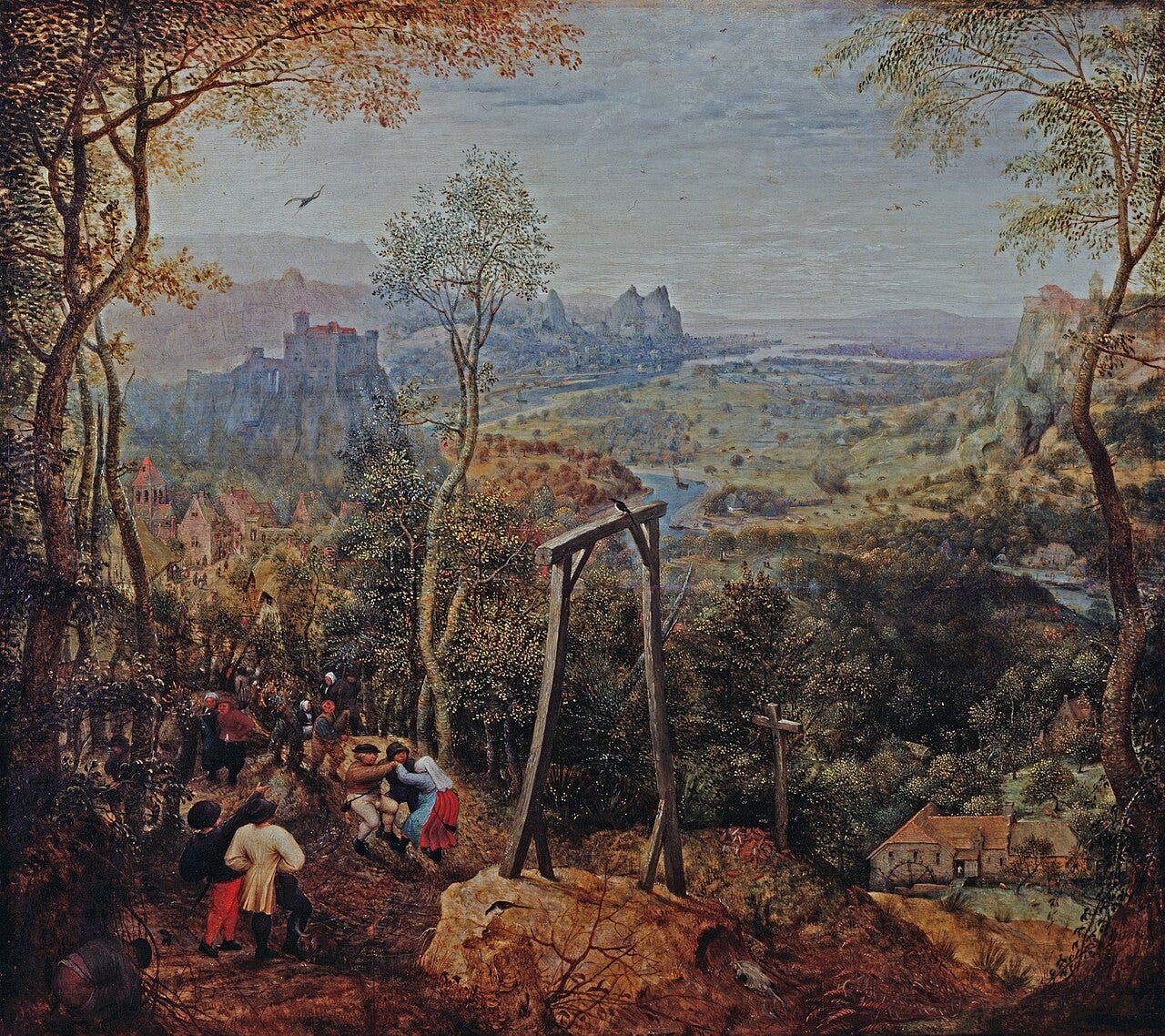
Peasants dance merrily on a hilltop right beside a gallows, while a single magpie perches on the crossbeam, watching them the whole time.
Bruegel painted this strange, unsettling scene near the end of his life, in a Netherlands living under harsh Spanish rule and public executions.
The magpie was a symbol of gossip and of the gossips who could get a person hanged, so a dance under the gallows carries a grim warning. He left the little picture to his wife in his will, a sign of how personal it was to him.
Look closely at the bottom left and a man is casually relieving himself, Bruegel's earthy joke tucked in amid the dread.
10. Ito Jakuchu, Rooster (about 1760)
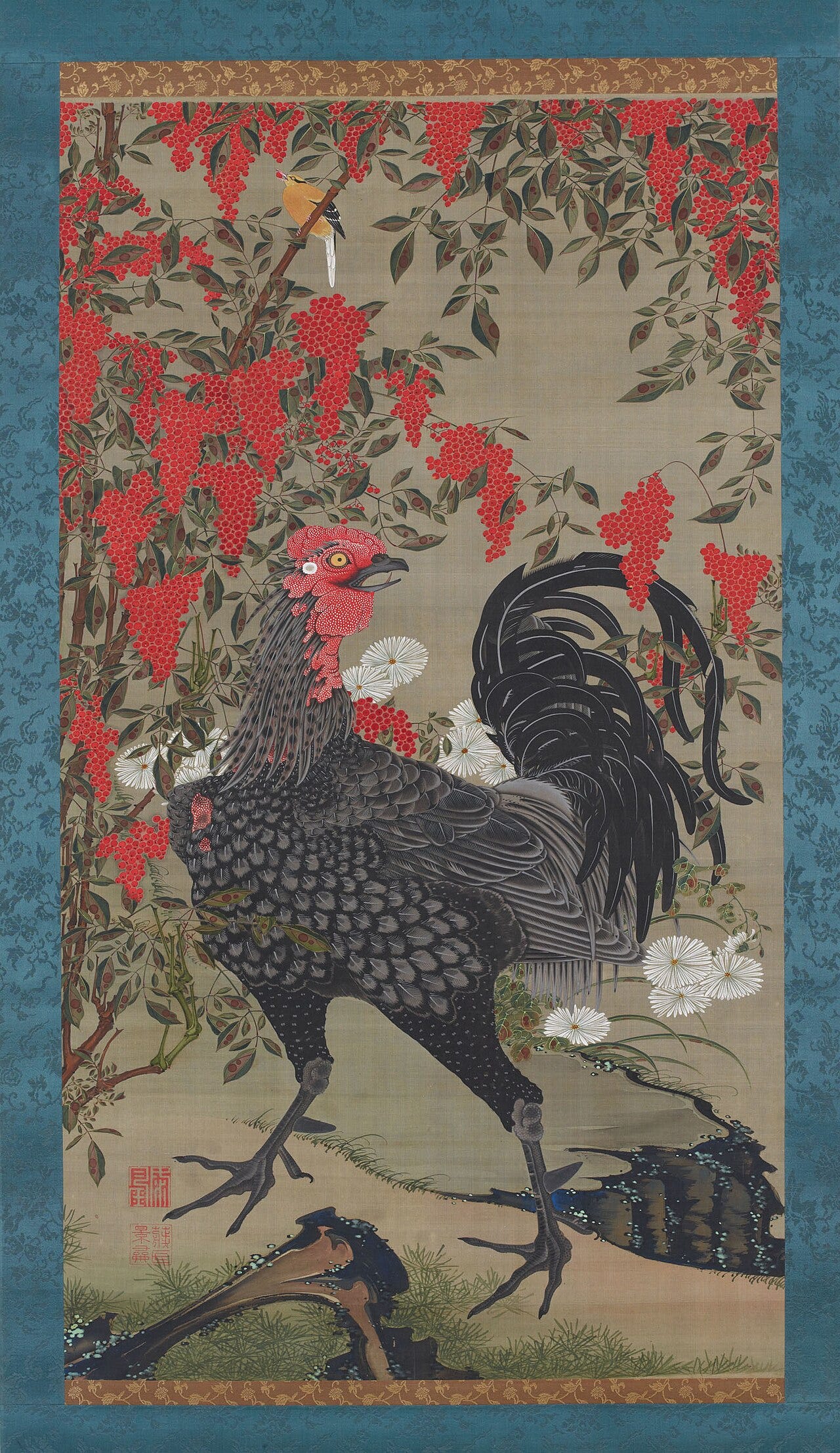
A rooster stands in brilliant detail, every feather and wattle rendered with obsessive care, part of a Japanese series celebrating every living creature.
Jakuchu was the son of a Kyoto grocer who gave up the family business to paint, above all his beloved chickens. He is said to have kept dozens of live roosters in his garden simply to study them for years on end.
His feathers glow with layered mineral pigments, sometimes worked from the back of the silk, a trick of Japanese bird and flower art He gave the whole set of thirty scrolls to a Kyoto temple, then was largely forgotten until Japan rediscovered him as a genius in the twentieth century.
11. Abbott Handerson Thayer, Peacock in the Woods (1907)
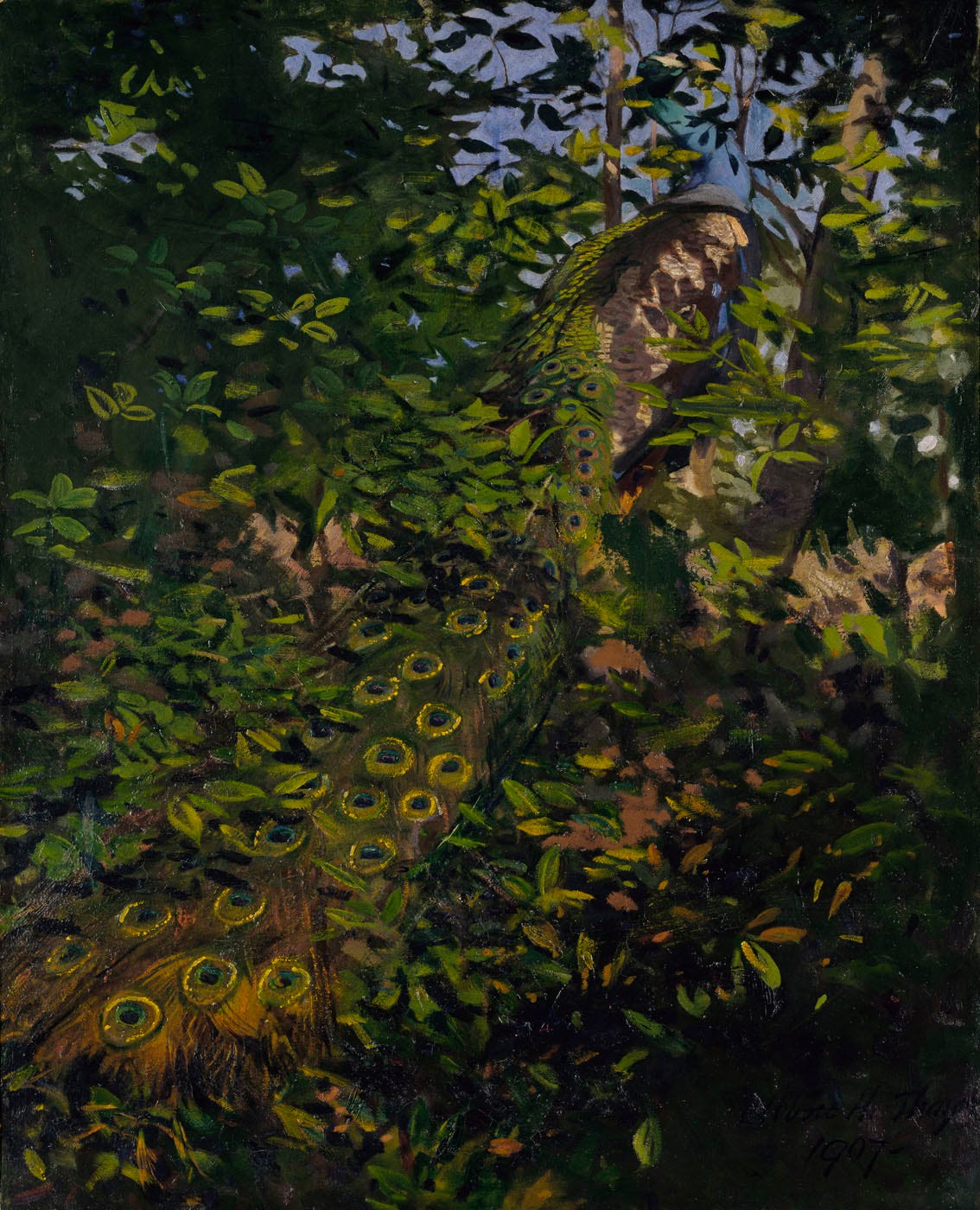
A peacock stands in dappled forest light, its long tail dissolving into the leaves and shadows around it, half hidden in plain sight.
Thayer, an American painter obsessed with camouflage, used this bird to argue that even the gaudiest animal is really disguised by its surroundings.
He was so convinced that he wrote a whole book on natural camouflage and later advised armies on how to hide ships and men. Critics thought a bright peacock was a strange way to prove that animals blend in.
Yet his ideas about disruptive pattern genuinely shaped early military camouflage in the First World War.
12. Albrecht Durer, The Little Owl (1508)
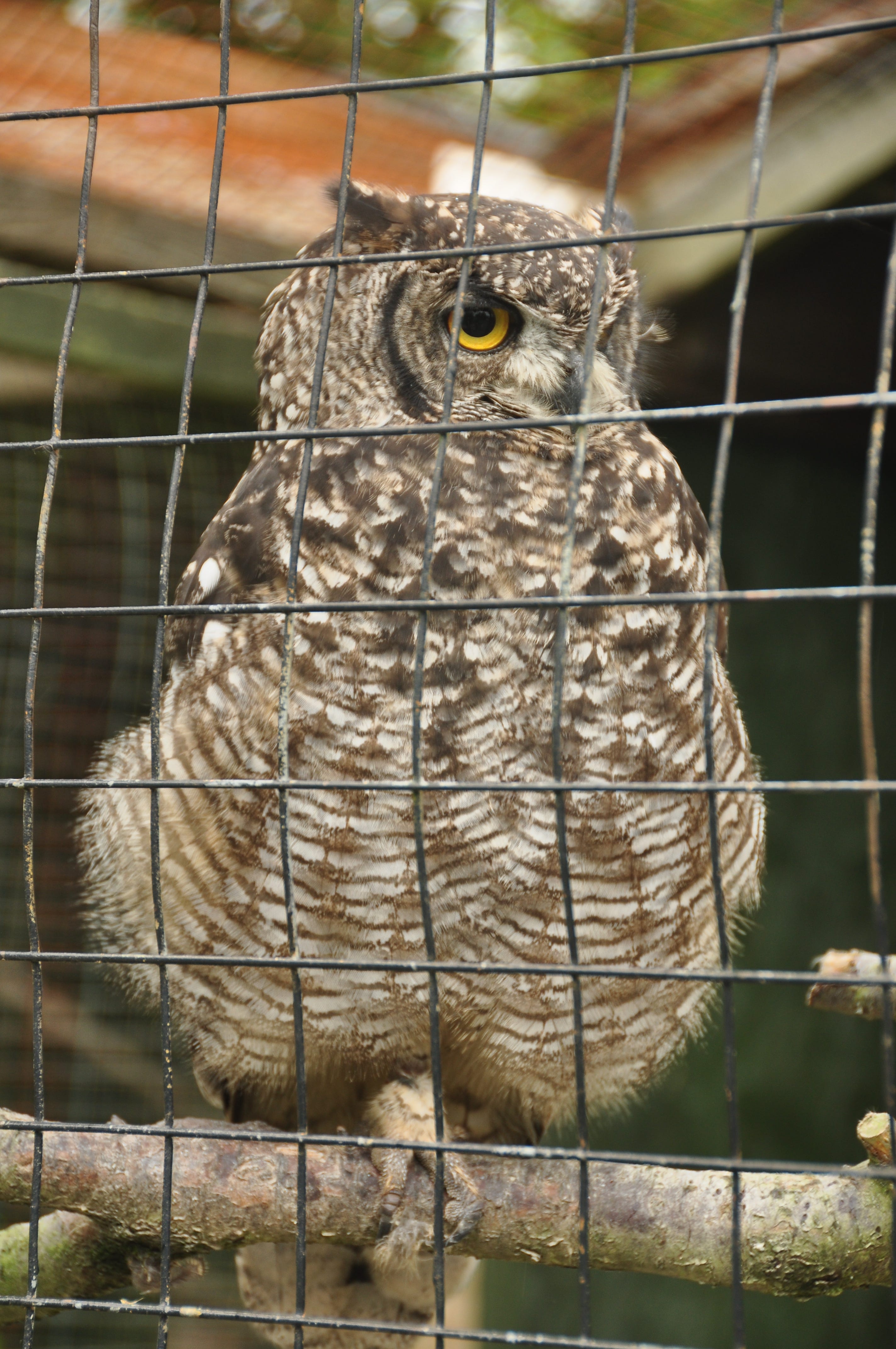
A small owl stares straight out at us with huge round eyes, painted in watercolor with such patience that every soft feather looks touchable.
Durer, the greatest artist of the German Renaissance, made these nature studies for himself, not for sale, purely to capture a living thing exactly as it was.
The little owl was long linked in folklore with both wisdom and bad luck, a bird of the night. He signed it with his famous monogram and a date, taking a study of one small bird as seriously as any grand altarpiece.
It sits today in the Albertina in Vienna among his most treasured studies from life.
Birds in painting, a few questions
What is the most famous painting of a bird? Carel Fabritius's Goldfinch is now the best known, helped by a hit novel, along with Audubon's life size American birds.
What do birds mean in paintings? A dove can stand for peace or the soul, an owl for wisdom or death, a magpie for theft or gossip, a caged bird for a trapped life.
Who was the greatest bird painter? Melchior d'Hondecoeter in Holland and John James Audubon in America both gave their whole careers almost entirely to birds.
Why are birds hard to paint? Feathers catch the light in countless tiny ways and birds rarely hold still, so capturing both texture and life takes real patience.
What does a caged or chained bird mean? It usually stands for lost freedom, a soul or a person held captive, as in Fabritius's chained Goldfinch.
If these birds pulled you in, you will love these too:
Vermeer, Woman Holding a Balance, what is actually on those scales
Inside Monet house at Giverny, room by room, including his own bedroom
The Ambassadors, detail by detail, the object at the bottom that only works from one side
Caught in mid flight
A bird is the hardest thing to hold still, which may be exactly why painters keep trying. To pin a swan mid hiss or a crow mid rise is to freeze the one creature that most wants to be gone.
These twelve painters each found a way to keep the wings from beating, just for a moment. Look away and you half expect the whole flock to lift off the canvas.