
Oil painting is paint made by grinding pigment into a drying oil, usually linseed. Because the oil dries slowly, the artist can blend colors, build transparent layers, and create soft, deep, glowing light.
It became the dominant medium in the West for over 500 years.
The Mona Lisa, Rembrandt’s Night Watch, almost every famous painting you can name in a Western museum is oil on panel or canvas.
More than any other medium, oil is what let Western painting chase realism, light and depth.
What oil paint actually is
What it is: pigment ground into a slow drying oil.
The gift: it stays wet, so you can blend and rework for hours.
The look: deep color, soft transitions, glowing layered light.
The shift: it replaced egg tempera as the main medium.
The pioneers: the early Netherlandish painters, above all van Eyck.
Keep learning art the fun way


Why slow drying changed everything
For me, the magic of oil is time.
Egg tempera, the medium oil replaced, dries almost instantly, so colors must be built in tiny separate strokes and cannot be blended on the panel.
Oil stays wet for hours or days. Suddenly a painter could soften one tone into another, melt a shadow into a cheek, and rework at will.
The smoky, seamless transitions of later painting only became possible because the paint refused to dry in a hurry.
Slow paint gave artists time to think with the brush.
Layers and glazes
Oil also lets light travel through the paint.
Painters built pictures in layers: a monochrome underpainting to map the light, then thin transparent films of color called glazes laid over it.
Light passes down through the glazes, bounces off the bright layers beneath, and comes back to your eye colored and deepened, the way light glows through stained glass.
It is how the old masters got reds and shadows that seem lit from within.
Oil does not just sit on the surface. It catches light inside itself.
From Ingres polish to Van Gogh ridges
Oil is also wonderfully physical.
Because it holds its shape, oil can be piled on thick, the raised, sculptural paint called impasto, or smoothed until no brushstroke shows at all.
The same medium gives you the glassy polish of an Ingres and the loaded ridges of a Van Gogh. Few materials stretch so far between control and freedom.
One paint, two opposite kinds of beauty.
The invention that gets misremembered
There is a myth I love correcting.
Van Eyck is often called the inventor of oil painting. He was not.
Painters had been mixing pigment with oil for centuries. The oldest known oil paintings survive in the Bamiyan caves of Afghanistan, made around the 7th century.
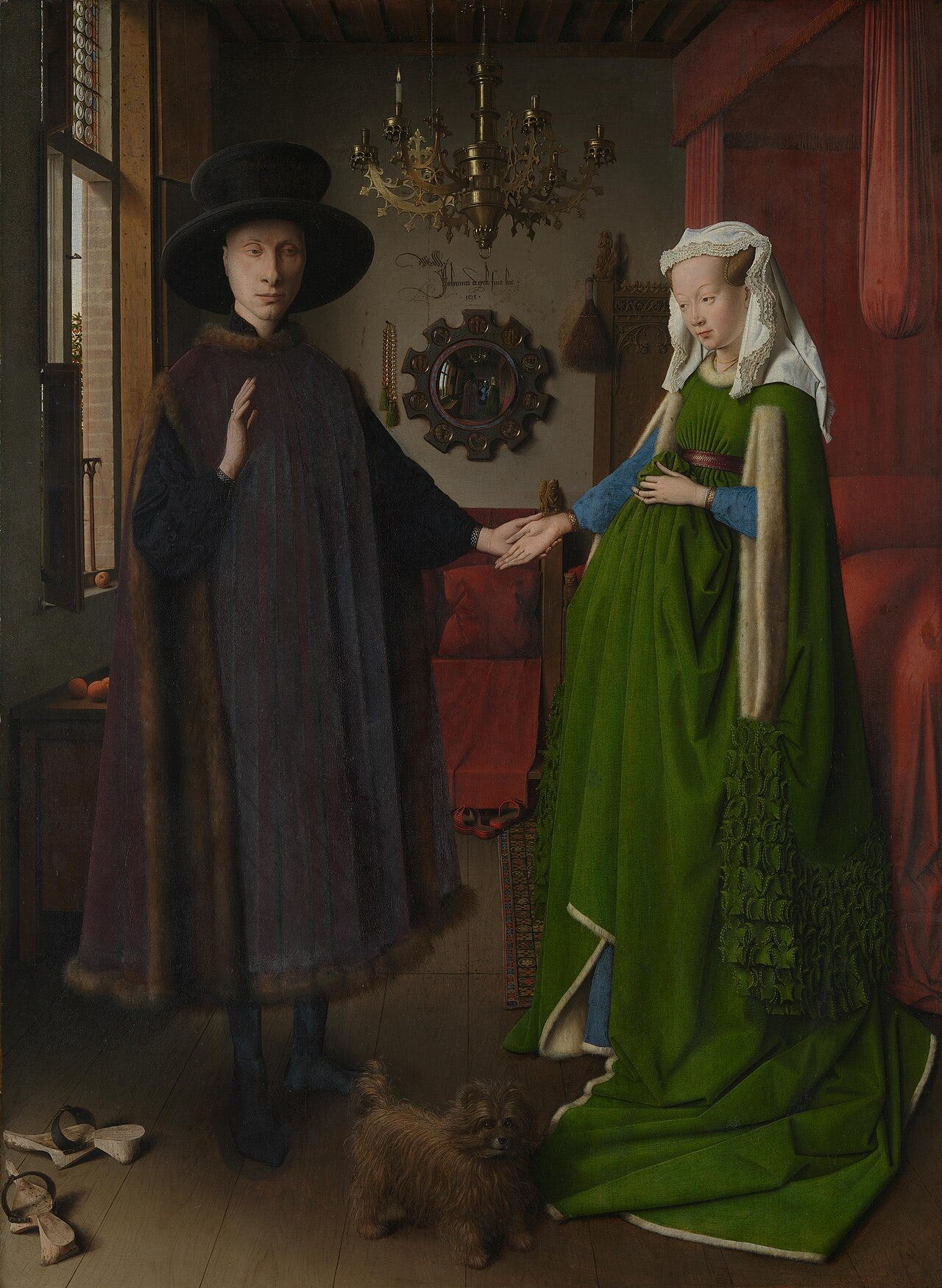
What van Eyck and the early Netherlandish painters did in the 1400s was master it, pushing oil until it could render fur, jewels and skin with a realism the world had not seen.
The Arnolfini Portrait was the moment oil announced what it could do.
Within a generation, painters across Europe were chasing his methods.
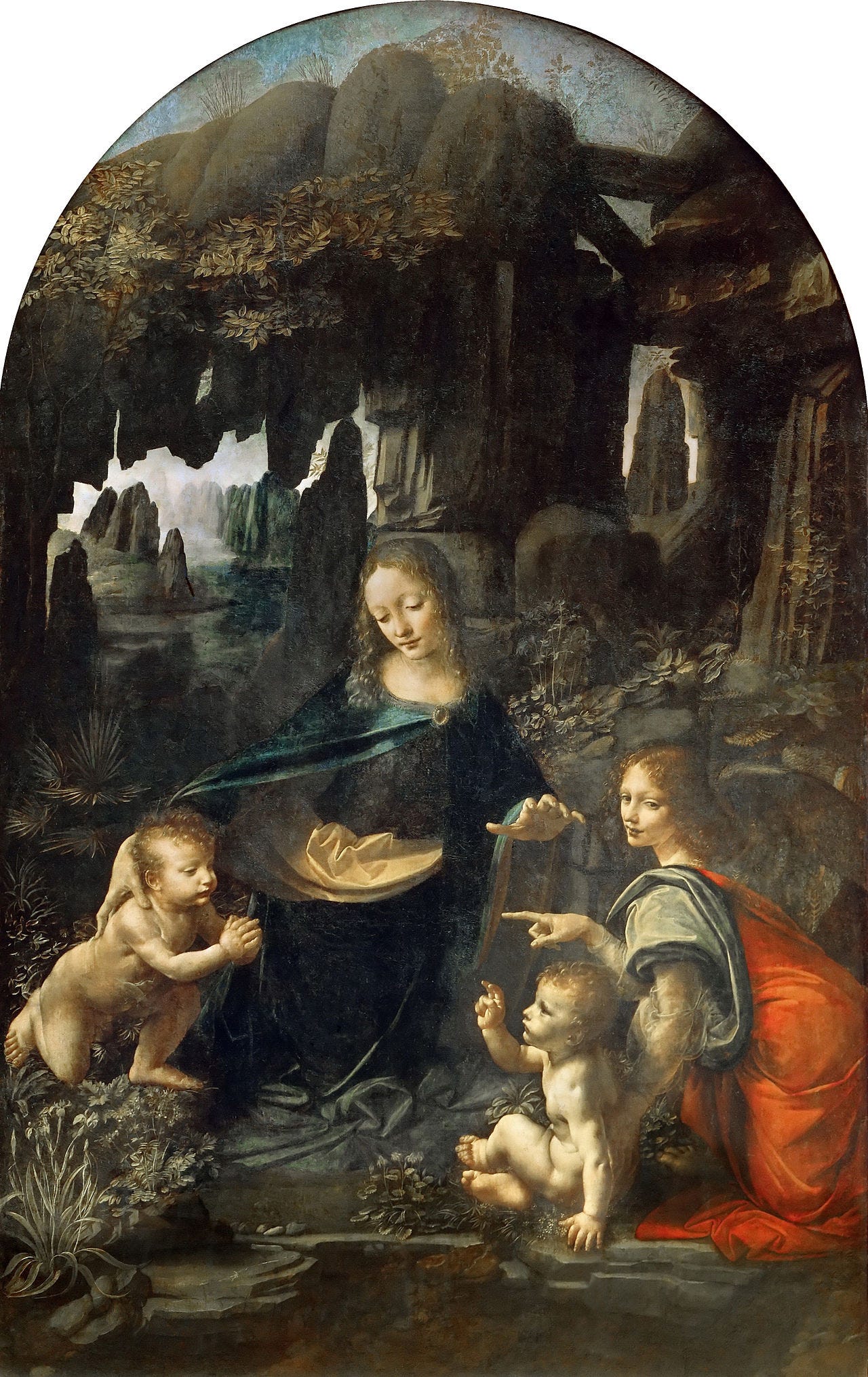
Two landmarks of oil hang in Europe. Van Eyck's Arnolfini Portrait is in the National Gallery, and the Louvre version of Leonardo's Virgin of the Rocks hangs in Paris.
The recipe that took centuries to crack
Oil paint sounds simple, pigment plus oil, but making it behave took generations of trial and error. The early Netherlandish painters around van Eyck worked out which oils dried well, how to layer thin glazes, and how to stop colors yellowing, and they guarded these recipes closely.
Later painters were not always so careful. Some of Joshua Reynolds’ pictures began cracking and fading within his own lifetime because of unstable mixtures, and certain bituminous browns never fully dried at all.
The freedom of oil came with a chemistry that could betray you.
Out of the studio in a tube
For most of its history oil painting was chained to the studio, where colors were ground fresh and used fast. That changed in 1841, when the American painter John Goffe Rand patented the collapsible metal paint tube.
Suddenly ready oil color was portable and sealed, and painters could carry it into the fields. Without that small invention there would have been no Impressionism painted outdoors in front of the subject.
A medium five centuries old was handed a second life by a piece of squeezable tin.
Oil let painters model skin and fur with a softness tempera never could, as you can see up close in Leonardo’s Lady with an Ermine.
Oil painting, the questions people ask most
What is oil painting? Paint made of pigment ground into a slow drying oil, usually linseed.
Why did it replace tempera? Because it dries slowly, oil can be blended and reworked, which tempera cannot.
What is a glaze? A thin transparent layer of oil color laid over another to deepen and enrich it.
Did van Eyck invent oil painting? No. He and other early Netherlandish painters perfected it, rather than inventing it.
Why is oil so versatile? It can be smoothed invisibly or piled on thick, giving everything from glassy polish to heavy texture.
More secrets to unlock


The paint that let painting grow up
Almost everything that comes to mind as great Western painting, the deep shadows, the glowing skin, the seamless light, comes from one plain fact: oil dries slowly.
That single property handed artists time. To me that is the whole story: with time came blending, glazing and risk.
From van Eyck's Arnolfini Portrait in 1434 to the loaded ridges of Van Gogh, five centuries of Western painting rode on a bowl of slow drying oil.
For what oil replaced and why painters made the switch, see tempera against oil.
Layer by layer, oil lets a painter build up light over weeks instead of hours, and twelve famous oil paintings show exactly what that looks like.
