
To analyze a painting, work through five formal elements in order: line, shape, color, light, and composition. Describe what you see before you interpret it. Below, each element is explained on a real painting.
Analysis is not appreciation
If you simply want to enjoy paintings more, start with our guide on how to appreciate art. That one is about pleasure.
This page is the toolbox. Formal analysis is the method taught in classrooms: you break a painting into its visual parts and describe how they work, before you say a word about meaning.
First rule: describe before you judge
Spend one full minute saying only what is physically there. A woman, a window, a jug, cool light from the left. No opinions yet.
This feels slow and mechanical. It is also the single habit that separates people who see paintings from people who glance at them.
Element 1: Line
Lines are the paths your eye rides through a painting. They can be drawn edges, or implied ones, like a pointing arm or a road that narrows.
Ask: are the lines straight or curved, calm or agitated, horizontal like a landscape or diagonal like an action scene?
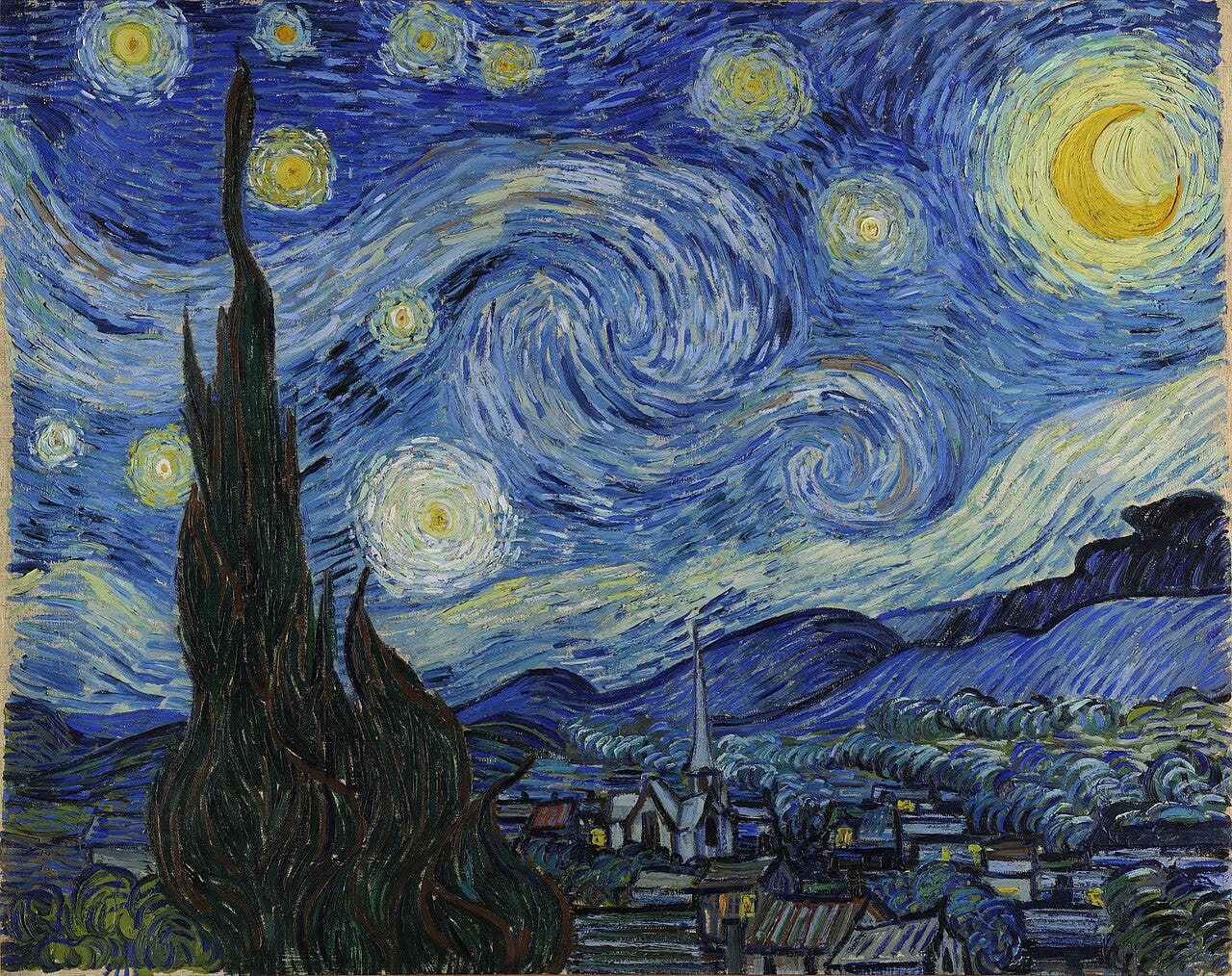
Look at Van Gogh’s The Starry Night. Almost every line curls. The sky moves in waves, the cypress flames upward, and your eye never gets to rest. The agitation is not in the story. It is in the lines.
Element 2: Shape
Shapes are what the lines enclose: circles, triangles, blocks, silhouettes. Painters stack simple shapes underneath complicated scenes.
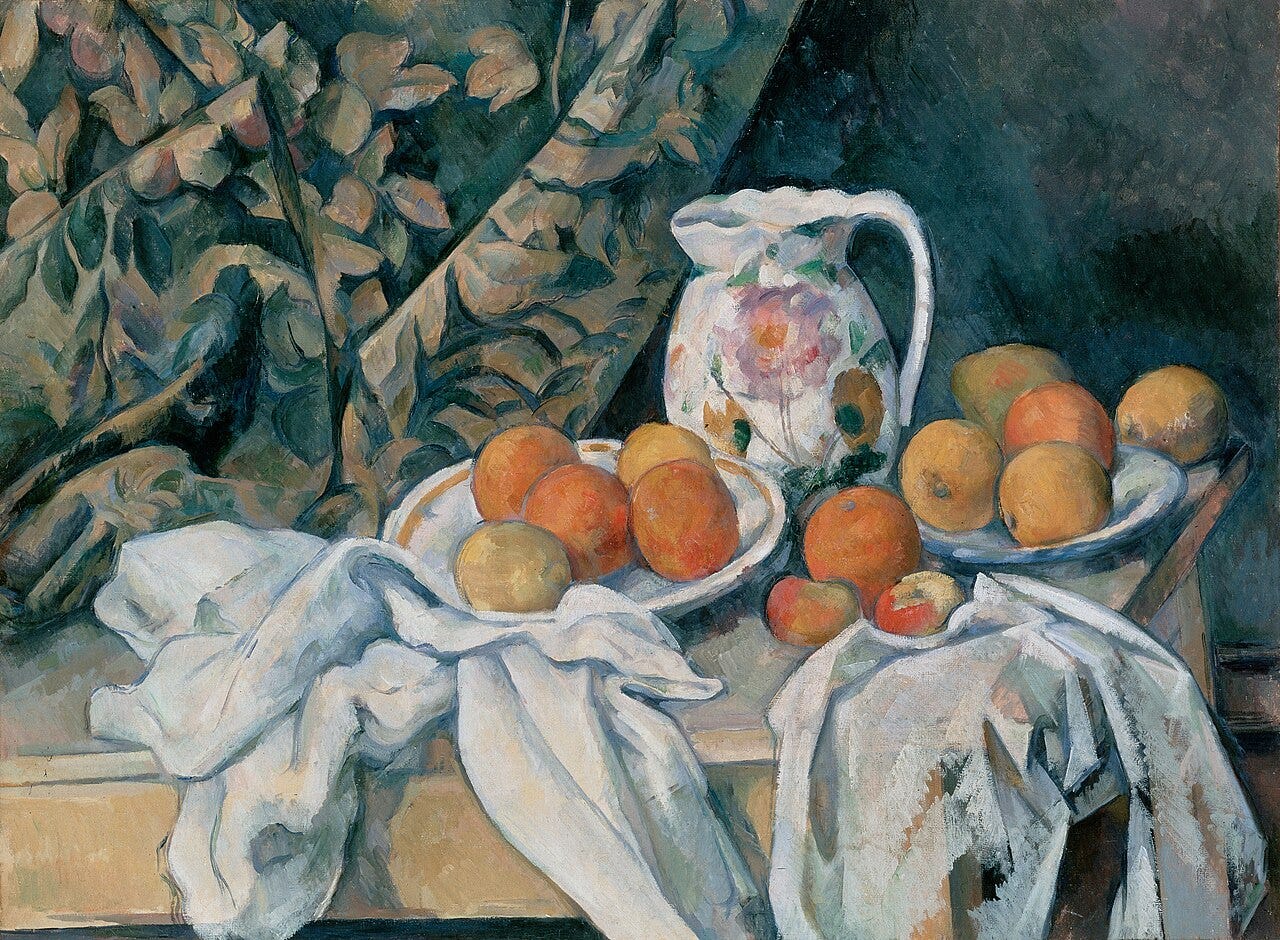
Cézanne said to treat nature by the cylinder, the sphere, and the cone, and his still lifes show it. Apples become spheres, tables become planes, and the picture holds together like architecture.
Element 3: Color
Color does two jobs at once: it sets temperature, warm or cool, and it directs attention, because a small patch of saturated color pulls the eye across a whole canvas.
Ask: which colors dominate, which are missing, and where does the strongest color sit?
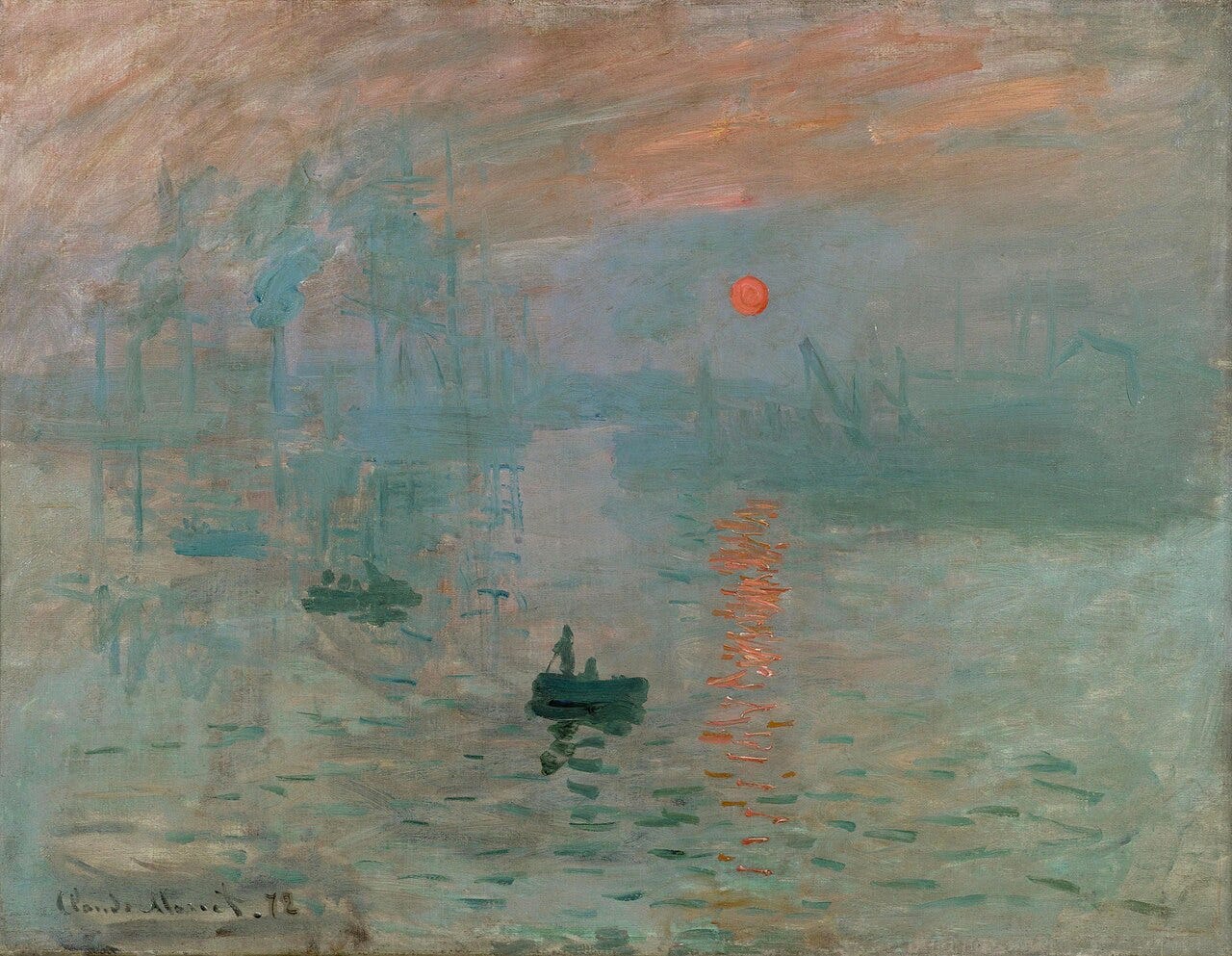
Monet’s Impression, Sunrise is a gray-blue harbor with one orange sun. Cover the sun with your thumb and the picture dies. That is color doing the work of a spotlight. It is also the painting that named Impressionism.
Element 4: Light
Find the light source first: where is it coming from, is it soft or harsh, and what does it choose to reveal?
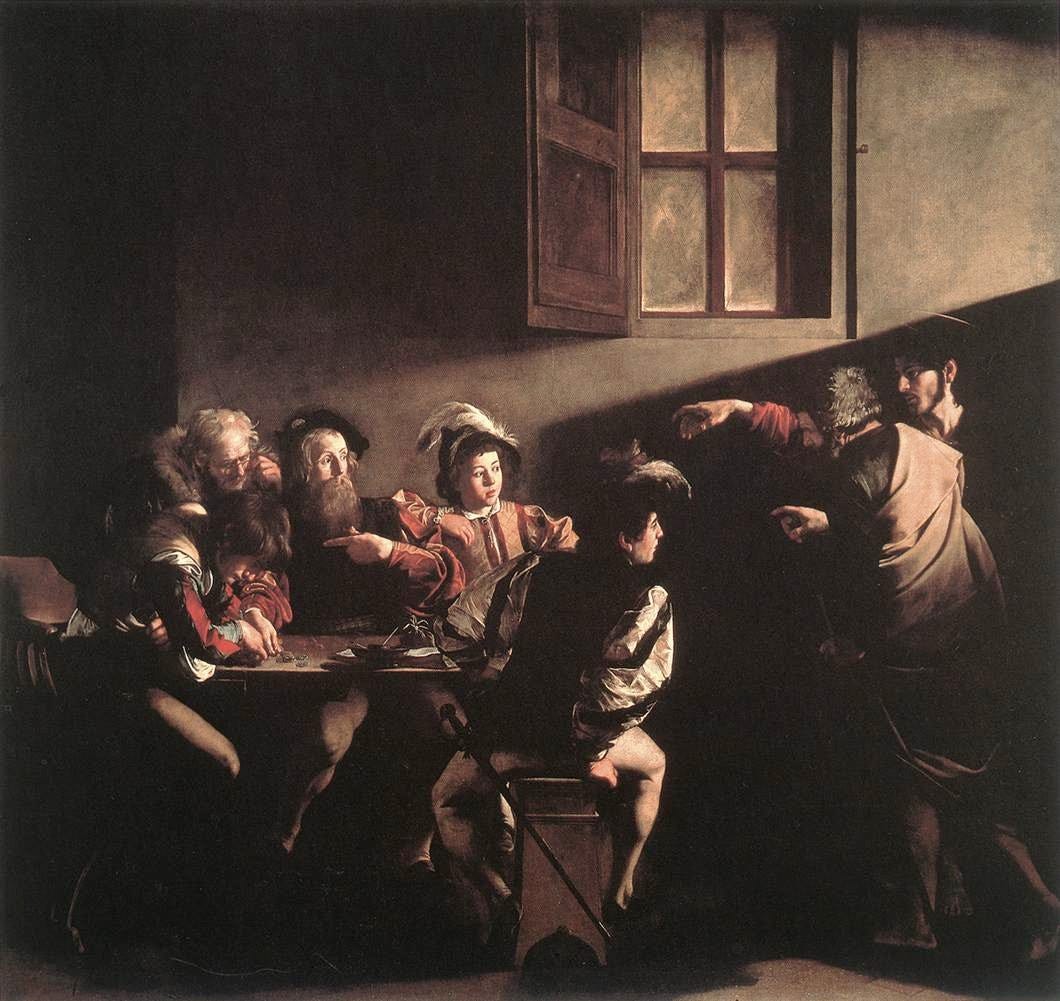
Caravaggio’s The Calling of Saint Matthew is the textbook case. One blade of light cuts through a dark tavern and lands on one man. The technique has a name, chiaroscuro, and once you spot it you will see it everywhere.
Element 5: Composition
Composition is where everything sits in the frame, and where the painter wants your eye to end up.
Ask: what is at the center, what is at the edges, and do hidden lines converge somewhere?
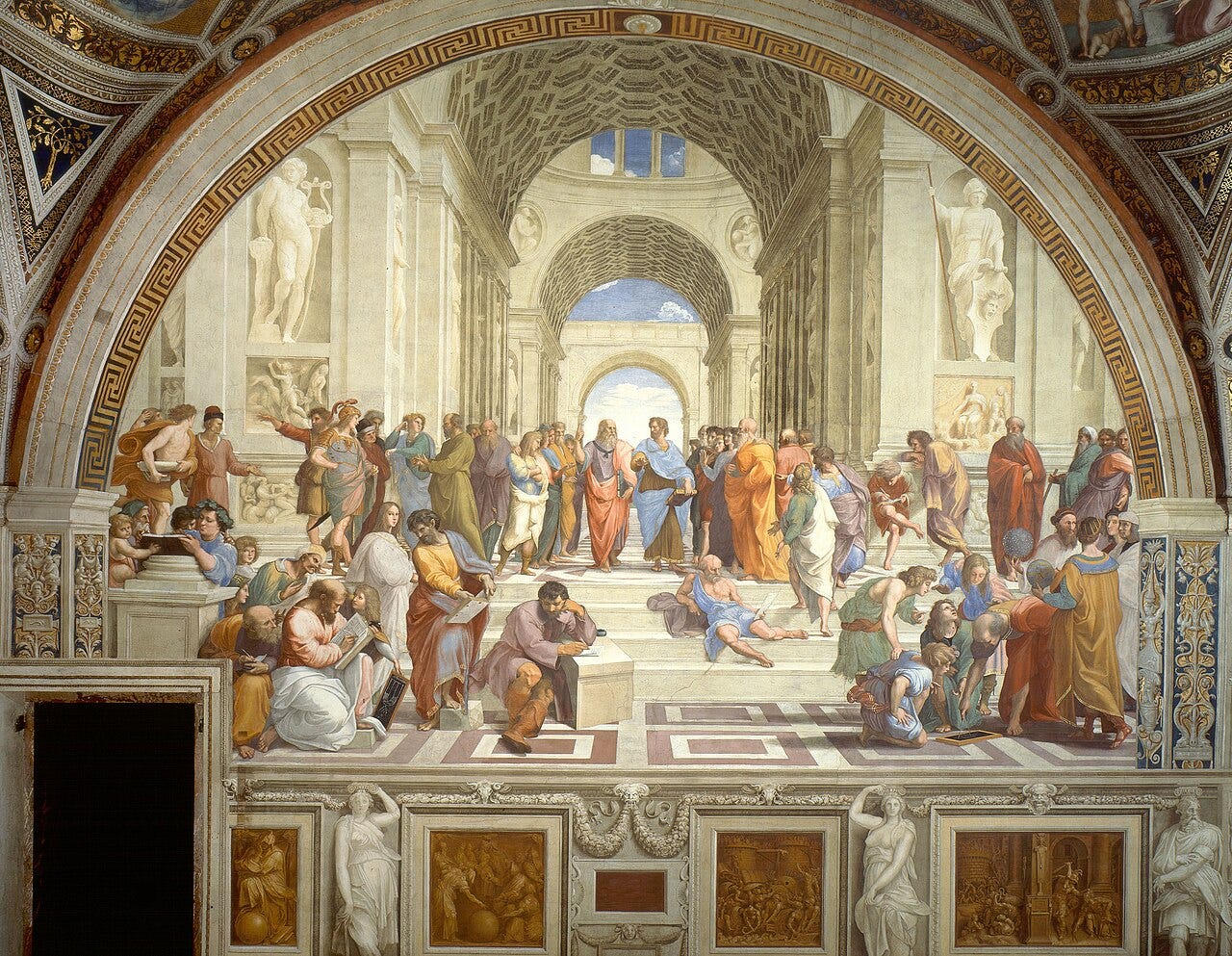
In Raphael’s The School of Athens, every architectural line converges on two figures in the doorway, Plato and Aristotle. You look at them first not by choice but by design.
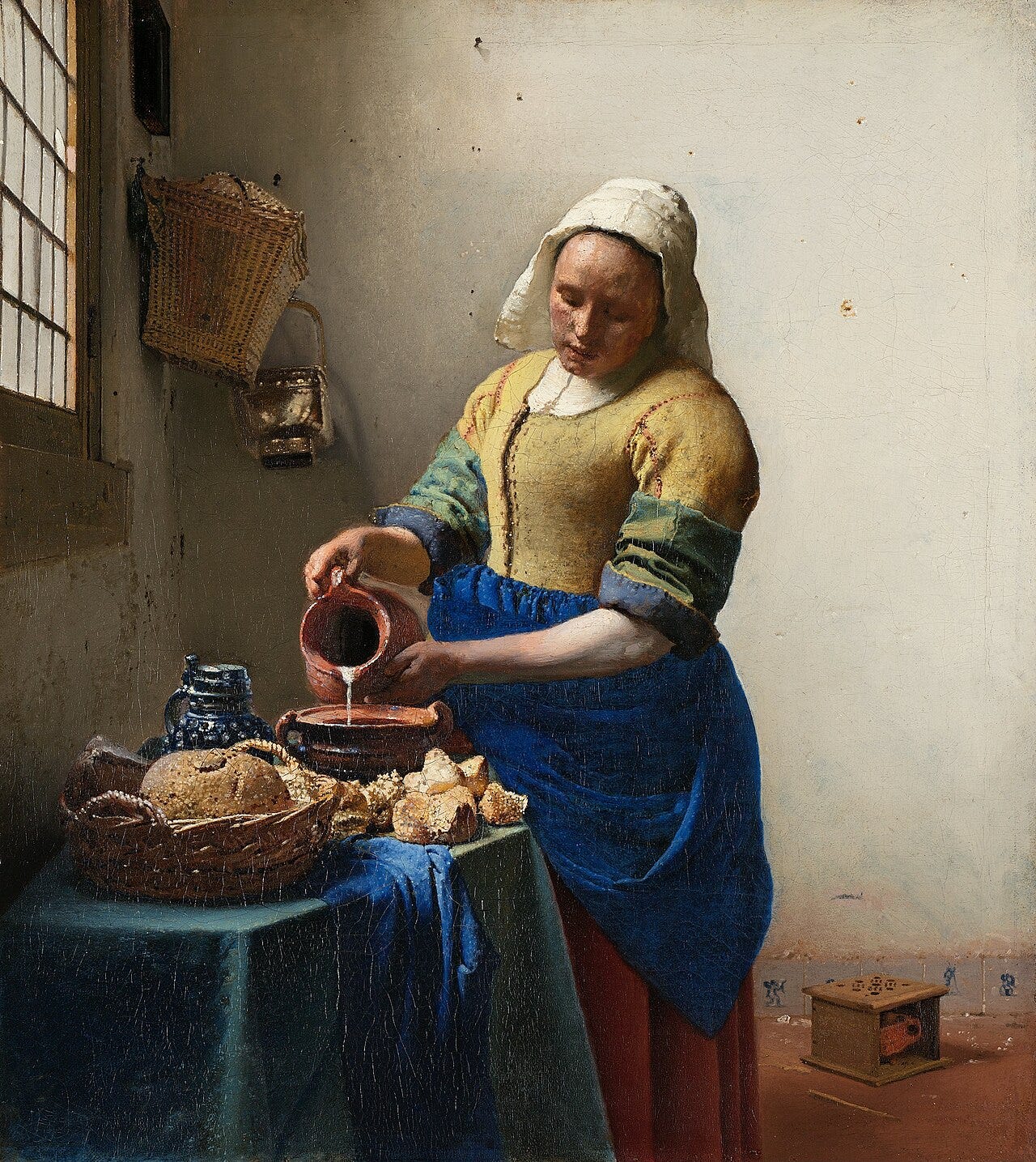
Put it together: Vermeer’s The Milkmaid
Line: mostly verticals and one long diagonal, the stream of milk, which your eye finds instantly because it is the only thing moving.
Shape: solid, rounded volumes. The woman is built like a column, stable and monumental even though she is just pouring milk.
Color: yellow and blue, over and over. Vermeer bought expensive ultramarine for a kitchen maid’s apron, which tells you how seriously he took her.
Light: one window, left side, soft. It catches the bread crust, the copper, her forehead, and nothing it does not need.
Composition: everything funnels toward the milk. Two seconds of analysis and a modest kitchen scene turns out to be engineered like a cathedral.
Common beginner mistakes
Jumping straight to meaning. Say what the light does before you decide the painting is about loneliness.
Describing the story instead of the paint. A plot summary of the myth is not analysis.
Ignoring size and medium. A miniature and a mural are different animals, even with the same subject.
Practice on one painting a week
The method only becomes automatic with repetition. Pick one painting a week and run the five elements. Our art history timeline gives you centuries to choose from, and our guide on how to learn art history turns the habit into a plan.
Or let the paintings come to you: this newsletter sends one painting’s story at a time, strange details included, free for 170,000 readers.
Questions readers ask
What are the formal elements of a painting?
Line, shape, color, light, and composition. Some lists add texture and space, but these five carry most of the work. Proportion is one of those extra threads, and it gets a full page of its own in proportion in art.
What is formal analysis?
Describing how a painting works visually, element by element, before interpreting what it means. It is the standard first exercise in art history courses.
What questions should I ask in front of a painting?
Where does my eye go first, why did it go there, and what did the painter do to make that happen? Every element above is a version of those three.
Is analyzing a painting different from appreciating it?
Yes. Appreciation is about enjoying the encounter, analysis is about explaining the mechanics. The first is a walk, the second is a workout, and each makes the other better.


