
Famous Bridge Paintings: 12 Great Crossings
A bridge is a gift to a painter, a clean line thrown across water, doubling itself in the reflection and leading the eye straight into the picture.
Painters have always loved bridges, for their clean lines, their mirror images in the water and the way they join one world to another. A bridge can be a place of work, a romantic ruin or a symbol of the modern iron age.
Here are twelve of the most famous bridge paintings, all now in the public domain. I have chosen the ones you want to walk straight across.
The rest of the archive
If you want the detail rather than the summary:
Was Monet really the first Impressionist, the painting that may have got there first
Inside Monet house at Giverny, room by room, including his own bedroom
The Ambassadors, detail by detail, the object at the bottom that only works from one side
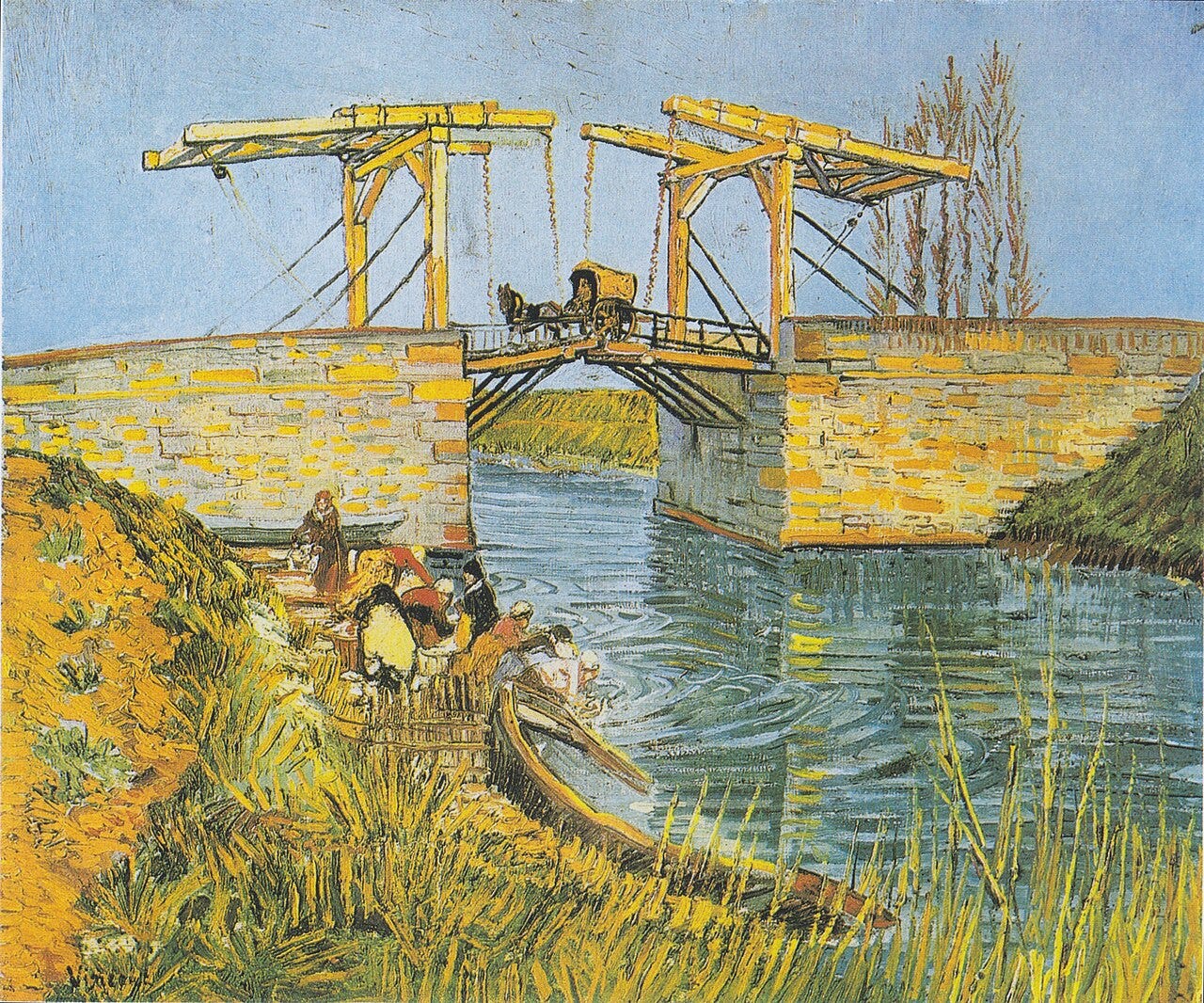
1. Van Gogh, The Langlois Bridge at Arles (1888)
Van Gogh painted this little wooden drawbridge near Arles again and again, drawn to its sharp lines against a clear southern sky and the yellow of the water.
It reminded the homesick Dutchman of the canals and lift bridges of his native Holland, a piece of home under a hotter sun. A woman washes clothes at the river's edge while a horse and cart clatter across, an ordinary morning caught in electric color.
He made several painted versions and many drawings of the same simple bridge in one year, a Post Impressionist burst of pure joy.
His whole legacy was later saved by his sister in law Johanna, whose story I tell in the piece on the woman who made Van Gogh, and the real Langlois bridge was pulled down in the 1930s, with a replica of the type rebuilt nearby for visitors.
2. Claude Monet, The Bridge at Argenteuil (1874)
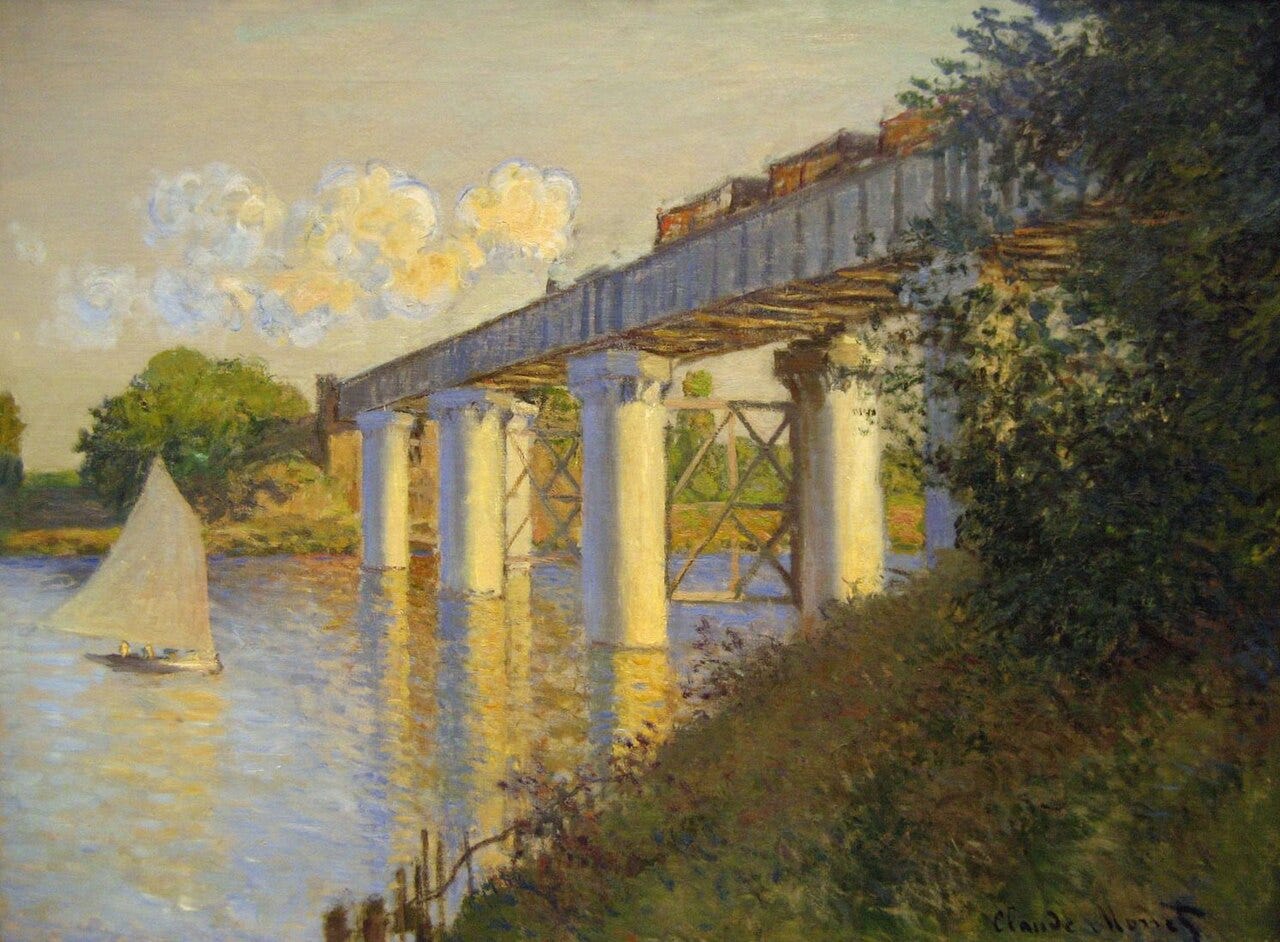
Monet painted the road bridge at Argenteuil on the Seine as a bright, calm scene of sailboats, blue water and a summer sky, all broken light and reflection.
This was pure Impressionism in its earliest days, painted outdoors in quick, loose strokes to catch a single sunny afternoon. Argenteuil was a boating town just outside Paris where Monet lived at the very heart of the movement.
The bridge had only just been rebuilt after the war of 1870 destroyed it, a sign of the modern world returning to normal. He would later build his own bridge, the green Japanese one at Giverny that I unpack in the piece on Monet's Japanese bridge, and paint it over and over as his eyes began to fail.
3. James McNeill Whistler, Nocturne: Blue and Gold, Old Battersea Bridge (about 1872)
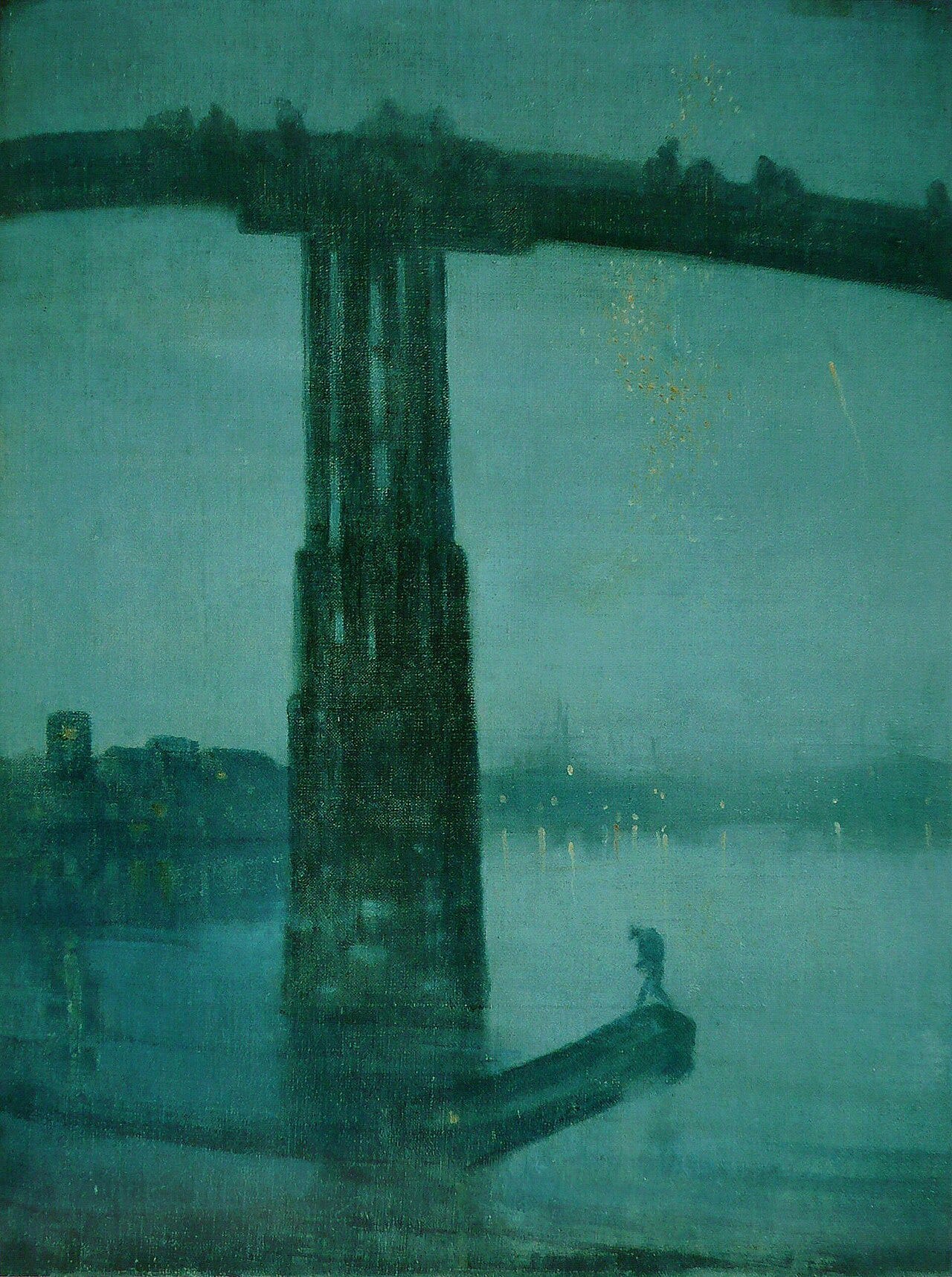
Out of a smoky blue dusk on the Thames looms the tall dark shape of an old wooden bridge, a single figure poling a boat beneath it, gold sparks of fireworks in the far sky.
Whistler called his night scenes nocturnes, borrowing the word from music, insisting they were arrangements of tone and mood, not records of a real place.
He stretched and simplified the real Battersea Bridge into something closer to a Japanese print than to London. The critic John Ruskin savaged one of these night scenes as flinging a pot of paint in the public's face, and Whistler sued him for libel.
He won, but the damages were a single farthing, and the cost of the trial left him bankrupt.
4. J.M.W. Turner, Rain, Steam and Speed (1844)
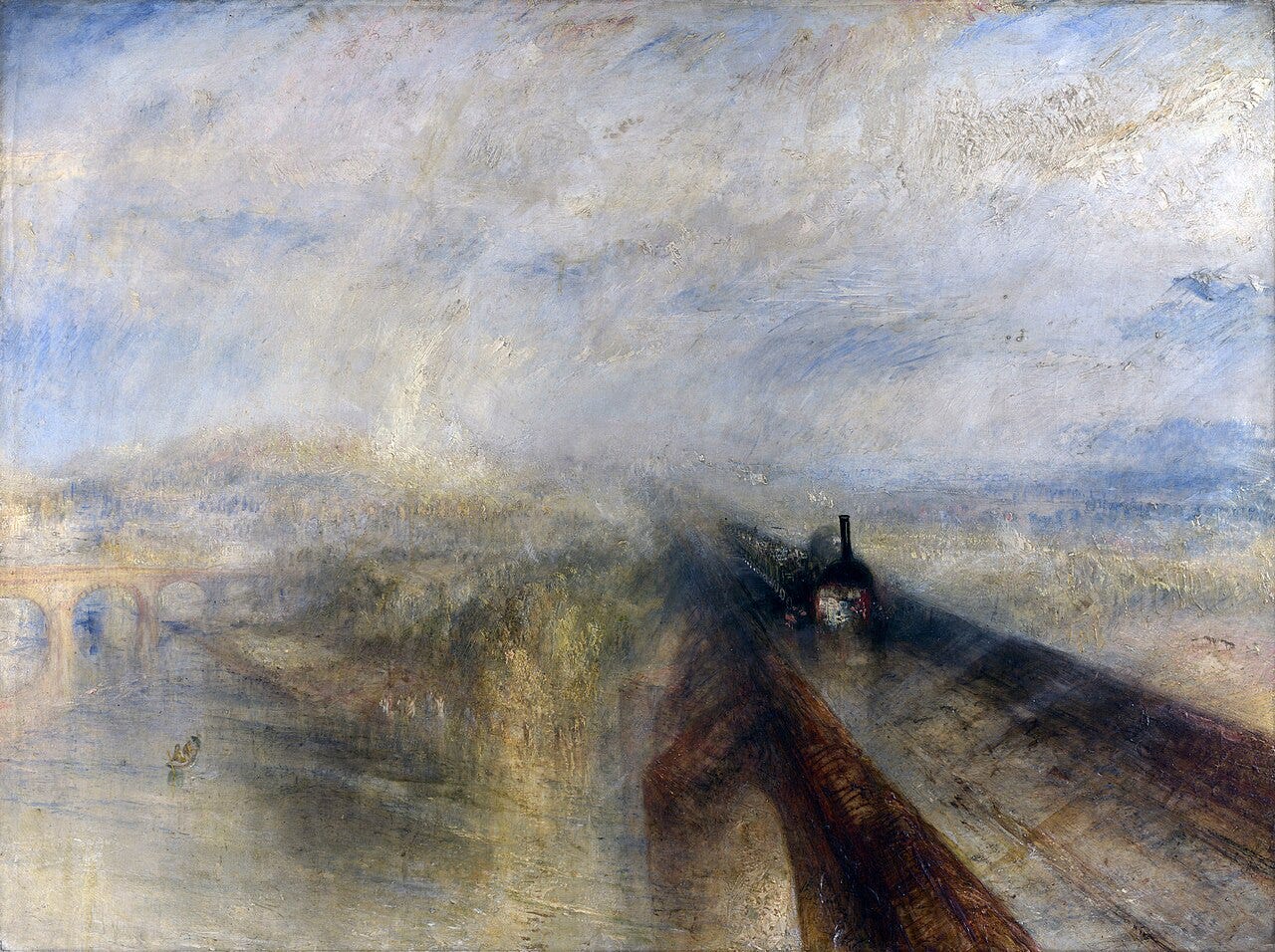
A black steam train charges straight at us across a bridge over the Thames, half dissolved in a golden storm of rain, speed and light.
Turner made this at the very dawn of the railway age, thrilled and unnerved by the terrifying new power of the machine.
The bridge is Brunel's brand new Maidenhead railway bridge, its clean lines almost lost in the blur of weather. A tiny hare races the train along the tracks ahead, a living thing fleeing the future.
It came to the National Gallery in London under Turner's own will, on his condition that his pictures hang among the old masters he loved.
5. Canaletto, The Rialto Bridge, Venice (about 1730)
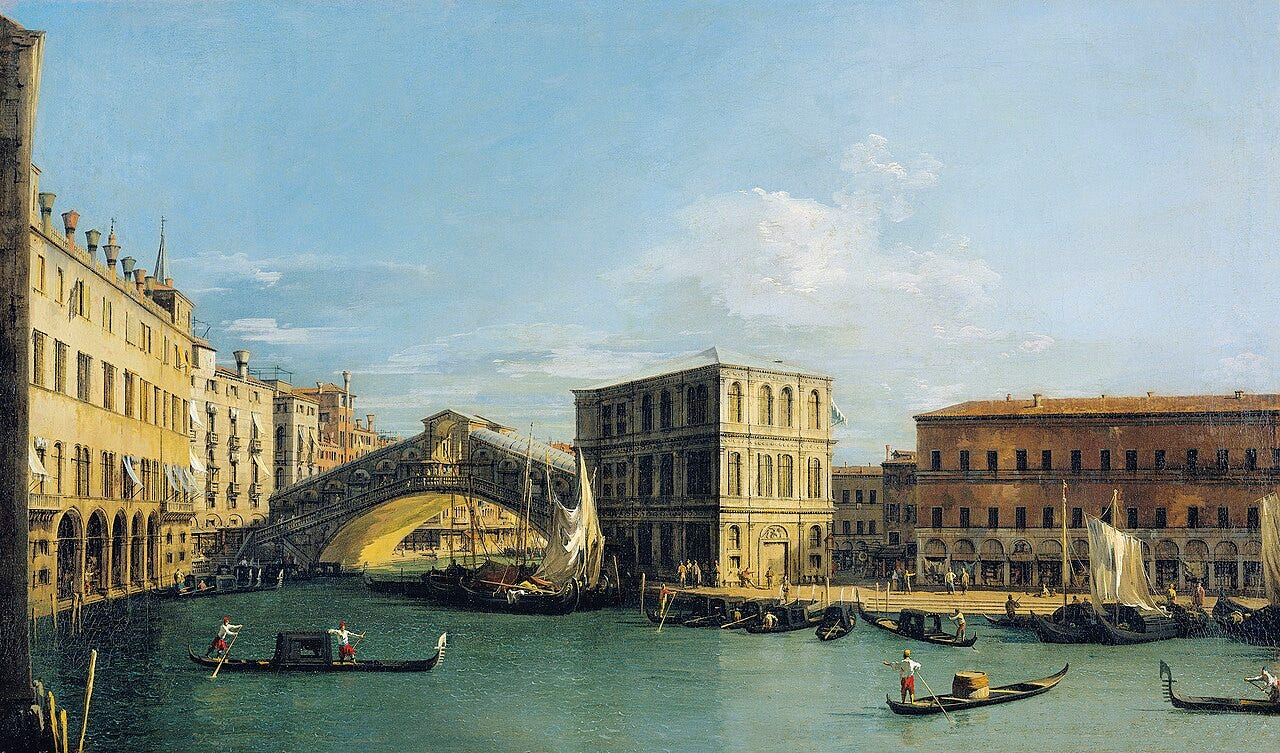
Canaletto painted the great stone arch of the Rialto Bridge over the Grand Canal in crystal clear light, every window, boat and figure rendered with jeweler's precision.
He was the supreme painter of Venice, turning the city into a view so perfect that English gentlemen on their Grand Tour bought his pictures by the crate.
To get the sweeping angles right, he is thought to have used a camera obscura, tracing the scene through a lens. He often nudged reality, widening the canal or shifting a building to make a more pleasing view.
So many of his finest Venices left for England at once that more Canalettos hang in Britain today than in Venice.
6. Gustave Caillebotte, Le Pont de l'Europe (1876)
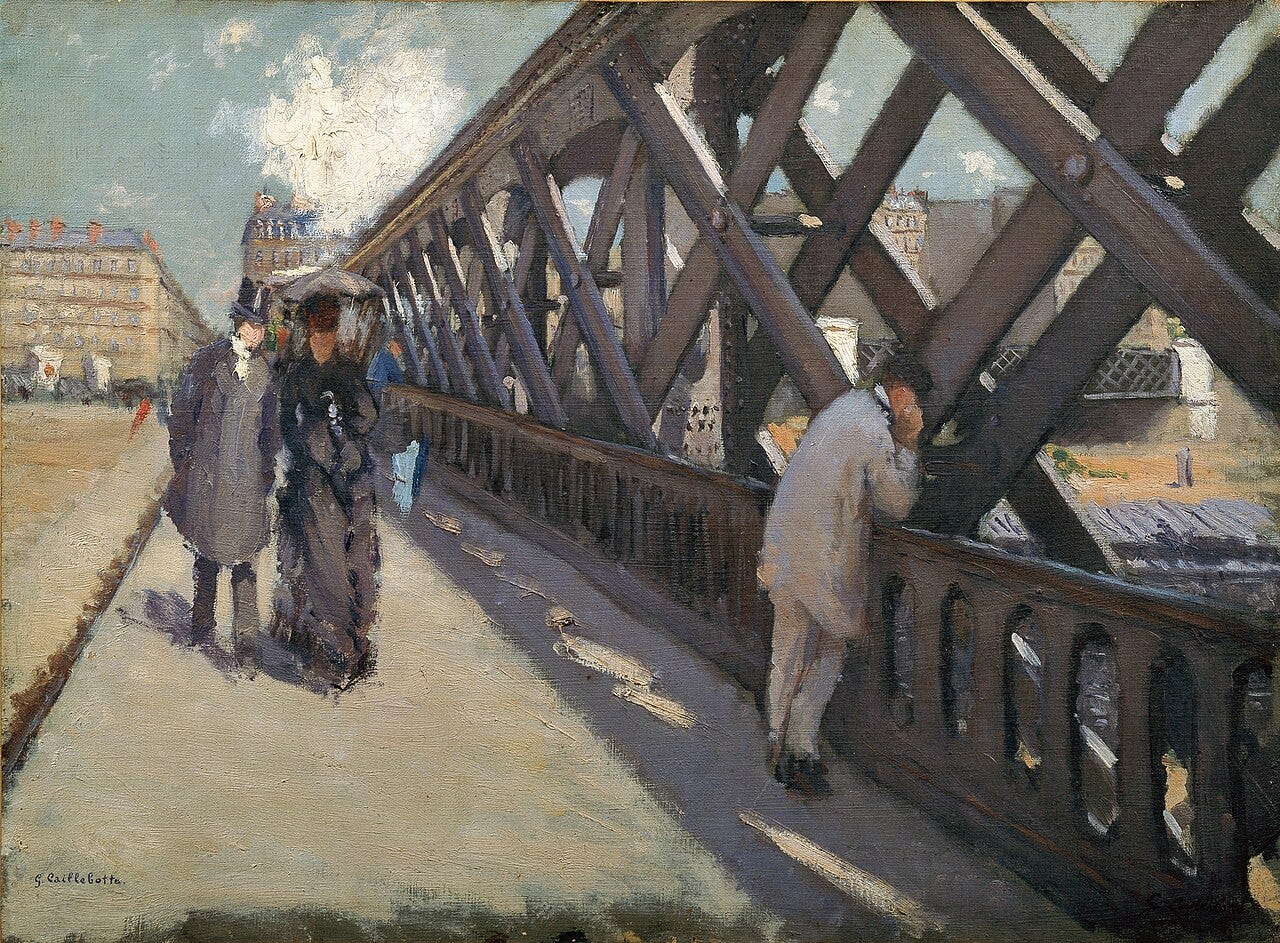
A well dressed couple strolls across a huge iron road bridge in Paris, its giant girders slicing across the picture in a great cage of steel.
Caillebotte, a wealthy lawyer turned painter and amateur boat designer, was fascinated by the hard new iron architecture of the rebuilt modern city.
A worker in a smock leans on the rail, staring down at the railway tracks below, quietly marking the gap between rich and poor. The steep, rushing perspective pulls you straight into the scene, as modern as a photograph.
He used his fortune to buy his friends' pictures, and left a collection that helped push Impressionism into the French national museums.
7. Camille Pissarro, The Pont Boieldieu, Rouen (1896)
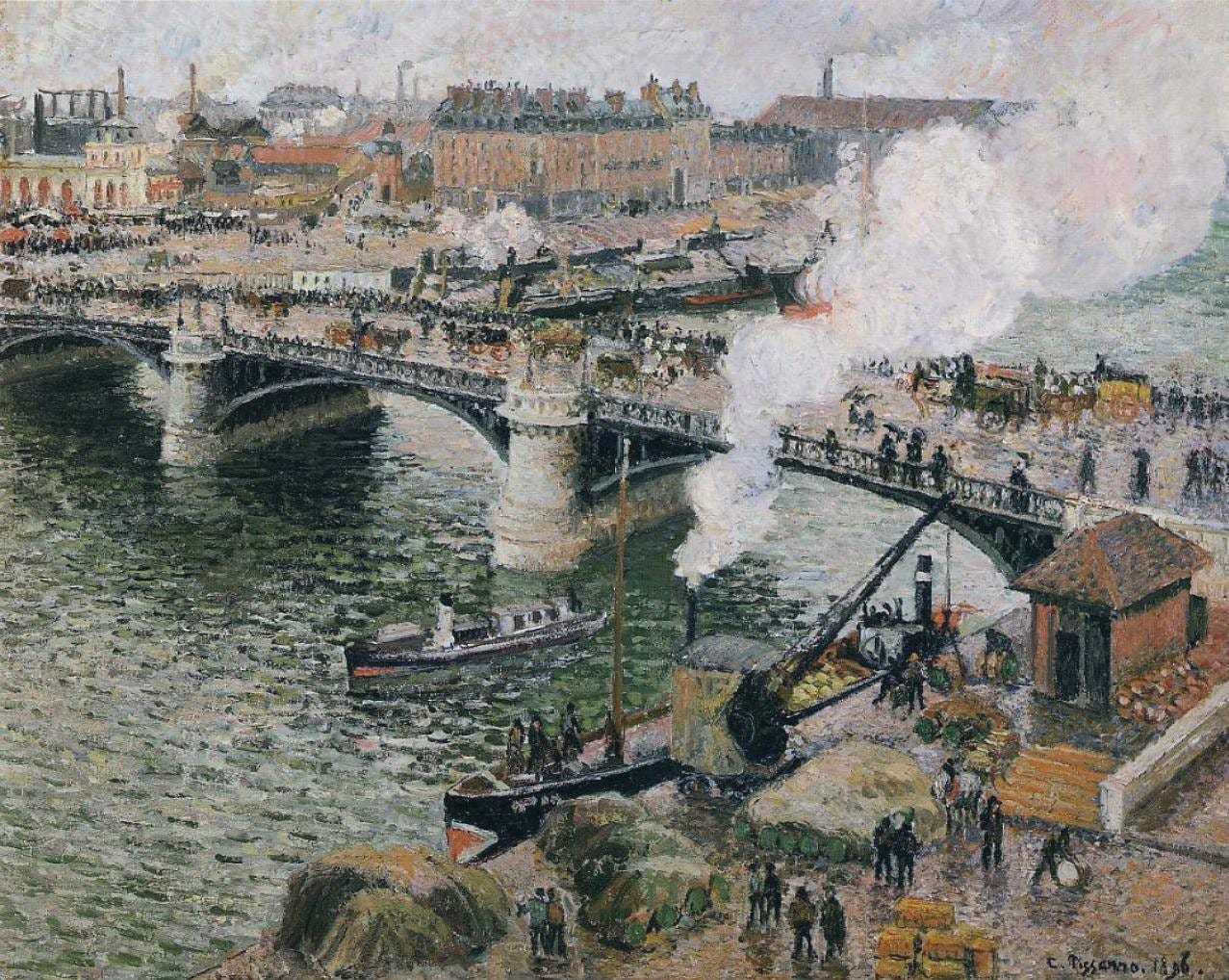
Pissarro painted this great iron bridge across the Seine at Rouen under a smoky, working sky, crowded with carts, steamboats and the chimneys of a busy port.
He gave the modern industrial city the same love others gave to sunsets, finding beauty in smoke, iron and traffic. Old and plagued by a bad eye, he painted this and its companions from a hotel window looking down on the bridge.
He caught the same view again and again in rain, fog and pale morning light, a whole series of one working bridge. The father figure of the Impressionists, he was the only one to show in all eight of their exhibitions.
8. Andre Derain, Charing Cross Bridge, London (1906)
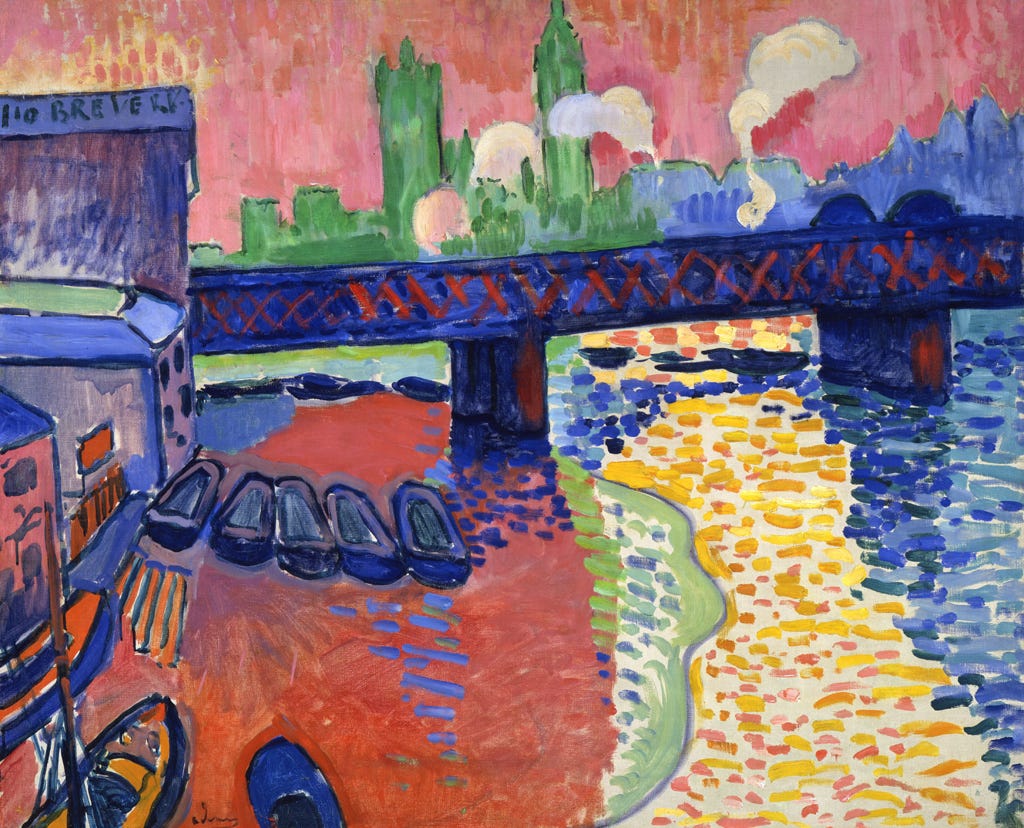
A London railway bridge blazes in shocking pink, orange and violet, the Thames beneath it a river of pure unnatural color under a candy sky. Derain painted London for a dealer who wanted fresh views to rival Monet's, but threw out realism entirely.
He was a leader of Fauvism, the wild beasts, a short lived movement that used savage, unmixed color straight from the tube. Where Monet had painted London's fog, Derain painted the city as a burst of joy and pure sensation.
He made around thirty London scenes on his visits, and their color still looks startling today.
9. Zhang Zeduan, Along the River During the Qingming Festival (about 1120)
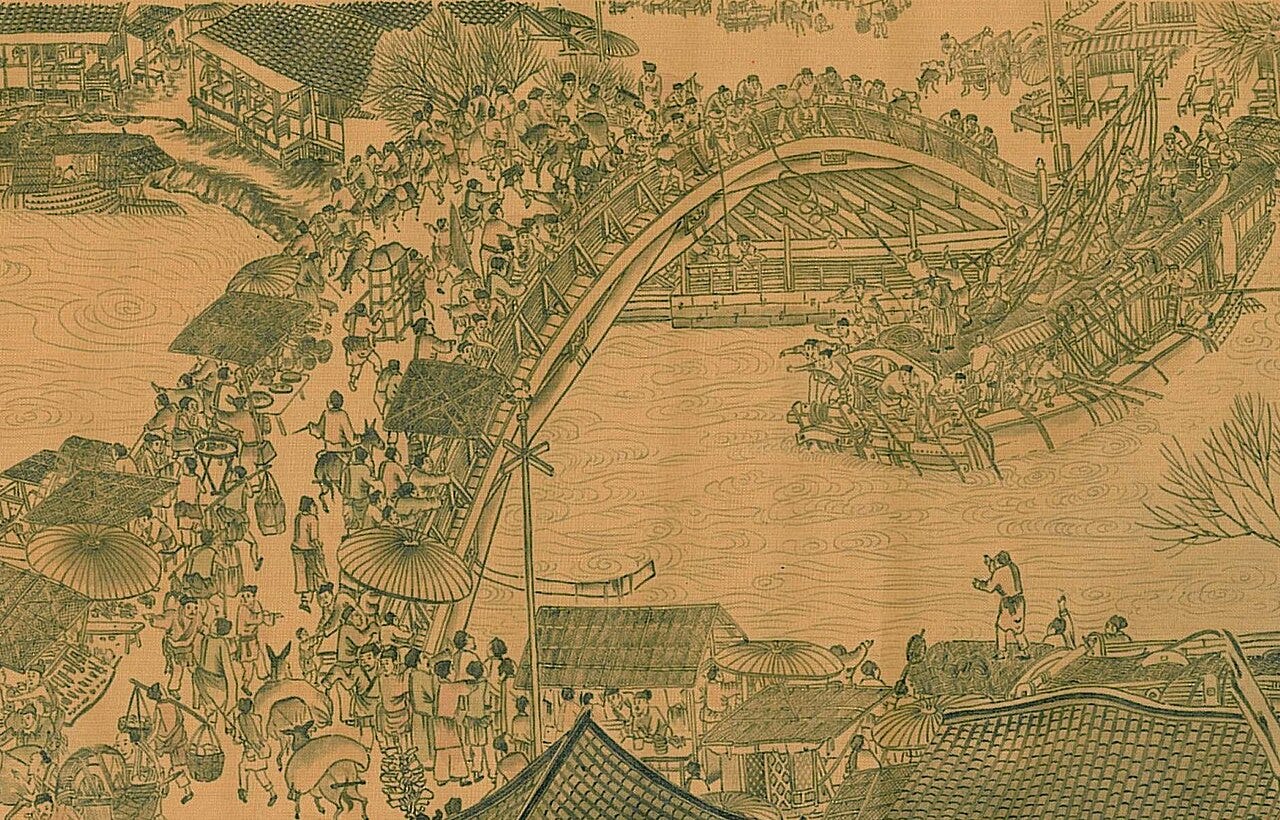
At the heart of one of China's most famous paintings, a great wooden arched bridge swarms with people while a boat below struggles to lower its mast in time to pass beneath it.
Painted on a long silk handscroll nearly a thousand years ago, the whole work is a teeming panorama of life in a Song dynasty capital.
The Rainbow Bridge, built without a single pier or nail, was a real feat of Chinese engineering, all interlocking wooden beams.
This one dramatic moment, a boat about to crash into the bridge, is the beating heart of the scroll. The painting is so beloved that Chinese artists have copied it for centuries, and the original only rarely goes on public show.
10. Camille Corot, The Bridge at Narni (1826)
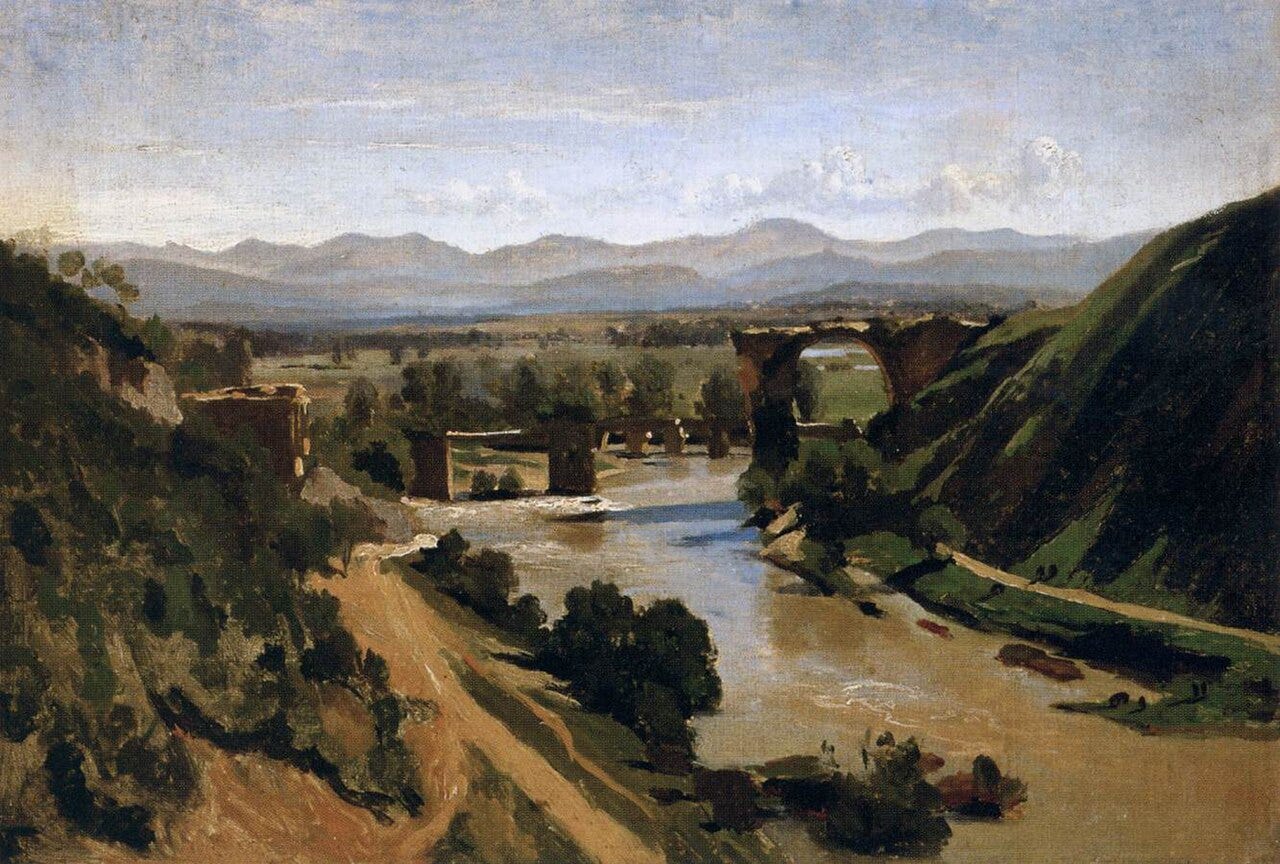
A low stone Roman bridge, half ruined, spans a wide river valley in soft, silvery Italian light, painted quickly outdoors on the spot.
Corot made this small oil study during a trip to Italy as a young man, working straight from nature in the open air.
It has a fresh, honest simplicity that painters would not fully prize until the Impressionists arrived decades later. Back in his studio he worked the scene up into a grand, formal painting, but the little sketch is the one everyone loves now.
Corot gave away so much money to poorer artists that they fondly called him Father Corot.
11. Alfred Sisley, The Bridge at Villeneuve la Garenne (1872)
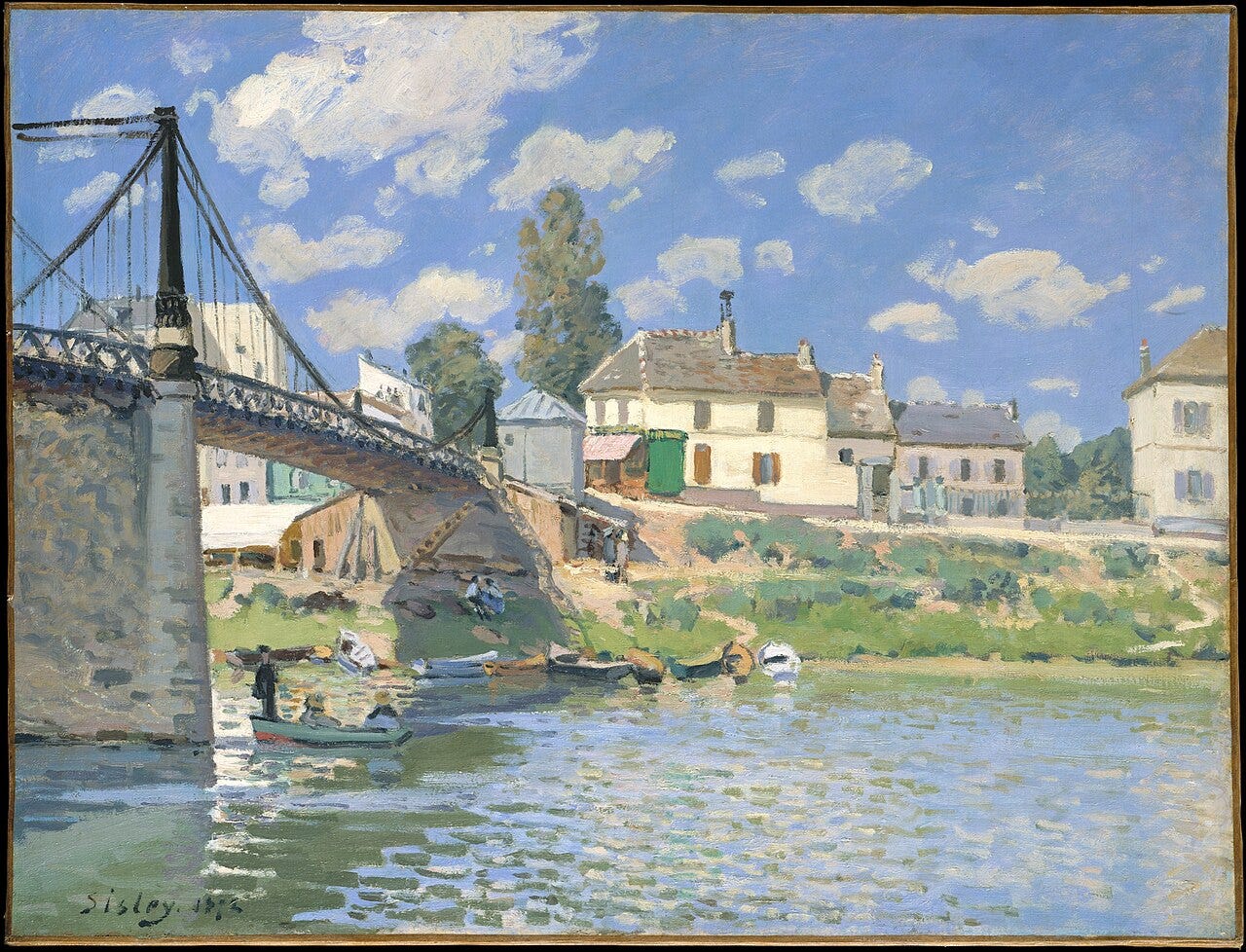
A stone road bridge strides across the sunlit Seine, its arches and their reflections making near perfect circles on the calm blue water.
Sisley painted it in the first flush of Impressionism, all clean light, fresh color and the pleasure of a bright day by the river.
A couple of small boats and a few strollers give the scene a lazy, holiday calm. He was the most faithful of all the Impressionists to pure landscape, never chasing figures or fame.
He died poor and overlooked in 1899, and this early bridge is now one of his most reproduced pictures.
12. John Sell Cotman, Greta Bridge (about 1806)
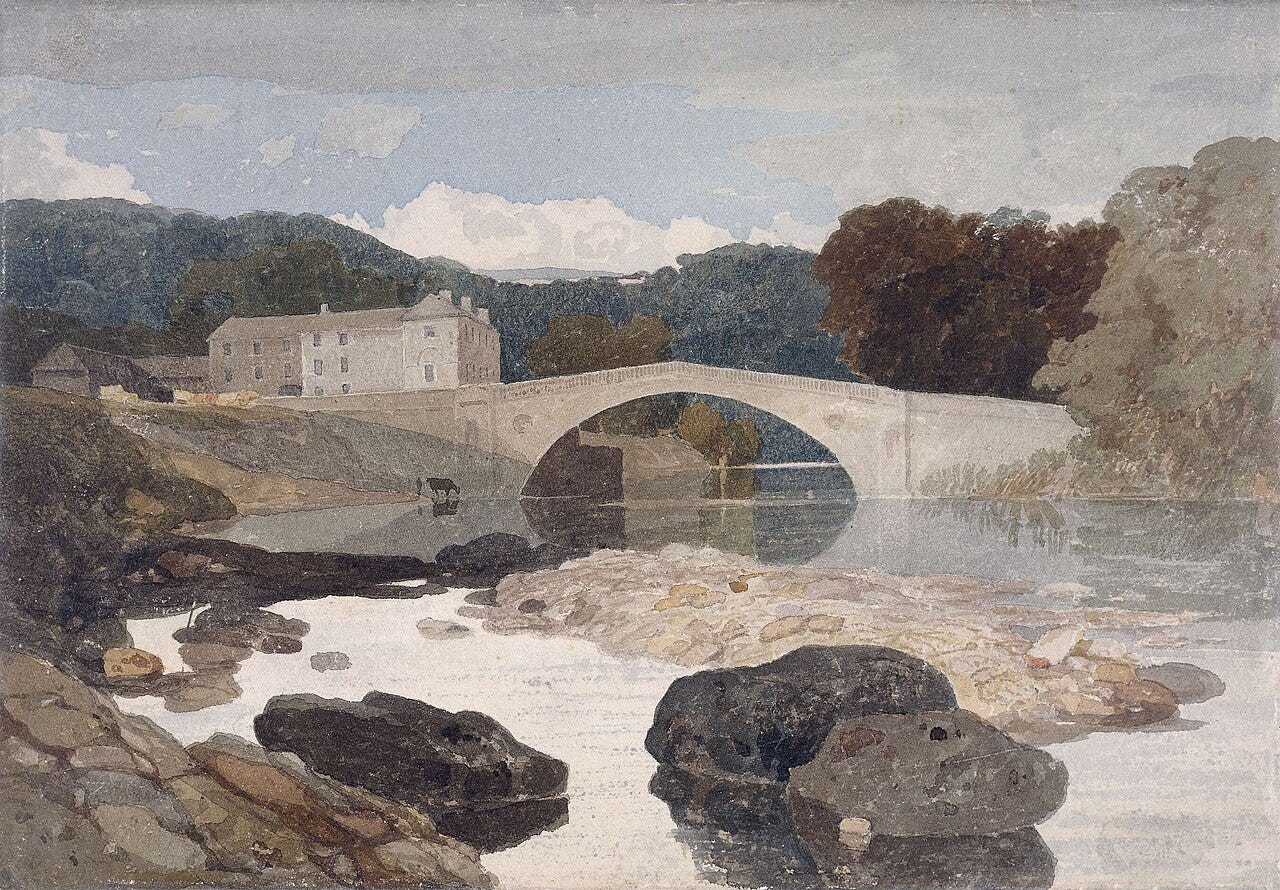
A plain stone bridge sits in perfect stillness over a river strewn with pale boulders, the whole scene built from broad, flat, calm patches of watercolor.
Cotman painted it as a young man on a walking tour of the north of England, and it became one of the most admired British watercolors ever made.
He flattened the view into simple shapes of light and shade, decades ahead of modern taste, almost abstract.
In his own lifetime he was overlooked, teaching drawing to survive, and died in near obscurity in 1842. He worked the scene up from sketches made on a single 1805 walking tour of the Greta valley in Yorkshire, and it hangs today in the British Museum.
Painted bridges, the questions readers ask
What is the most famous bridge painting? Monet's Japanese bridge at Giverny and Van Gogh's Langlois Bridge at Arles are among the best known, along with Whistler's misty Battersea Bridge.
Why do painters love bridges? A bridge gives a clean shape, a mirror image in the water and a line that leads the eye deep into the scene.
What does a bridge symbolize in art? Crossing and connection, the link between two worlds or two lives, and often the arrival of the modern iron age.
Which real bridges appear most in art? Monet's Giverny bridge, the Rialto in Venice, the bridges of the Seine in Paris and the Thames crossings of London.
Why did the Impressionists paint so many bridges? The new iron and stone bridges of Paris stood for the modern age, and their reflections in the river were perfect for studying light.
If these crossings pulled you in, you will love these too:
The secret behind Monet Magpie, one bird in the snow, and why it matters
Luncheon of the Boating Party, detail by detail, who everybody at that table actually was
Ten women artists you need to know, the names the textbooks skipped
Made to be crossed
Every bridge in these pictures is really an invitation, a path drawn across the water that dares you to follow it. That is the quiet magic painters found in them, a shape that is also a promise of the other side.
Whether it is a wooden drawbridge in the sun or a train roaring through the rain, each one joins here to there. Look long enough and you start to walk.