
This art history timeline runs in order from prehistoric cave painting to contemporary art. Each period gets its dates, a short definition, and the two or three artists who define it, with links to go deeper on every movement.
Most timelines drown you in dates. This one is built to be read in five minutes and remembered.
I write Cool Stories About Art for 170,000 readers, and this page is the map I wish someone had handed me at the start. Bookmark it, then follow whichever link pulls at you. Once the map makes sense, best art history books rounds up the titles worth reading next, and best art history podcasts rounds up the shows worth hearing, and best art history newsletters rounds up the inboxes worth filling.
The periods at a glance
Prehistoric art, before 3000 BC
Ancient art, 3000 BC to 300 AD
Byzantine art, 330 to 1453
Medieval and Gothic art, 500 to 1400
Renaissance, 1400 to 1530
Mannerism, 1520 to 1600
Baroque, 1600 to 1750
Rococo, 1720 to 1780
Neoclassicism, 1760 to 1830
Romanticism, 1800 to 1850
Realism, 1840 to 1880
Impressionism, 1860 to 1886
Post-Impressionism, 1886 to 1905
Fauvism and Expressionism, 1905 to 1930
Cubism, 1907 to 1920
Surrealism, 1924 to 1950
Abstract art, 1910 to 1970
Pop art, 1955 to 1970
Contemporary art, 1970 to now
Cool Stories About Art is a newsletter to learn art the fun way.
Join 170,000+ readers and get:
10 new art stories / month
The entire archive of content (1,000+ articles)
Comment, ask questions, and chat with other readers
How the dates work
Every date above is a handle, not a wall. Periods overlap by decades, start earlier in one city than in another, and linger longest far from the capitals. Monet outlives the invention of Cubism by a quarter century, still painting water lilies. Use the dates to keep the order straight, and let the edges stay soft, because they were soft in real life too.
Learn art the fun way


Prehistoric art (before 3000 BC)
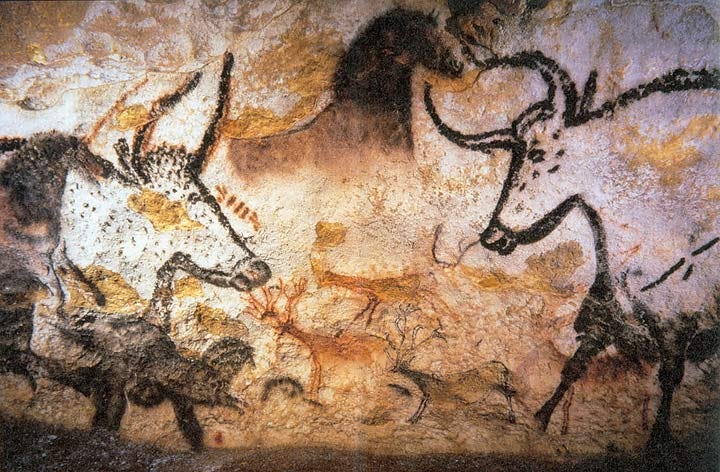
Painting begins in the dark. The horses of Chauvet and the bulls of Lascaux were made by torchlight, some thirty thousand years before writing. Nobody knows exactly why, and that mystery is the point.
The dates keep moving. A hand stencil in Spain has been argued to be Neanderthal work, which would push the start of art before our own species. Every decade, the timeline gets older.
Ancient art (3000 BC to 300 AD)
Egypt fixes the rules, Greece perfects the body, Rome copies Greece and adds the portrait. Almost everything Western art later argues about starts here.
One habit to notice: Greek painting is almost entirely lost. What we call Greek art today is mostly sculpture and painted pottery, plus Roman copies of vanished originals.
Byzantine art (330 to 1453)
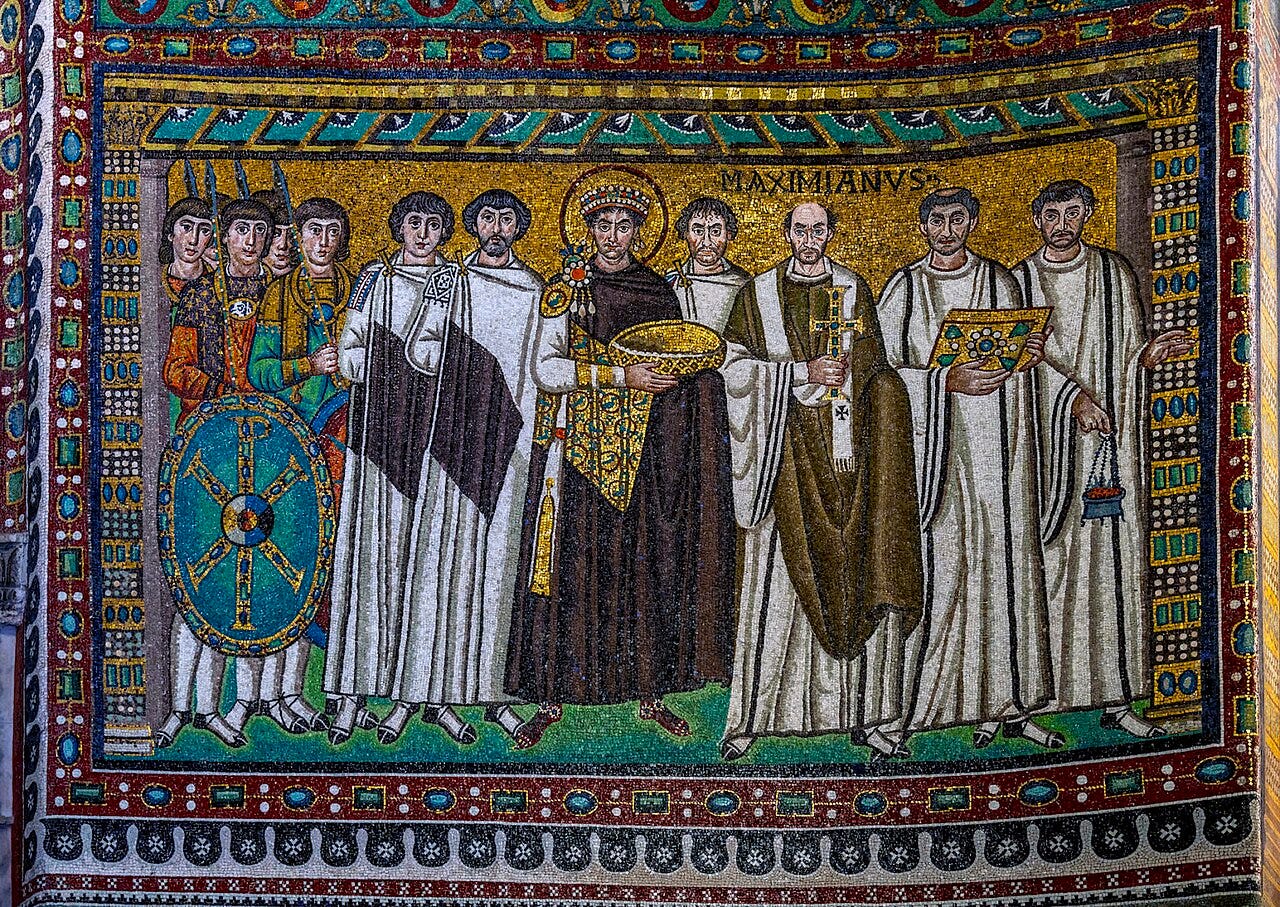
Byzantine art means gold grounds, flat figures, and icons made for prayer rather than realism. It ruled the Christian East for a thousand years.
If you have seen a gold background in any museum, you have met its influence. The style survives today, almost unchanged, in Orthodox icon painting.
Medieval and Gothic art (500 to 1400)
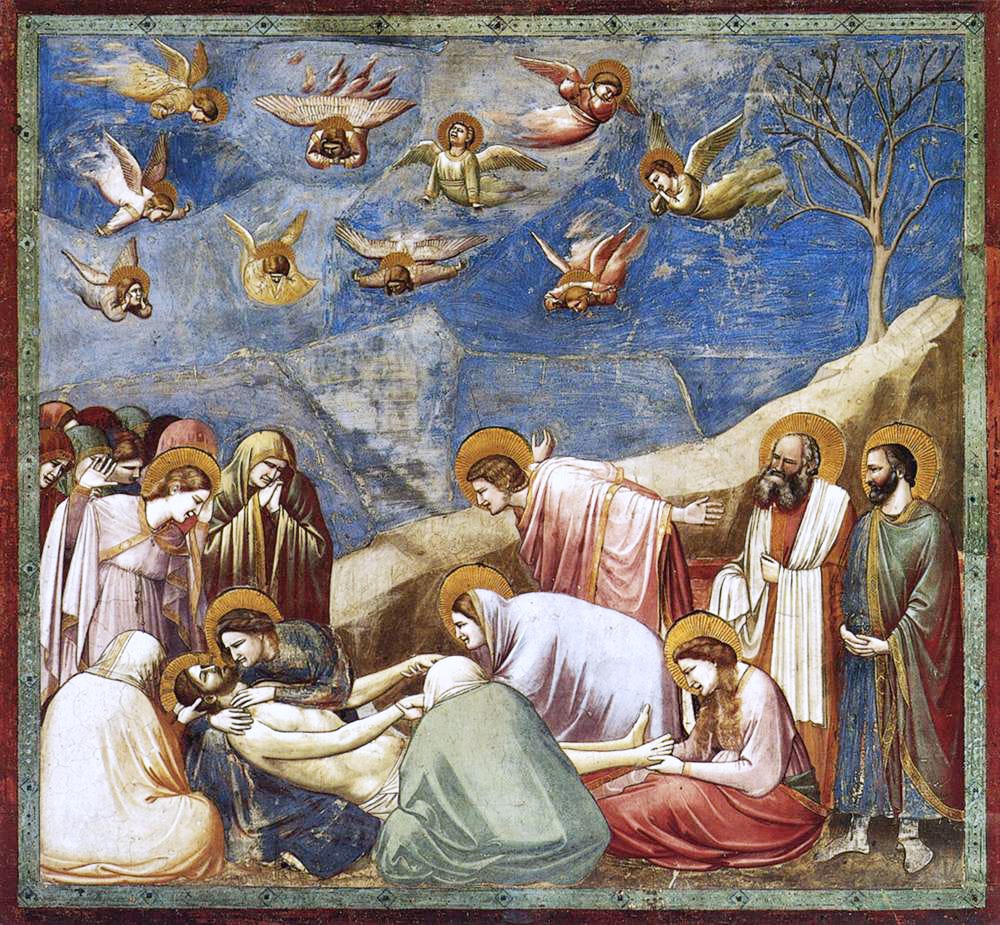
Cathedrals, stained glass, and Gothic art slowly teaching painting to tell stories again. At the end of it, Giotto gives figures weight and faces feelings, and the door to the Renaissance opens.
The name Gothic was an insult too, coined later by Italians who blamed the Goths for everything they found barbaric about the north.
Renaissance (1400 to 1530)
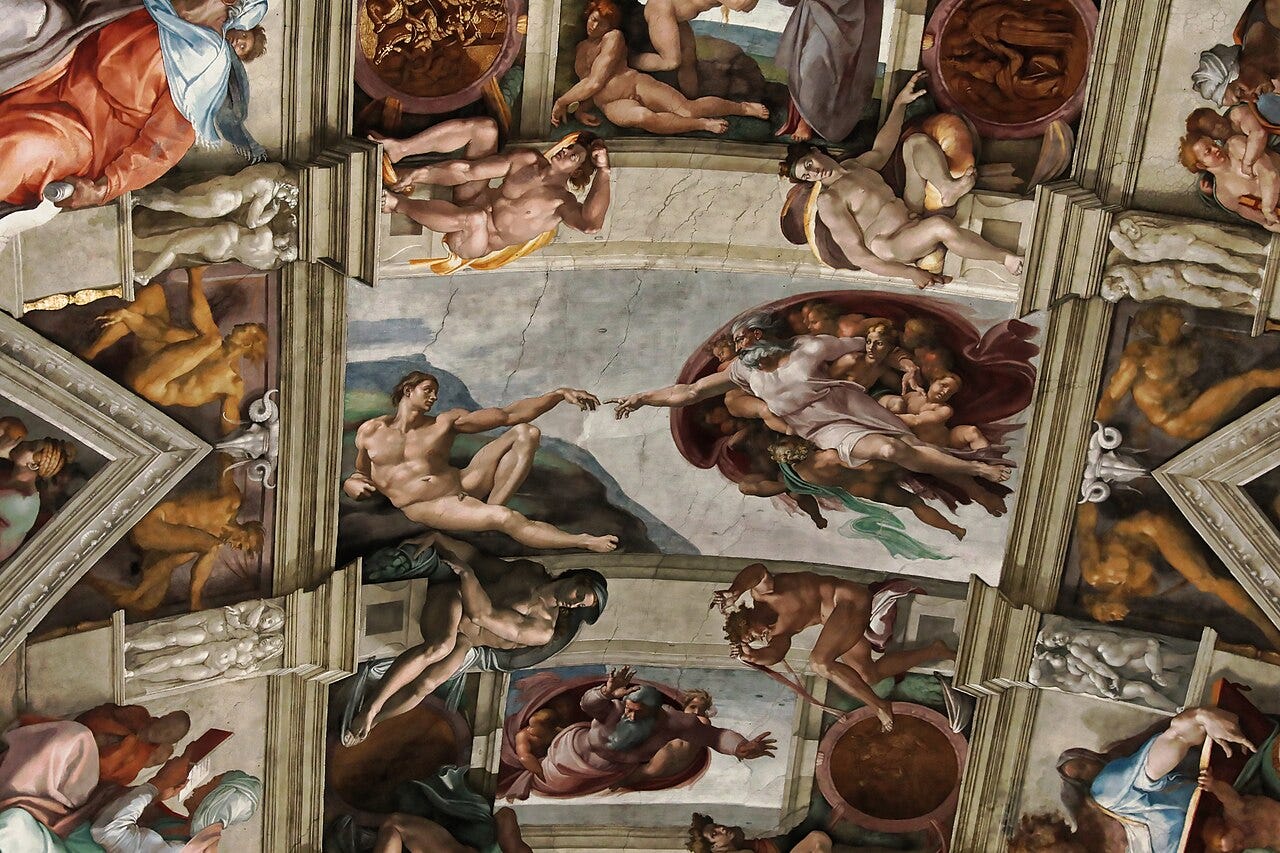
The Renaissance brings perspective, anatomy, oil paint, and the idea of the artist as genius. Leonardo, Michelangelo, and Raphael all work within a single generation, often in the same cities, sometimes on the same walls.
The trick to remembering it: north and south solve different problems. Italy wants ideal bodies in measured space. Flanders, led by Jan van Eyck, wants every thread and every reflection.
Mannerism (1520 to 1600)
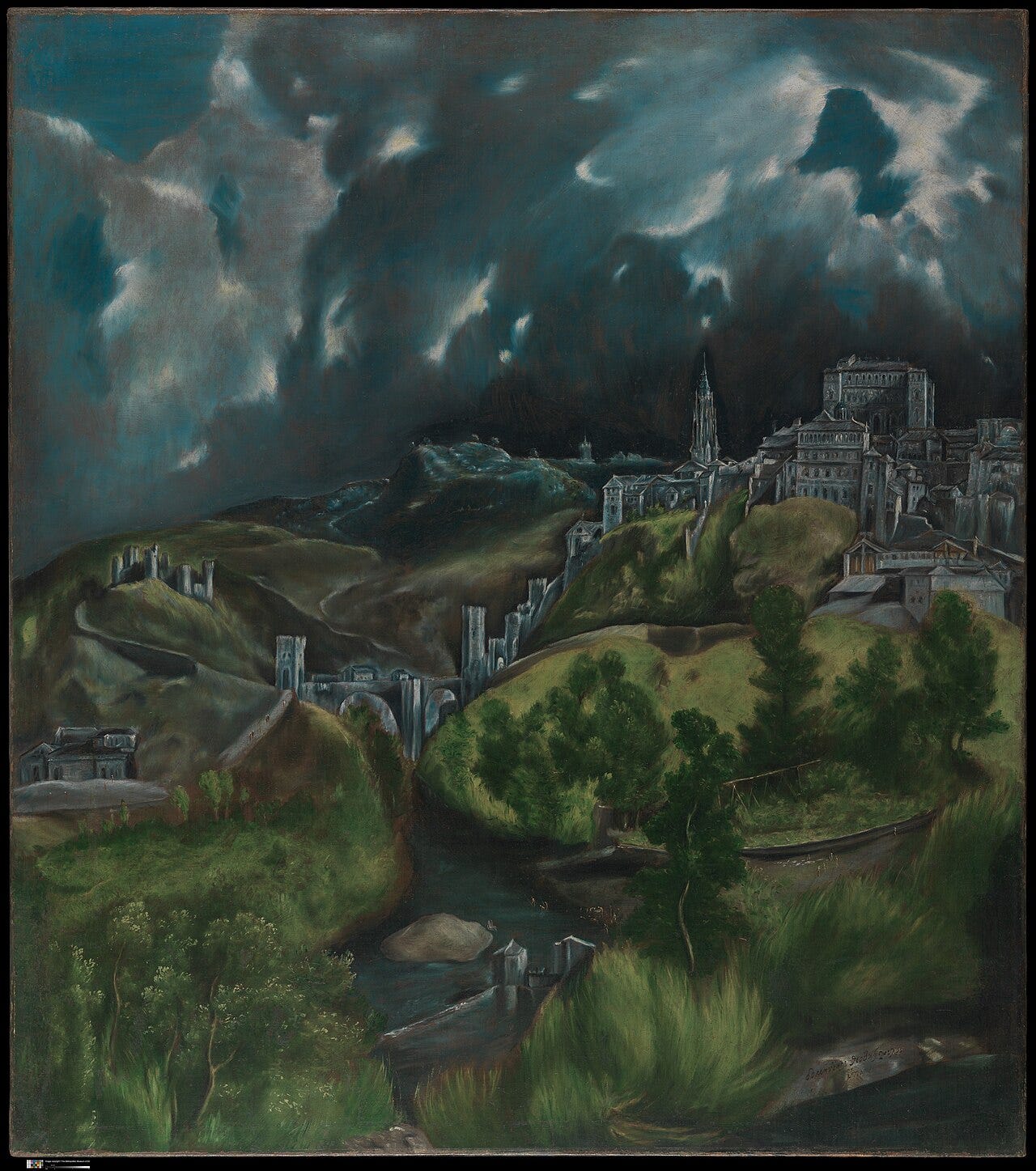
What do you do after perfection? You bend it. Mannerism stretches bodies, sharpens colors, and poses everyone a little too elegantly to be real. El Greco takes it somewhere nobody has followed since.
The word comes from maniera, style for its own sake. For centuries it was said with a sneer, and the period was only taken seriously again in the twentieth century.
Baroque (1600 to 1750)
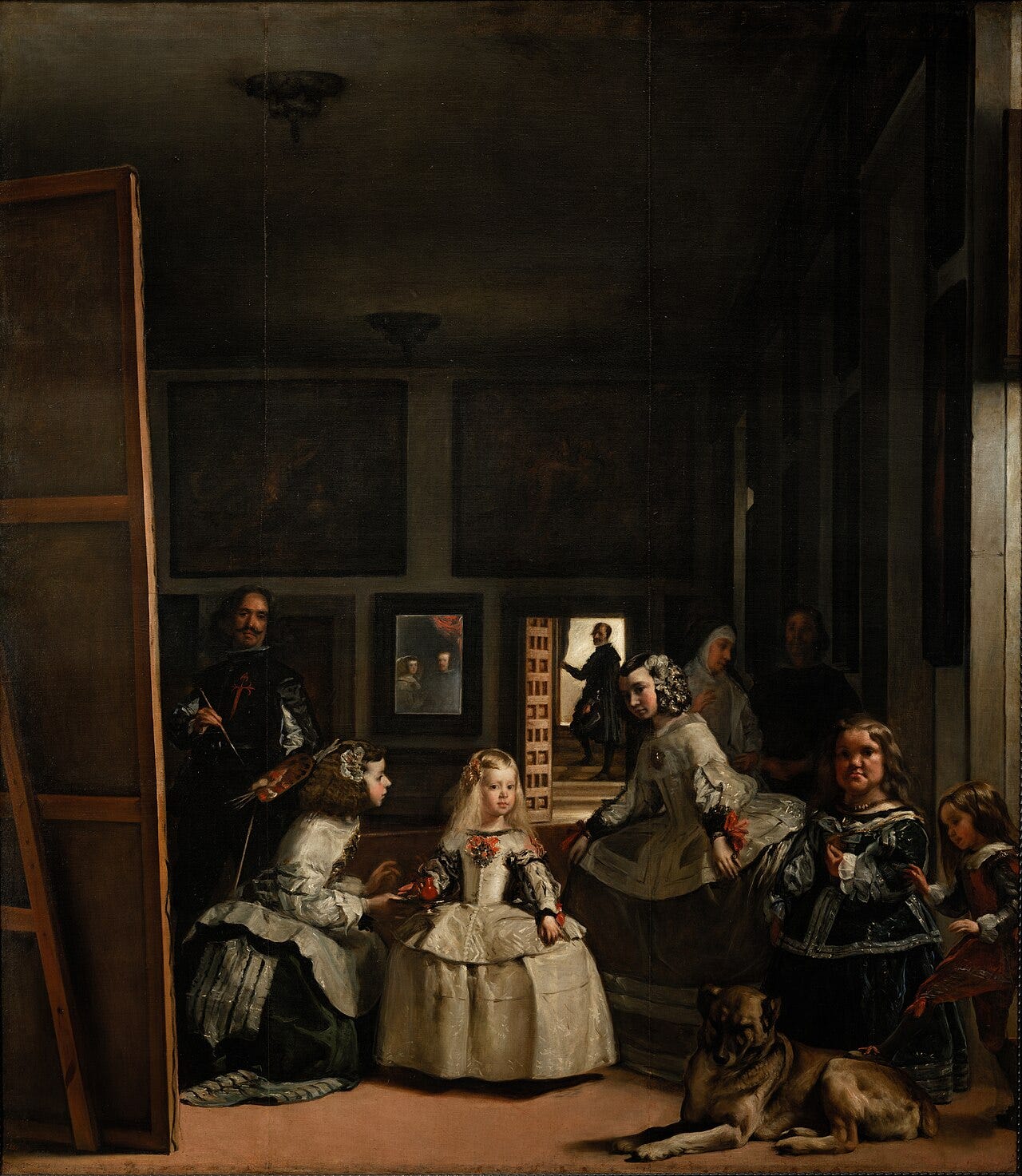
Drama as doctrine. The Church wants Baroque painting to hit like theater, and Caravaggio answers with saints lit like crime scenes. Rembrandt and Vermeer turn the same light onto ordinary Dutch rooms.
Spain runs its own version at court, where Velazquez paints Las Meninas, the picture other painters still argue about four centuries later.
Rococo (1720 to 1780)
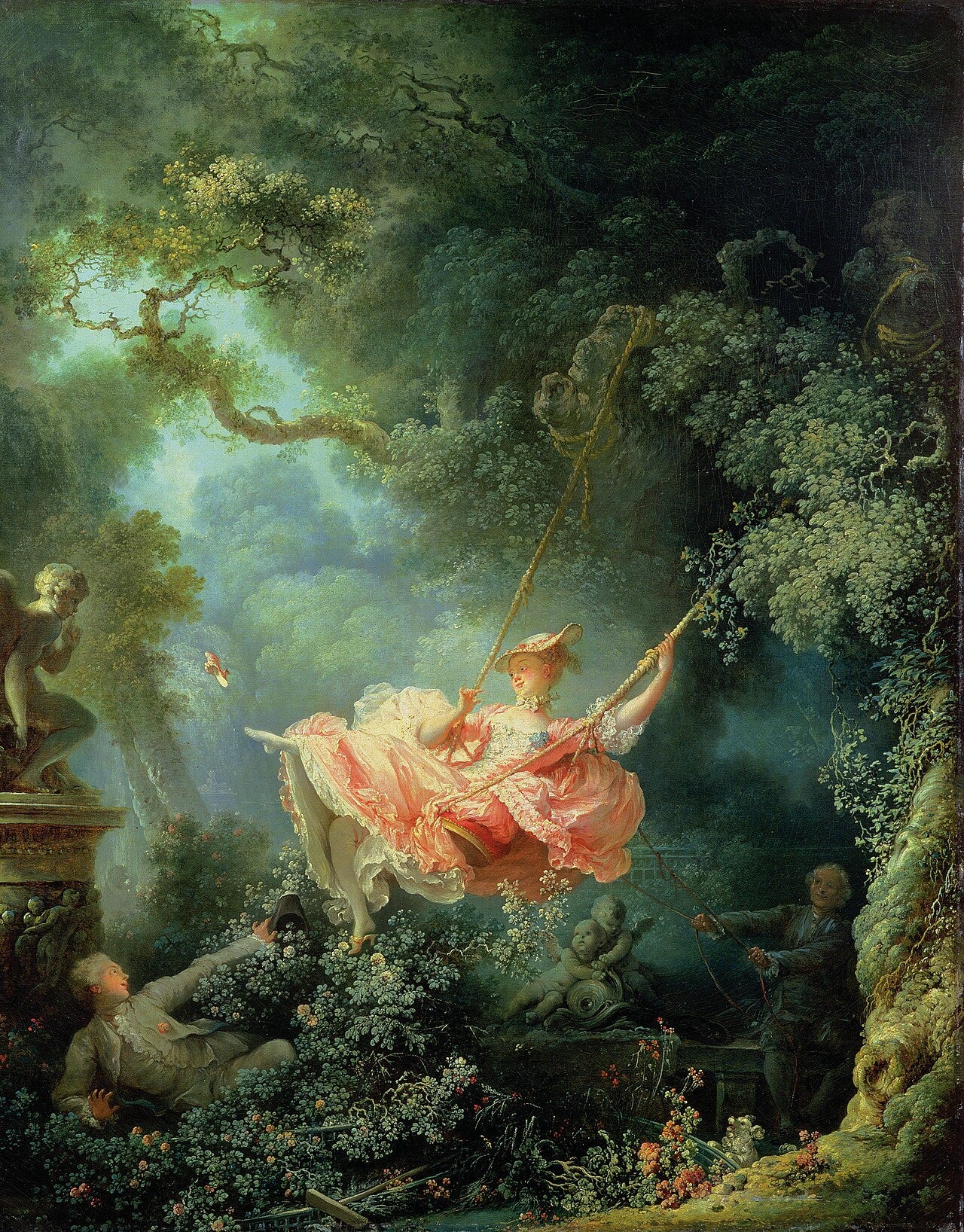
Baroque moves from the church to the salon and loses weight. Pastel colors, swings, picnics, flirtation. Watteau, Boucher, and Fragonard paint an aristocracy that has no idea what is coming.
The backlash is built in. Diderot is already calling for moral seriousness in the 1760s, and the Revolution finishes the argument.
Neoclassicism (1760 to 1830)
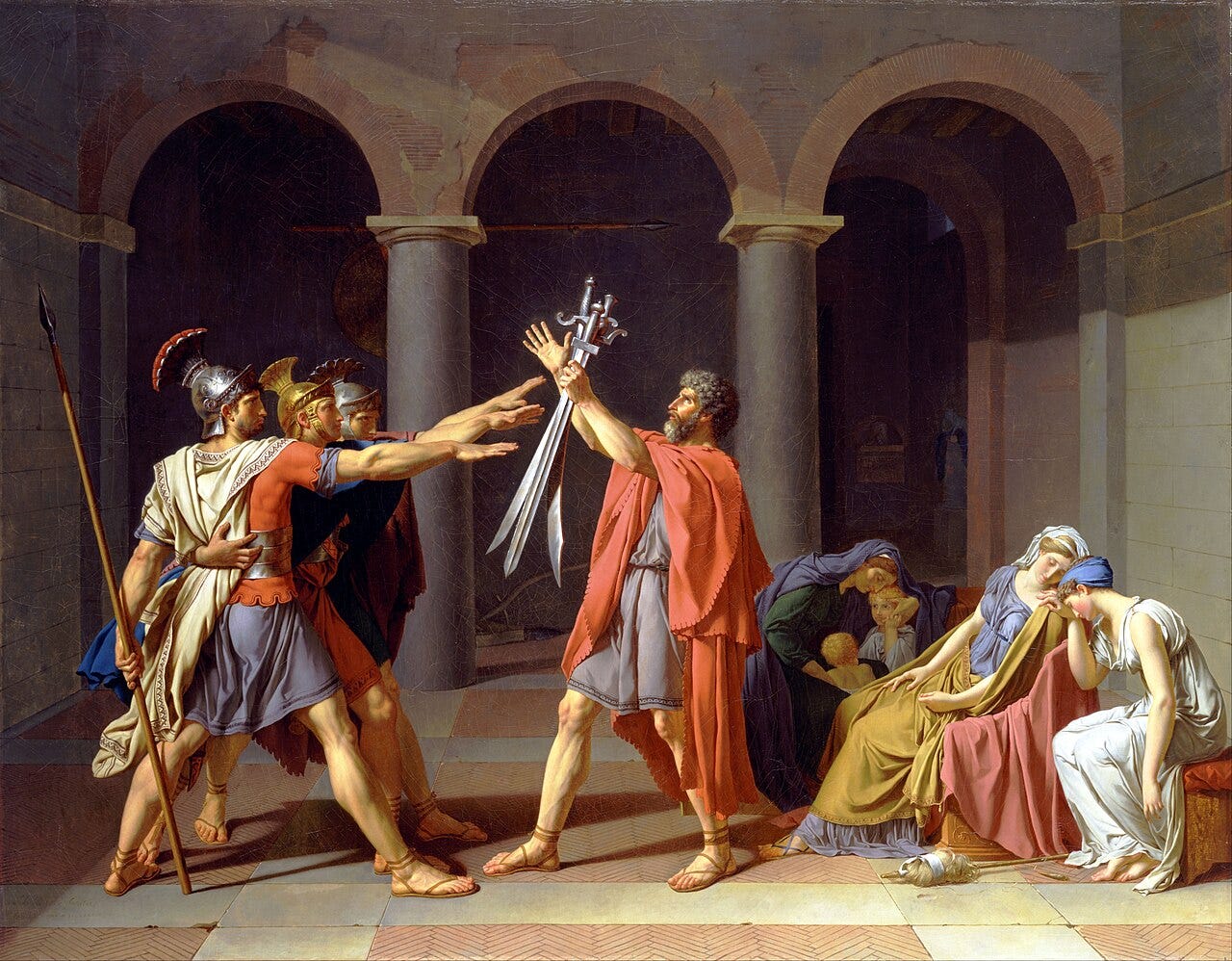
The Revolution wants Roman virtue, straight lines, and moral seriousness, and Neoclassicism delivers. David paints oaths and assassinations. Ingres draws like a scalpel.
It is also the first period driven by archaeology. Pompeii is being dug up while these painters work, and Europe falls in love with the ancient world all over again.
Romanticism (1800 to 1850)
Feeling over reason: storms, shipwrecks, nightmares. Goya is its darkest case, painting witches and war from a house whose walls he covered in black. Delacroix brings the color and the barricades.
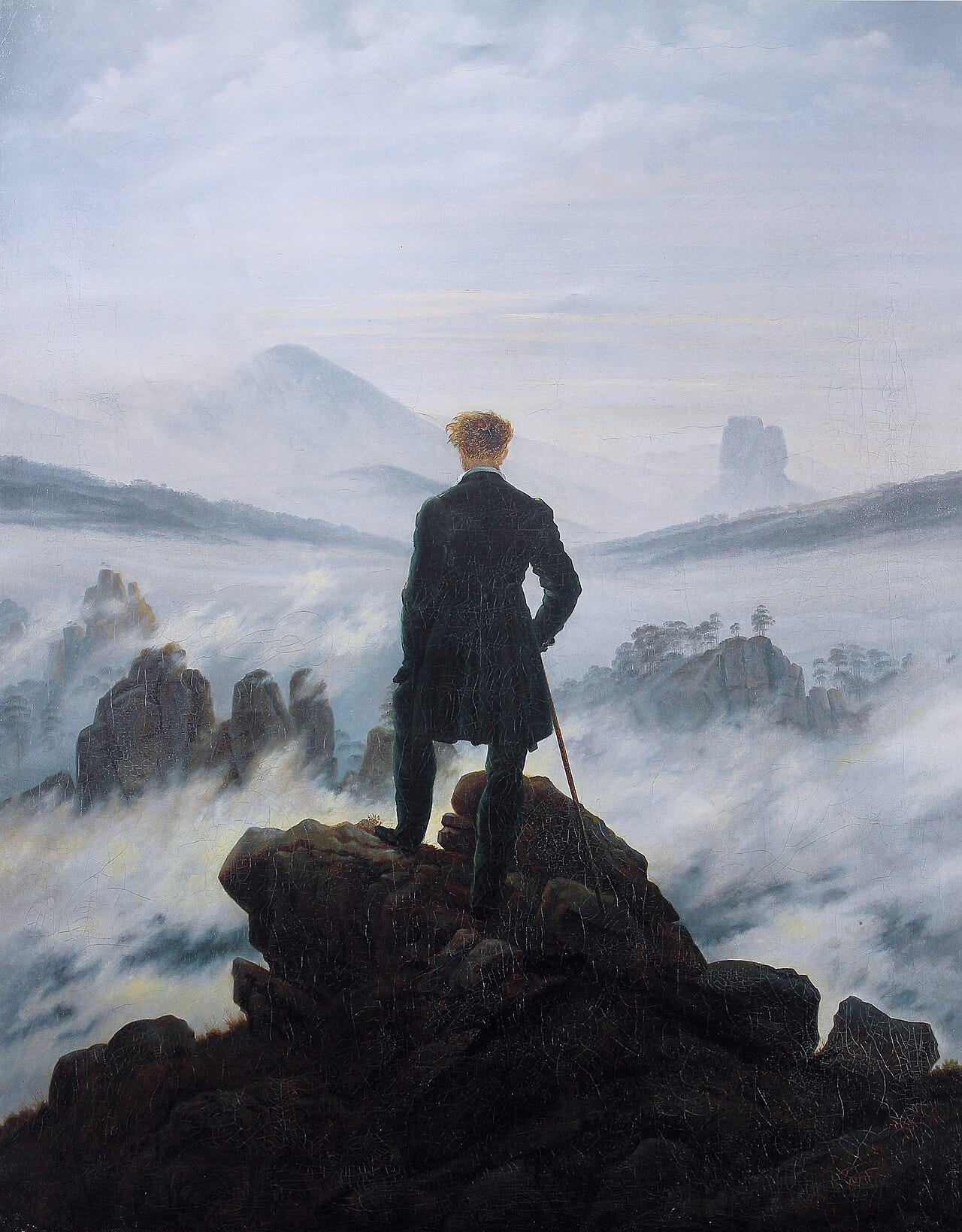
Its favorite subject is nature at scale: Friedrich standing small figures in fog, Turner dissolving ships in storms. Man small, world enormous.
Realism (1840 to 1880)
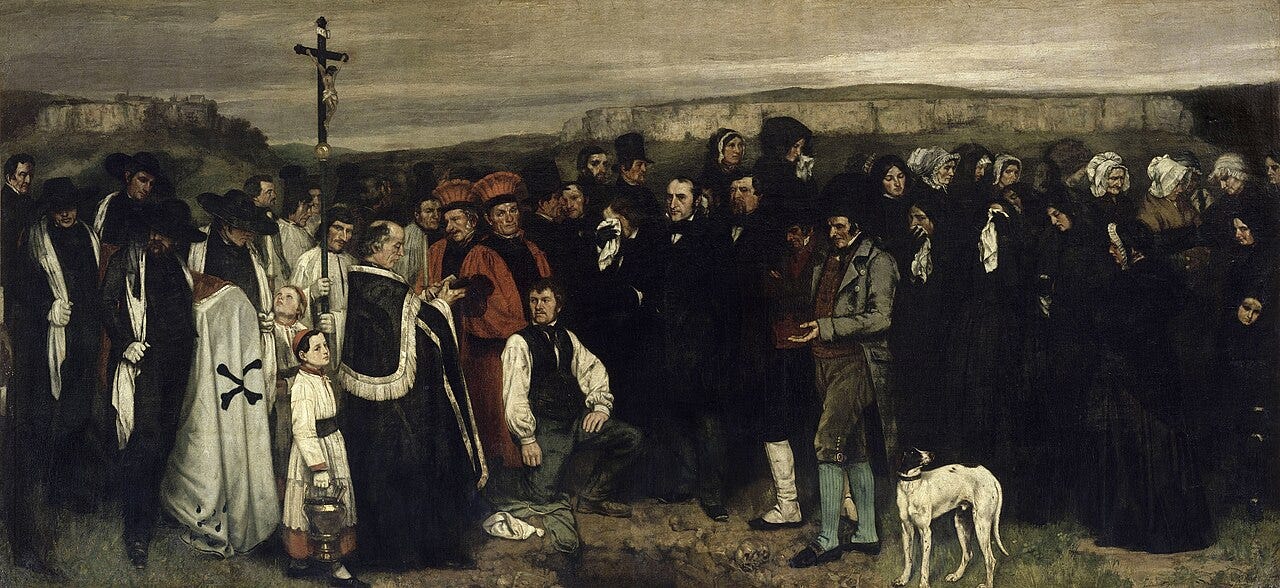
Realism paints ordinary life at the scale reserved for kings. Courbet shows stone breakers and a provincial funeral, and the Salon calls it an insult. It turns out to be the century's most radical move.
Photography arrives in the same decades, which sharpens the question underneath everything: if a machine can record the world, what is painting for? Every movement after this is one answer or another.
Impressionism (1860 to 1886)
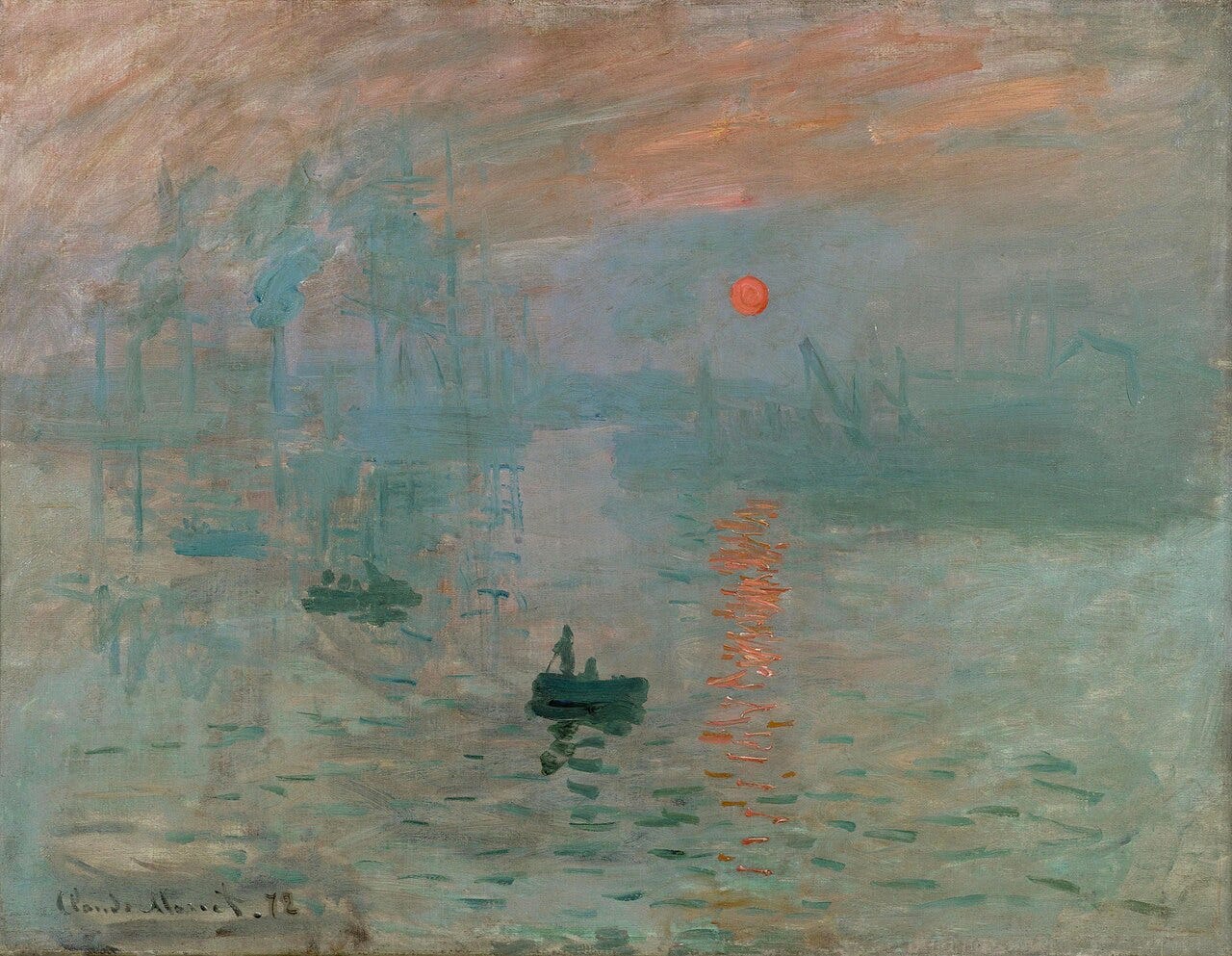
Impressionism means painting fast, outdoors, in front of the thing itself. Monet chases light for sixty years. Renoir and Degas take the method to cafes and dance rehearsals.
The name comes from Monet's Impression, Sunrise, and it was coined by a critic as a joke. Within a decade, the joke was the most influential painting movement in Europe.
Post-Impressionism (1886 to 1905)
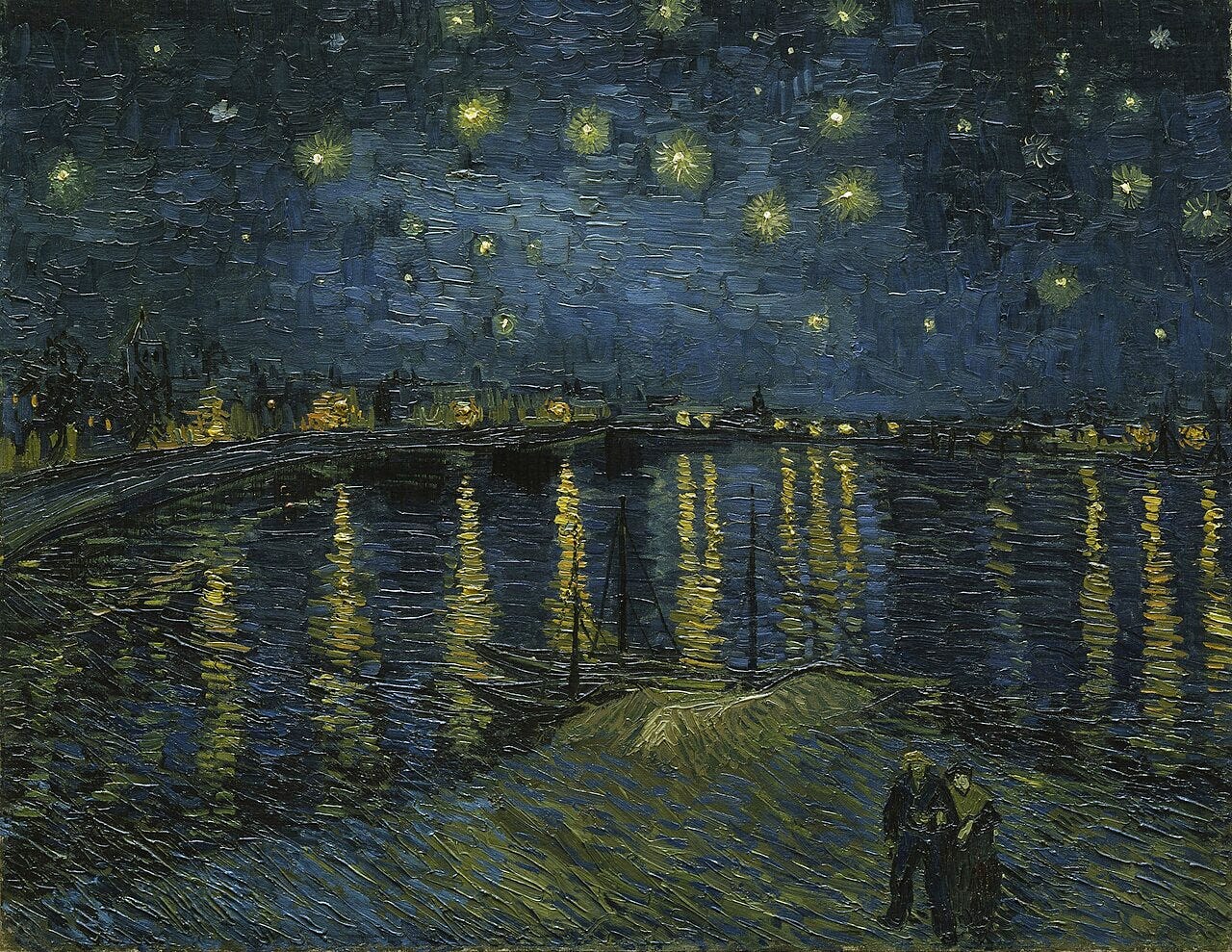
Post-Impressionism keeps the freedom and adds structure and feeling. Van Gogh turns color into emotion, Cézanne into architecture, Gauguin into escape. Seurat rebuilds light dot by dot with pointillism.
Fauvism and Expressionism (1905 to 1930)
Fauvism gets Matisse and his friends called wild beasts for their color. In the north, Munch and Expressionism use the same violence for the inner life.
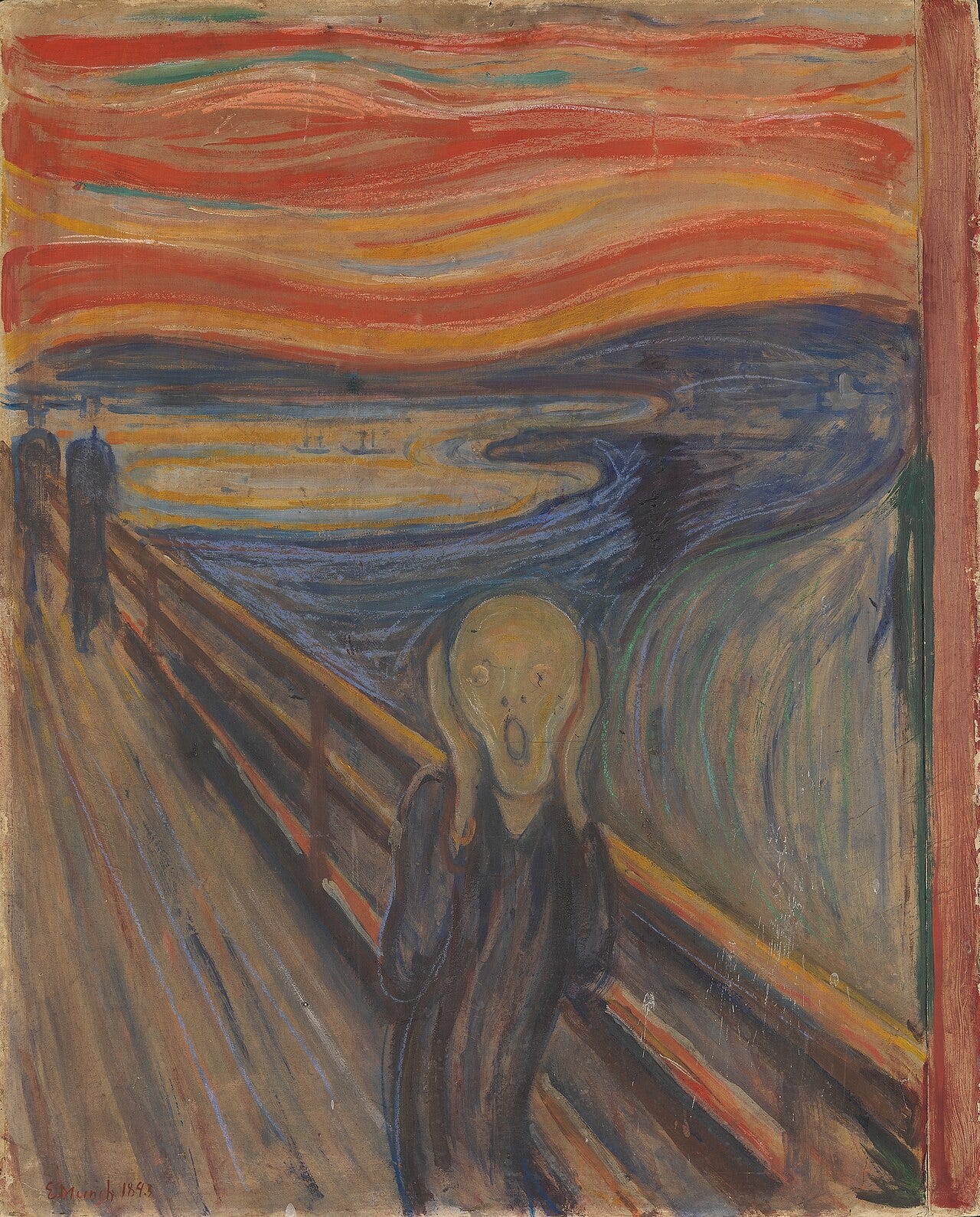
Cubism (1907 to 1920)
Cubism breaks objects into facets and shows several viewpoints at once. Picasso and Braque invent it in a Paris studio, and almost every abstract movement since owes them the permission.
Its shock wave is hard to overstate. Within five years, painters in Italy, Russia, and Holland are building their own abstractions on cubist scaffolding.
Surrealism (1924 to 1950)
Surrealism takes dreams seriously and paints them with a straight face. Dalí melts watches. Magritte paints pipes that are not pipes.
It is also the first movement run like an organization, with a manifesto, official members, and expulsions. Breton led it like a party, in both senses of the word.
Abstract art (1910 to 1970)
Abstract art drops the subject entirely. Kandinsky gets there around 1910. By mid century, Pollock is dripping paint on the floor and Rothko is staining canvases the size of doors.
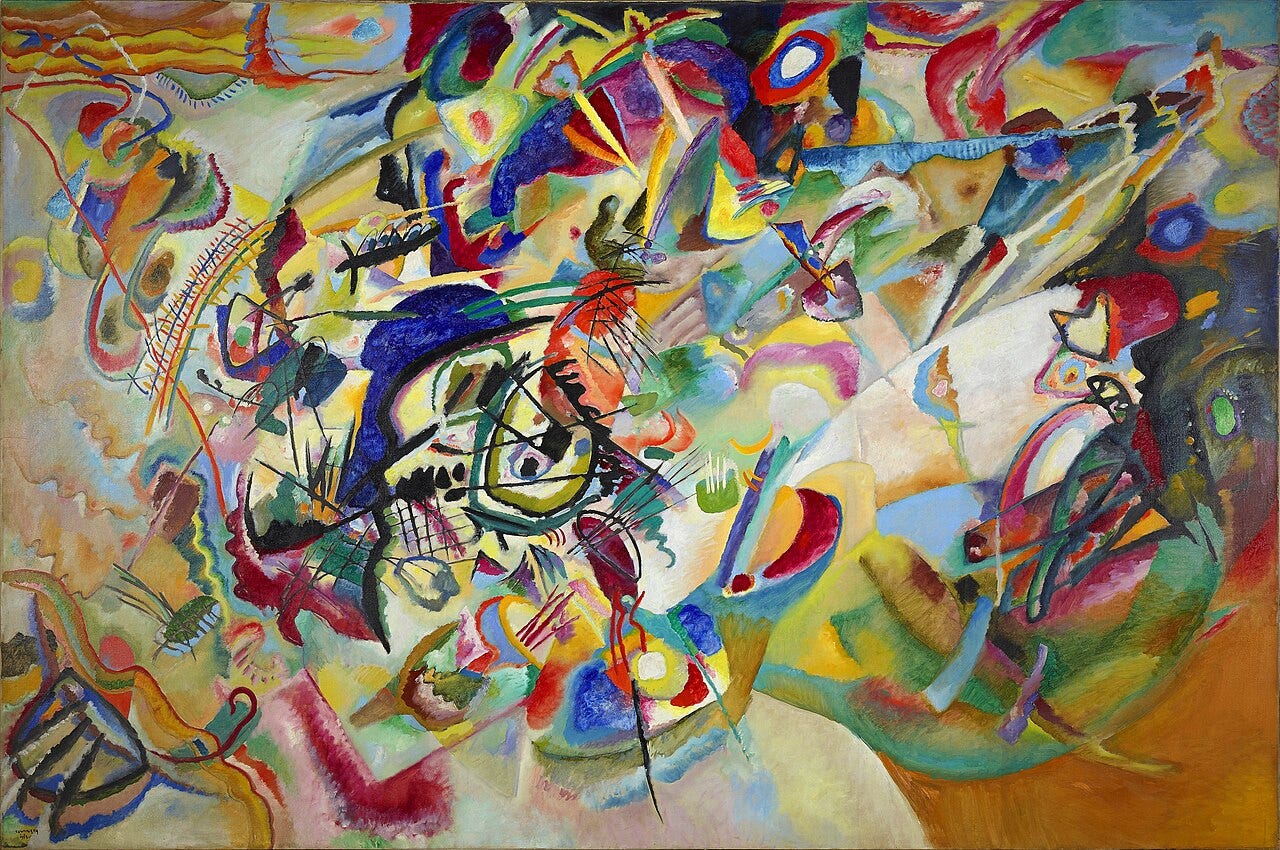
The center of gravity also crosses the Atlantic here. After 1945, for the first time in centuries, the story of painting runs through New York instead of Paris.
Pop art (1955 to 1970)
Pop art brings soup cans and comic strips into the museum. Warhol and Lichtenstein ask why a Coke bottle is less real than a water lily.
It also ends the idea that a subject can be too low for art, an argument that began with Courbet's provincial funeral a century earlier.
Contemporary art (1970 to now)
No single style, which is the style. Installation, performance, video, and painting again. The timeline is still being written.
Ai Weiwei, Kusama, Banksy: the names you know now sit at the end of the same line that started in a cave.
How to use this timeline
Do not memorize it. Read the sequence once for the order, then pick the period that pulled at you and follow its link.
If you want a plan, I wrote a step by step guide on how to learn art history, and a shorter one on how to appreciate art for when you are standing in front of the real thing.
FAQ: art history periods
What are the periods of art history in order? Prehistoric, Ancient, Byzantine, Medieval and Gothic, Renaissance, Mannerism, Baroque, Rococo, Neoclassicism, Romanticism, Realism, Impressionism, Post-Impressionism, Fauvism and Expressionism, Cubism, Surrealism, Abstract art, Pop art, then contemporary art.
What is the oldest art movement? The oldest art is prehistoric cave painting, at least forty thousand years old. The first movement in the modern sense, artists exhibiting together under one banner, is usually said to be Impressionism, which debuted as a group in 1874.
How many periods of art history are there? There is no official number. This timeline uses nineteen, which covers every name you will meet in a general museum. Textbooks split or merge them differently, and the dates always overlap.
What is the best order to learn art history? Chronological, exactly as listed above, because each period reacts to the one before it. Start with whichever period already pulls at you, then read outward in both directions. Here is a full plan for learning art history.
One last thing. Gothic, Baroque, Impressionism, and Fauvism all began as insults. Half this timeline was named by people who hated what they were looking at, which tells you exactly how every new period gets received.


